Table of Contents
Lacing up your running shoes and hitting the pavement brings a unique sense of freedom and accomplishment. For casual joggers, tracking progress shouldn’t feel like deciphering rocket science or draining your savings account. The good news? You don’t need a high-end sports watch costing hundreds to enjoy the benefits of GPS tracking, distance measurement, and basic performance insights. The market for accessible fitness technology has exploded, offering genuinely capable options that focus on the essentials without overwhelming complexity or price tags. Finding the right tool to enhance your runs is about matching features to your specific, everyday needs.
It’s easy to get lost in a sea of technical jargon and exaggerated claims, especially when searching for “the best” under a tight budget. Many casual runners feel intimidated by watches packed with features they’ll never use, or worse, end up with a device that frustrates them with poor battery life or confusing menus. The sweet spot for the everyday jogger lies in simplicity, reliability, and genuine value. This guide cuts through the noise, focusing purely on what matters for someone who runs for enjoyment, fitness, and stress relief, not competitive racing. We’ll explore the key features to prioritize, the specs that actually impact your experience, and how to make a smart, satisfying choice without spending more than necessary.
Top 10 GPS Running Watches Under $150
Detailed Product Reviews
1. mibro GS Active2 Running GPS Smartwatch with 46mm AMOLED, Lightweight and 15-Day Battery, Supports Training Guidance and Dual-Band GNSS, 150+ Sport Modes (Dark Gray)

Overview: The Mibro Active2 targets serious runners with a lightweight 46mm AMOLED smartwatch featuring dual-band GNSS and professional training tools. Its 39g nylon band ensures comfort during extended use, while 150+ sport modes cater to diverse athletic needs.
What Makes It Stand Out: Dual-frequency satellite positioning delivers exceptional route accuracy, even in challenging terrain. The standout feature is its AI-powered running coach, which analyzes VO₂ Max, cadence, and stride to generate adaptive 5K–half-marathon training plans. The 15-day battery life (15 hours in GPS mode) outperforms most competitors, eliminating mid-run anxiety.
Value for Money: Priced competitively against mid-range options like Amazfit, it offers premium features like AMOLED clarity and advanced running metrics typically found in $300+ watches. The inclusion of detailed training guidance—rare at this price—makes it ideal for runners seeking structured progress without splurging on Garmin.
Strengths and Weaknesses: Strengths: Unmatched battery longevity; actionable running analytics; featherlight comfort; precise dual-band GPS. Weaknesses: Limited smart features (no call/music control); basic health tracking lacks ECG/stress tools; nylon band may wear faster than silicone.
Bottom Line: A top-tier running companion for athletes prioritizing training insights and endurance over smart capabilities. Highly recommended for runners seeking coach-like guidance without draining their wallet.
2. afoloery GPS Running Watch and Outdoor Smartwatch, AMOLED Display, Built-in LED Flashlight,Multisport GPS Smartwatch,5ATM Waterproof,Fitness Tracker up to 15 Days of Battery

Overview: This versatile outdoor smartwatch blends rugged functionality with comprehensive health tracking. Its AMOLED display, 5ATM waterproofing, and 15-day battery target adventurers needing reliability across swimming, hiking, and daily fitness.
What Makes It Stand Out: The built-in LED flashlight is a unique safety asset for trail runners, while dual-satellite GPS (GPS+BD) ensures precise navigation. Beyond typical activity tracking, it offers HRV analysis, female health monitoring, and seamless Apple Health/Google Fit integration—uncommon in budget multisport watches.
Value for Money: At a fraction of Garmin’s cost, it delivers premium durability (zinc alloy case), 100+ sport modes, and smart features like Bluetooth calls. The flashlight and 5ATM rating add practical value for outdoor enthusiasts, though accuracy lags slightly behind high-end GNSS models.
Strengths and Weaknesses: Strengths: Exceptional battery life; flashlight utility; robust waterproofing; broad health metrics. Weaknesses: GPS less precise than dual-frequency systems; compass/altimeter basic for serious mountaineering; call quality inconsistent.
Bottom Line: An outstanding all-rounder for casual adventurers and fitness users seeking ruggedness and health insights. Skip if you need elite navigation, but ideal for swimmers/hikers wanting smart features without overspending.
3. Garmin Forerunner 55, GPS Running Watch with Daily Suggested Workouts, Up to 2 Weeks of Battery Life, Aqua
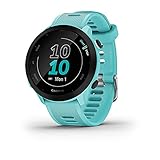
Overview: Garmin’s entry-level Forerunner 55 focuses purely on running fundamentals with wrist-based heart rate tracking, GPS mapping, and intelligent training tools. Its no-frills design prioritizes performance metrics over smartwatch bells and whistles.
What Makes It Stand Out: Garmin’s proprietary PacePro feature provides race-day pacing strategies based on elevation and course data—a rarity in sub-$200 watches. Daily suggested workouts adapt to fitness levels, while 20-hour GPS endurance and reliable step/sleep tracking leverage Garmin’s trusted algorithms.
Value for Money: Justifies its premium price ($199) through Garmin’s unmatched running ecosystem. Compared to similarly priced alternatives, it offers superior training analytics and brand reliability, though lacking AMOLED screens or call features found in budget smartwatches.
Strengths and Weaknesses: Strengths: Intuitive PacePro guidance; exceptional GPS accuracy; 2-week battery life; comprehensive running metrics. Weaknesses: Basic monochrome display; no music storage; limited third-party app support; no advanced health sensors like SpO₂.
Bottom Line: The definitive choice for runners seeking Garmin’s coaching expertise without complexity. Avoid if you want smart features, but essential for dedicated athletes prioritizing actionable performance data.
4. Smart Watch For Men Women: 1.96" AMOLED Touchscreen,GPS Tracker,Waterproof Make/Answer Call Smart Watches,Sleep & Activity Tracking,multiple Sport Modes,Digital Running Watches for iPhone Android iOS
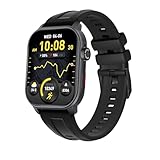
Overview: This budget-friendly smartwatch emphasizes connectivity and health tracking with an AMOLED screen, call functionality, and IP68 waterproofing. It targets casual users wanting smart features alongside basic fitness monitoring.
What Makes It Stand Out: Full call/message handling directly from the wrist bridges a gap for Android/iOS users, while the vibrant 1.96" AMOLED display rivals pricier models. Customizable photo dials and mini-games add playful personalization absent in sport-focused competitors.
Value for Money: Exceptional for under $80, offering standalone GPS tracking, SpO₂ monitoring, and smart features typically seen in $150 devices. However, GPS accuracy requires daily phone syncing, and battery life (5–7 days) trails dedicated sports watches.
Strengths and Weaknesses: Strengths: Strong call/notification integration; vivid display; versatile health tools; affordable. Weaknesses: GPS inconsistent without daily resync; battery drains fast with GPS; basic sports analytics; unreliable SpO₂ readings.
Bottom Line: A solid everyday smartwatch for casual fitness users needing notifications and style. Not for serious runners—opt for Mibro/Garmin instead—but unbeatable for budget-conscious buyers wanting smart functionality.
5. EZON GPS Running Watch with Distance Pace Alarm and Calorie Counter and Stopwatch for Men T031B01 Black

Overview: The EZON T031B01 is a no-nonsense GPS sports watch focused on core running metrics. Its minimalist design emphasizes stopwatch precision, auto-lap tracking, and personalized fitness calculations for straightforward performance monitoring.
What Makes It Stand Out: The dedicated stopwatch with 50-lap memory and auto-synced GPS time zone adjustments cater to track runners and interval trainers. Unlike smartwatches, it prioritizes raw data accuracy—entering personal metrics (age/weight) refines calorie/distance calculations significantly.
Value for Money: At under $60, it outperforms fitness bands in stopwatch functionality and GPS reliability. While lacking health sensors or smart features, its purpose-built design offers better value than hybrid watches for users solely wanting run analytics without distractions.
Strengths and Weaknesses: Strengths: Reliable lap tracking; accurate personalized metrics; instant GPS reconnection; affordable. Weaknesses: No heart rate monitoring; basic monochrome display; limited to 10 saved workouts; no smartphone sync beyond initial setup.
Bottom Line: A niche tool for runners who prioritize stopwatch precision and simplicity over modern features. Skip if you want health tracking, but ideal for sprinters or budget-focused athletes needing dependable lap data.
6. Amazfit Bip 6 Smart Watch 46mm, 14 Day Battery, 1.97" AMOLED Display, GPS & Free Maps, AI, Bluetooth Call & Text, Health, Fitness & Sleep Tracker, 140+ Workout Modes, 5 ATM Water-Resistance, Black

Overview: The Amazfit Bip 6 is a feature-packed, budget-friendly smartwatch targeting fitness enthusiasts and everyday users seeking long battery life without sacrificing core functionality. What Makes It Stand Out: Its standout features are the vibrant 1.97" sunlight-readable AMOLED display, exceptional 14-day battery life, integrated GPS with free downloadable maps and turn-by-turn navigation, and comprehensive health monitoring (HR, SpO2, stress, sleep). The 140+ workout modes, including HYROX, and Bluetooth calling/texting add significant value. Value for Money: Offering premium features like AMOLED, robust GPS navigation, and health tracking at a fraction of Apple Watch or Garmin prices, the Bip 6 delivers outstanding value. It surpasses similarly priced competitors in display quality and feature breadth, making it ideal for cost-conscious buyers needing versatility. Strengths and Weaknesses: Strengths: Exceptional battery life; bright, clear AMOLED screen; accurate GPS with free maps; comprehensive health suite; Bluetooth calling capability. Weaknesses: Aluminum build feels less premium than stainless steel; AI coaching may lack depth; free maps require prior download via companion app. Bottom Line: For its price, the Amazfit Bip 6 is a near-perfect blend of long battery life, essential smart features, and robust fitness tracking. Highly recommended for users prioritizing value, battery endurance, and core health/sports functionality without premium pricing.
7. Amazfit Active 2 Sport Smart Watch Fitness Tracker for Android and iPhone, 44mm, 10 Day Battery, Water Resistant, GPS Maps, Sleep Monitor, 160+ Workout Modes, 400 Face Styles, Silicone Strap, Free App

Overview: The Amazfit Active 2 positions itself as a stylish, health-focused smartwatch with strong battery life and advanced tracking capabilities for both fitness and daily wellness. What Makes It Stand Out: It excels with its premium stainless steel build offering classic elegance, BioTracker PPG 2.0 for highly accurate 24/7 heart rate and sleep monitoring, and unique ski map functionality with resort guidance. The 160+ workout modes and 400 customizable watch faces enhance personalization. Value for Money: Priced competitively below major brands, the Active 2 justifies its cost through superior build quality, exceptional health tracking accuracy, specialized features like ski maps, and a 10-day battery. It offers a more polished experience than the Bip series, appealing to style-conscious users. Strengths and Weaknesses: Strengths: Premium stainless steel design; best-in-class BioTracker health/sleep accuracy; specialized ski resort maps; extensive watch face library; reliable 10-day battery. Weaknesses: Smaller 1.32" display than Bip 6; lacks built-in Bluetooth calling; ski features niche for non-winter athletes. Bottom Line: The Amazfit Active 2 is an excellent choice for users seeking a stylish, health-centric smartwatch with top-tier biometric tracking and unique outdoor features. It’s ideal for those valuing accuracy and aesthetics over calling functionality, offering superb value for its segment.
8. EZON GPS Running Watch with Distance Pace Alarm and Calorie Counter and Stopwatch for Men (Blue)

Overview: The EZON GPS Running Watch is a dedicated, no-frills sports watch focused purely on accurate running and outdoor activity tracking, targeting budget-conscious athletes. What Makes It Stand Out: Its core strength is precise GPS functionality with fast cold/hot starts and automatic time sync. The detailed one-tap exercise data review (distance, pace, calories) and robust stopwatch/lap tracking (50 laps saved) cater specifically to runners needing reliable performance metrics without smart features. Value for Money: As a specialized GPS running tool, it offers exceptional value under $50. It outperforms similarly priced basic watches with its accurate GPS, lap memory, and personalized profile calibration, making it a smart buy for runners avoiding smartwatch costs. Strengths and Weaknesses: Strengths: Highly accurate GPS tracking with fast lock; automatic time sync; detailed lap/stopwatch data storage; simple, intuitive interface; affordable price. Weaknesses: No smart features (calls, notifications); basic monochrome display; limited to 10 saved workouts; lacks continuous health monitoring; plasticky build. Bottom Line: The EZON GPS Running Watch is a focused, reliable tool for runners prioritizing core metrics over smart features. Its precision and affordability make it a top recommendation for dedicated athletes seeking a straightforward, budget-friendly GPS tracker.
9. Garmin Forerunner 55, GPS Running Watch with Daily Suggested Workouts, Up to 2 weeks of Battery Life, Black (Renewed)
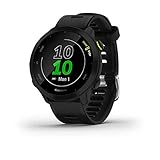
Overview: The renewed Garmin Forerunner 55 is an entry-level GPS running watch from a trusted brand, designed to provide essential training metrics and guidance for beginners to intermediates. What Makes It Stand Out: Garmin’s expertise shines through with its accurate wrist-based HR, reliable GPS tracking, and unique training tools like PacePro for race strategy and daily suggested workouts. The long 20-hour GPS battery life (2 weeks as a watch) and multi-sport profiles add versatility. Value for Money: Purchased renewed, it offers significant savings on genuine Garmin quality. It justifies the price with proven accuracy, essential running dynamics, and Garmin’s robust training ecosystem, outperforming many new budget smartwatches in pure running metrics. Strengths and Weaknesses: Strengths: Trusted Garmin accuracy for HR/GPS; valuable PacePro feature; long battery life (especially in watch mode); daily workout suggestions; durable build. Weaknesses: Basic monochrome display; no music storage; limited smart features; renewed unit carries minor cosmetic risks. Bottom Line: The renewed Forerunner 55 is a highly recommended, cost-effective gateway into serious running metrics. Its focus on core performance data and Garmin’s training tools make it ideal for runners seeking reliable, no-nonsense guidance without smartwatch distractions.
10. PUBU Smart Watch for Men, Built-in GPS with Map(Answer/Make Call/Text), AI Smartwatch for Android Phones/iPhone, 100+ Sport Mode Fitness Tracker with Health/Sleep Monitor, Compass/Barometer(2 Bands)

Overview: The PUBU Smart Watch aims to be a feature-dense, all-in-one Android/iOS companion, packing GPS mapping, health tracking, calling, and AI tools into a single device with dual straps. What Makes It Stand Out: Its defining features are the built-in offline maps with route guidance without a phone, comprehensive outdoor sensors (compass, altimeter, barometer), Bluetooth calling/texting (Android), and unique AI capabilities like voice-to-text replies, AI watch face generation, and translation. Value for Money: Positioned as a budget “do-it-all” device, it offers remarkable feature density – especially the offline maps and AI tools – at a very low price point. However, the large “550ml” battery claim is likely exaggerated; real-world usage may fall short of advertised longevity. Strengths and Weaknesses: Strengths: True offline maps with route guidance; robust outdoor sensors; Bluetooth calling/texting; extensive AI features; dual straps included; very affordable. Weaknesses: Questionable battery life claims; text reply limited to Android; AI features may be gimmicky; build quality likely average; app ecosystem less refined. Bottom Line: The PUBU Smart Watch delivers an impressive array of features, particularly offline navigation and AI tools, for a minimal investment. Best suited for Android users wanting maximum functionality on a tight budget, though manage expectations regarding battery and AI depth.
Understanding Your Core Needs as a Casual Jogger
Before diving into technical details, it’s crucial to honestly assess what you truly need from a running watch. Casual jogging differs significantly from competitive training, and your device should reflect that reality. Prioritizing the right features ensures you get the most value and actually use the watch consistently, rather than letting it gather dust.
Defining “Casual Jogging” for Your Purchase
Casual jogging typically means runs focused on general fitness, mental well-being, or enjoying the outdoors, often 1-3 times per week for durations under an hour. You likely don’t need advanced metrics like VO2 max estimates, sophisticated race predictors, or extensive recovery analysis. Your primary goals are probably tracking distance covered, time spent running, basic pace, and perhaps a simple calorie burn estimate. Recognizing this helps avoid paying for unnecessary complexity.
The Essential vs. The Extraneous
Focus relentlessly on the core trio: accurate GPS tracking for distance, reliable timekeeping, and ease of use. Features like continuous heart rate monitoring (beyond basic step counting), extensive sport profiles beyond running/walking, or complex navigation are often superfluous for the casual user. A device that excels at the fundamentals and gets out of your way is far more valuable than one boasting dozens of rarely used functions. Ask yourself: “Will I actually use this feature regularly during my typical run?”
Budget Realities and Long-Term Value
Sticking to a sub-$150 budget is smart, but true value extends beyond the initial price. Consider the total cost of ownership: Does the watch require a mandatory subscription for basic route tracking? Is battery life so poor you need to charge it daily, causing frustration? Does the companion app provide clear, actionable insights without paywalls? A slightly higher initial cost might be justified if it means years of reliable, subscription-free use, whereas the absolute cheapest option might become unusable within a year due to poor software support or battery degradation.
GPS Accuracy: What Truly Matters for Everyday Runs
GPS is the cornerstone feature for any running watch, but not all GPS implementations are equal, especially at lower price points. Understanding the nuances helps set realistic expectations and identify models that deliver dependable performance for casual use.
How Budget GPS Chips Perform Differently
Entry-level GPS modules in this price bracket often use less sophisticated chipsets compared to premium models. This can translate to slightly slower satellite acquisition (taking 30-60 seconds to lock on) and minor fluctuations in distance tracking, especially in dense urban areas with tall buildings or under heavy tree cover. However, for open park paths or suburban streets, accuracy is usually more than sufficient for tracking overall distance and pace trends over time. Don’t expect military-grade precision, but reliable day-to-day consistency is achievable.
Environmental Factors You Can Control
Your location significantly impacts GPS signal strength. Running in wide-open spaces yields the best results. If you frequently run in heavily forested trails or dense city canyons, manage expectations – minor inaccuracies are common for all GPS watches in these environments, not just budget models. Choosing routes with clearer sky visibility whenever possible will maximize the accuracy you get from any affordable device.
The Role of Assisted GPS (A-GPS)
Many budget watches utilize Assisted GPS, which uses Wi-Fi or cellular data (via your connected phone) to download satellite location data faster, speeding up the initial lock. While this is a helpful feature for quicker start times, it’s not essential for accuracy once the signal is locked. Be aware that without a connected phone (e.g., if you run phone-free), A-GPS won’t function, and the initial lock might take slightly longer. For most casual joggers starting their run near their phone, this is a minor consideration.
Battery Life: Beyond the Marketing Hype
Battery life claims are often the most exaggerated specs in the wearable world, especially for budget devices. Understanding the real-world factors that drain power is key to finding a watch that lasts as long as your running routine demands.
Deciphering Manufacturer Claims
A claim of “7 days” usually assumes very conservative usage: no GPS, minimal notifications, screen always off except for quick glances. Using GPS for even one hour-long run per day drastically reduces this. Look for realistic estimates specifying “with GPS use” – a figure like “20 hours GPS” is more meaningful. For casual joggers doing 3-4 short runs weekly, a watch offering 5-7 days of mixed use (including GPS) is generally ideal, minimizing charging fuss.
Major Power Drains to Watch For
GPS usage is the single biggest battery hog. Heart rate monitoring, especially continuous optical HR, is another significant drain. Bright screen settings, frequent notifications from your phone, and using the backlight constantly also sap power quickly. If long battery life is critical, prioritize models that allow you to easily disable continuous heart rate monitoring when not needed for runs, as casual joggers often don’t require it 24/7.
Charging Convenience Matters
Consider the charging method. Proprietary pogo-pin chargers are common but easily lost. A standard USB-C magnetic charger is a huge plus for convenience and longevity, as the cable is likely already in your drawer. How long does it take to get a useful charge? A watch that reaches 50% in 30 minutes is far more practical than one needing 2 hours for a full charge, fitting better into a casual user’s schedule.
Display and Usability: Keeping it Simple and Clear
A screen you can actually read in sunlight and menus you can navigate without stopping are non-negotiable for a running watch. Complexity is the enemy of consistent use, especially for casual runners who just want to glance and go.
Screen Type: LCD vs. Always-On OLED
Most budget watches use reflective Memory-in-Pixel (MIP) LCD screens. These are excellent for sunlight readability and very power-efficient, often only lighting up when you raise your wrist or press a button. Avoid budget OLED screens marketed as “always-on” – they look sleek but drain battery rapidly at this price point, negating the benefit. Prioritize high-contrast, easy-to-read LCDs over marketing buzzwords.
Interface Design for Gloved Fingers and Sweaty Hands
Can you easily start, pause, and stop a run with sweaty fingers mid-stride? Is the menu structure intuitive, requiring minimal taps? Look for watches with physical buttons in addition to, or instead of, a touchscreen. Buttons work reliably with gloves, rain, or sweaty hands, where touchscreens often fail. A simple, logical menu hierarchy focused on running functions is vastly preferable to nested digital crown menus designed for smartwatches.
Essential Display Information at a Glance
During your run, you need key metrics instantly visible without scrolling: current pace, elapsed time, and distance covered. Heart rate (if used) is common, but avoid watches that bury these basics under layers of less relevant data like step count during the run. Customizable data screens are a bonus, allowing you to prioritize exactly what you want to see per run segment. Clarity and simplicity win over information overload.
Comfort and Wearability: The Watch You Forget You’re Wearing
If a watch is uncomfortable, bulky, or annoying, you simply won’t wear it consistently. For casual jogging, comfort is paramount for long-term adoption. A device that feels like a second skin ensures it becomes a natural part of your routine.
Strap Materials: Silicone Reigns Supreme
Soft, flexible silicone straps are the standard for a reason: they’re comfortable, lightweight, sweat-wicking, and durable. Avoid watches with stiff rubber or cheap plastic straps that can irritate skin or feel cumbersome. Look for straps with adequate ventilation channels if you tend to have sweaty wrists. Quick-release mechanisms for swapping straps (even if you never swap them) often indicate better overall build quality.
Size and Weight: Less is More
A smaller, lighter watch face (typically 1.0" to 1.3" diameter) sits more comfortably under a sleeve and feels less obtrusive during movement. Heavy, oversized watches designed for rugged adventures can feel awkward and distracting for simple jogs. Prioritize a low profile that doesn’t catch on clothing. Remember, you don’t need a massive screen for basic run data – compact is often more comfortable.
Water Resistance: Beyond the Basics
While “water-resistant” is standard, ensure it meets at least 5 ATM (50 meters) rating. This protects against sweat, rain, and accidental splashes, and allows you to rinse the watch after a sweaty run. It does not mean it’s suitable for swimming (unless explicitly stated as 50m+ and swim-tracking capable, which is rare at this price). For casual jogging, 5 ATM is the practical minimum; avoid anything rated only for “splash resistance” (IPX7 or similar).
The Companion App Ecosystem: Where Data Becomes Insight
The watch itself is just the data collector; the companion smartphone app is where your runs are stored, analyzed, and turned into meaningful feedback. A poor app can ruin an otherwise decent watch, especially for casual users who need simplicity.
Data Syncing Reliability is Non-Negotiable
The app must sync your run data reliably and quickly after your workout, without requiring constant phone proximity or complex troubleshooting. Frequent failed syncs lead to frustration and data loss, discouraging continued use. Read user reviews specifically mentioning app stability – this is often a weak point for budget brands. Seamless, automatic background syncing is the gold standard.
User-Friendly Analysis Over Complex Metrics
You don’t need graphs showing your lactate threshold. Look for apps that present your run history clearly: maps of your routes, trends in your average pace over weeks, total weekly distance. Simple charts showing improvement (or plateaus) in your core metrics are motivating. Avoid apps cluttered with dense analytics panels designed for elite athletes; simplicity fosters consistent engagement for casual users.
Subscription Traps to Avoid
Be vigilant about app functionality behind paywalls. Does basic route history, map viewing, or simple trend analysis require a monthly subscription? At the sub-$150 price point, the core app features should be entirely free. Some brands lock advanced (but often unnecessary) features behind subscriptions, which is acceptable, but the fundamental run tracking and review must remain accessible without ongoing payment. Read the fine print before purchasing.
Durability and Build Quality: Built to Last, Not Just to Sell
A watch taking a few knocks during a run or getting bumped against a doorframe shouldn’t mean a trip to the repair shop. While not built like expedition gear, a decent budget watch should withstand the realities of casual use without falling apart.
Case Material: Plastic Done Right
Most budget watches use reinforced polymer (plastic) cases. This isn’t a bad thing – it keeps weight down and is surprisingly durable if well-engineered. Look for terms like “fiber-reinforced” or “impact-resistant polymer.” Avoid descriptions suggesting flimsy, thin plastic. A metal bezel (even a thin one) around the screen can add significant scratch resistance and perceived quality without a huge cost increase.
Screen Scratch Resistance
The screen is vulnerable. Gorilla Glass is rare at this price, but many use strengthened mineral glass or acrylic. Acrylic scratches more easily but is cheaper to replace; mineral glass is harder but can shatter. A slight screen curvature often indicates better scratch resistance. User reviews mentioning screen durability after a few months of use are invaluable here – look for patterns of complaints.
Button and Port Longevity
Physical buttons should feel solid and clicky, not mushy or loose. They need to withstand repeated pressing during runs. Check reviews for mentions of buttons failing prematurely. The charging port cover (if present) should seal securely to maintain water resistance. Proprietary ports are common, but ensure the connector feels robust and not prone to bending.
Value Assessment: Beyond the Sticker Price
True value in a budget running watch isn’t just the lowest number at checkout. It’s a combination of performance, longevity, software support, and freedom from hidden costs that delivers satisfaction over the long haul.
Software Updates and Long-Term Support
Does the manufacturer have a track record of providing firmware updates for their budget lines? Even basic updates fixing bugs or improving GPS accuracy months after purchase add significant value. Brands that abandon older models quickly leave you with a device that might become less reliable or compatible over time. Research the brand’s update history – this is often overlooked but critical for longevity.
Warranty and Customer Service Realities
A standard 1-year warranty is typical. Investigate the brand’s reputation for honoring warranties and providing responsive customer support, especially for common issues like battery degradation within the first year. A slightly higher price from a brand known for good service might save headaches later compared to the absolute cheapest option with terrible support. Check independent review sites for recurring service complaints.
The Hidden Cost of Abandonment
Consider the lifespan. A $120 watch that reliably tracks your runs for 2-3 years offers better value than a $90 watch that becomes unusable due to battery failure or lack of software support after 12 months. Factor in the expected usable life based on user experiences, not just the initial purchase price. Durability and brand support directly impact long-term cost per use.
Making Your Final Decision: A Practical Checklist
Armed with the knowledge of what truly matters, distill your decision down to a clear, actionable checklist tailored to your casual jogging lifestyle. This cuts through marketing fluff and focuses on real-world usability.
Prioritize Your Personal “Must-Haves”
List your absolute non-negotiables based on your routine. Is it 7-day battery life without GPS? A physical button for starting runs? Flawless sunlight readability? A completely free companion app? Rank these 2-3 top priorities. If a watch fails on a top priority, move on, regardless of other features or the price tag. Compromising on core needs leads to buyer’s remorse.
Research Real-World Experiences
Dive deep into user reviews, but be discerning. Focus on reviews from self-identified casual runners with usage patterns similar to yours (e.g., “I run 3x a week for 30 mins”). Pay attention to consistent complaints about GPS drift in parks, battery life falling short of claims with basic use, or app syncing issues – these are red flags. Ignore extreme 1-star reviews about unrelated features you don’t care about.
Where to Buy and Return Policies
Purchase from reputable retailers (official brand stores, major electronics chains, Amazon sold by Amazon) with clear, hassle-free return policies. The ability to test the watch in real-world conditions for a week or two is invaluable. Ensure you understand the return window and restocking fees. Buying from obscure websites with no returns is a significant risk at any price point.
Frequently Asked Questions
Frequently Asked Questions
Can I get accurate GPS tracking under $150 for park runs?
Yes, absolutely. Modern budget GPS modules provide reliable distance and pace tracking on open paths and streets. Minor fluctuations in dense urban areas or heavy forests are normal for all GPS watches, but accuracy is sufficient for tracking progress and route mapping in typical casual running environments.
Is heart rate monitoring accurate enough on these budget watches?
Optical heart rate sensors at this price offer reasonable trends (e.g., seeing your heart rate rise during effort and fall during rest) but shouldn’t be relied upon for medical accuracy or precise training zones. For casual joggers monitoring general effort, they are generally useful, but chest straps remain more accurate if that’s critical.
Will the battery last long enough if I run 3 times a week?
Typically, yes. Most capable budget models offer 5-10 days of mixed use (including 3-4 GPS runs of 30-60 minutes each). Always check real-world reviews for battery performance specifically mentioning regular GPS use, as manufacturer claims are often optimistic.
Do I need a smartphone to use the watch for running?
You need a smartphone initially to set up the watch and companion app. During the run, you can usually store GPS data directly on the watch and sync it to your phone afterward. However, real-time navigation or receiving notifications requires your phone to be nearby.
Are these watches suitable for running in the rain?
Yes, models with a 5 ATM (50m) water resistance rating are perfectly safe for running in rain and sweat. This rating protects against water pressure equivalent to shallow swimming, so rain and splashes pose no problem. Just avoid pressing buttons while submerged.
Will the screen be readable in bright sunlight?
Reflective LCD (MIP) screens, common on budget running watches, are specifically designed for excellent sunlight readability – often better than bright OLED screens which can wash out. This is a key advantage of the screen type typically found in this price range.
Can I use these watches for activities other than running?
Most include basic activity tracking (steps, sleep) and may have modes for walking, cycling, or gym sessions. However, the GPS accuracy and specialized metrics for non-running activities are often less refined. They are primarily optimized for running and general fitness.
How important is having physical buttons?
Very important for usability during runs. Physical buttons work reliably with sweaty hands, gloves, or rain, where touchscreens often fail. They allow quick, confident start/pause/stop actions without fumbling, enhancing the practical running experience significantly.
Will the companion app require a paid subscription?
The core functionality – syncing runs, viewing your route map, seeing distance/pace/time, and basic history – should be entirely free. Some brands offer optional premium subscriptions for advanced (and often unnecessary for casual users) analytics, but the fundamental tracking must remain accessible without payment.
How long can I expect a budget running watch to last?
With reasonable care, expect 2-3 years of reliable service. Battery degradation is the most common reason for replacement, gradually reducing usage time between charges. Build quality varies, so choosing a brand with good reviews for durability maximizes lifespan within this price segment.
See Also
- 10 Best Budget GPS Running Watches Under $200 for Beginners in 2026
- 10 Best Budget GPS Watches Under $150 for Trail Running in 2026
- 10 Best Budget GPS Running Watches Under $150 for Beginners in 2026
- 10 Expert-Recommended GPS Running Watches for Ultramarathons in 2026
- Stop GPS Drift with the 10 Best Outdoor Running Watches This Year