Table of Contents
Remember that heart-stopping moment when your child vanished at the park, only to reappear moments later with a mud-splattered grin? Today’s connected world offers tools to ease that modern parenting anxiety, but it also introduces new complexities. Children’s smartwatches have evolved far beyond simple step counters; they’re now sophisticated safety companions designed to bridge the gap between a child’s growing independence and a parent’s need for reassurance. Choosing the right one, however, feels less like shopping and more like navigating a high-stakes tech maze where privacy, reliability, and age-appropriateness are non-negotiable. It’s not just about knowing where your child is—it’s about ensuring the tool itself fosters trust and security without overwhelming them or invading their budding autonomy.
Gone are the days when a wrist-mounted walkie-talkie was the pinnacle of kid tech. Modern wearables promise real-time location tracking, controlled communication, and even health monitoring, but they also come with subscription fees, battery life headaches, and critical privacy questions. As a parent, you’re not just buying a gadget; you’re investing in a layer of peace of mind that must withstand playground drops, swimming pool splashes, and the relentless curiosity of a seven-year-old. This guide cuts through the marketing hype to focus on what truly matters: understanding the core features that deliver genuine safety, the hidden pitfalls to avoid, and how to match a device’s capabilities to your child’s specific age, maturity, and daily routine. Let’s demystify the essentials so you can make a confident, informed choice for your family’s unique needs.
Top 10 Children’s Smartwatches for Parents
Detailed Product Reviews
1. JrTrack 5 Kids Smart Watch by Cosmo | Best Kid-Safe Phone Watch | Precision Real-Time GPS Tracking | Call, Text, Activity, School Settings | Spotify Music | Parental Controls | SOS & Safety Alerts

Overview: The JrTrack 5 is an award-winning kids’ smartwatch designed exclusively for safety and secure communication for children aged 6+. It functions as a cellular-enabled phone watch with robust parental controls, eliminating internet and social media access entirely.
What Makes It Stand Out: Its HaloGPS technology delivers industry-leading real-time location accuracy, while True Texting allows secure picture/video messaging with pre-approved contacts. The eSIM activation offers seamless cellular service across North America, and Spotify integration adds entertainment within strict safety boundaries. Parental message monitoring is a significant differentiator.
Value for Money: Starting at $9.99/month for cellular service, it’s competitively priced for its premium safety features. While the watch cost is higher than basic trackers, the comprehensive security, reliable network coverage, and absence of spam justify the investment compared to cheaper alternatives lacking true cellular integration.
Strengths and Weaknesses: Strengths: Unmatched GPS precision, rigorous contact-only security, reliable cross-border coverage, and detailed parental oversight. Weaknesses: Requires a mandatory monthly subscription; incompatible with non-Cosmo carriers; no Wi-Fi calling backup.
Bottom Line: Ideal for parents prioritizing absolute safety and real-time connectivity over budget constraints. Its unparalleled security and tracking accuracy make it a top-tier choice despite the subscription requirement.
2. Smart Watch for Kids, 1.85" Fitness Tracker with Heart Rate, Sleep Monitor, IP68 Waterproof Smartwatches with Video Music, Pedometer, Game, NO APP/Phone, Gift for Boys Girls. (Classic, Pink)

Overview: This feature-rich smartwatch targets kids with extensive health tracking and entertainment functions, operating independently without phone or app dependency. It emphasizes wellness monitoring and engagement through gamified rewards.
What Makes It Stand Out: The 24/7 pediatric health analysis using a specialized database provides actionable sleep/stress insights, while the “Reward Coins” system incentivizes fitness and learning. Its standout trait is full standalone operation—no app needed for core functions like calls, games, or camera.
Value for Money: Priced accessibly, it offers exceptional feature density for the cost. The inclusion of blood oxygen monitoring, 100+ sports modes, and robust durability (IP68, 1.5m drop-tested) outperforms similarly priced competitors focused solely on basic tracking.
Strengths and Weaknesses: Strengths: Comprehensive health suite, app-free usability, durable build, and engaging reward system. Weaknesses: GPS accuracy is less precise than cellular models; no real-time location sharing; limited parental oversight without companion app.
Bottom Line: A superb standalone fitness and entertainment device for health-conscious families wanting minimal screen time management. Best suited for non-urgent safety needs where app independence is prioritized.
3. Parsonver Kids Smart Watch with Parent-Child Task & Reward System, Fun Fitness Tracker with 20 Sports Modes, Heart Rate & Sleep Monitor, IP68 Waterproof, Great Birthday Gift for Boys Girls 5-16, Black
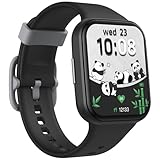
Overview: The Parsonver watch uniquely blends habit-building with health tracking, targeting children aged 5–16. Its core innovation is a collaborative task-reward ecosystem managed via optional app integration.
What Makes It Stand Out: The Parent-Child Task System transforms chores into redeemable “Star Coins” for rewards like game time, fostering responsibility. It balances independence (fully functional without an app) with optional parental oversight for health data and device management via a cross-platform app.
Value for Money: Offers remarkable flexibility at a mid-range price. The dual-mode operation (with/without app), extensive customization (100+ watch faces), and focus on behavioral development provide broader utility than pure trackers, justifying its cost for engaged parents.
Strengths and Weaknesses: Strengths: Highly motivating reward structure, seamless app flexibility, robust health tracking, and comfortable design. Weaknesses: GPS functionality is absent; task setup requires consistent parental input; no cellular calling capability.
Bottom Line: The premier choice for parents seeking to encourage responsibility and healthy routines through positive reinforcement, especially where cellular connectivity isn’t essential.
4. Xipax 4G Kids Smart Watch for Boys Girls with GPS Tracker, Kid Smartwatch Phone Call SOS Video Call for Kids Birthday Gift Ages 4-12 (Pink 4G)

Overview: A budget-friendly 4G LTE watch focused on core safety features for young children (4–12 years), emphasizing instant location tracking and emergency communication in a ready-to-gift package.
What Makes It Stand Out: Includes a physical SIM card out-of-box and delivers reliable 4G-based GPS tracking with immediate location updates. The dedicated SOS button (5–6 second press) and video calling capability stand out at this price point, alongside practical tools like calculator and stopwatch.
Value for Money: Exceptional entry-level value with essential cellular features. The bundled SIM card, extra strap, and charger eliminate hidden setup costs, undercutting competitors like TickTalk on initial investment while covering critical safety needs.
Strengths and Weaknesses: Strengths: Affordable 4G access, straightforward SOS function, school “Focus Mode,” and complete gift-ready packaging. Weaknesses: Basic GPS accuracy; limited app functionality; no advanced health metrics like heart rate monitoring.
Bottom Line: A practical, no-frills safety solution for parents seeking essential 4G calling and location tracking without premium features or subscriptions, ideal for younger kids.
5. TickTalk 5 Kids Smart Watch with GPS Tracker, Voice & Video Calling, Texts, SOS & Parental Controls | Safe 4G LTE Smartwatch with Free Music, Reminders & School Mode for Boys & Girls Ages 3-12

Overview: The TickTalk 5 is a top-tier 4G LTE smartwatch offering advanced safety tech for ages 3–12, featuring AI-enhanced location tracking, video calling, and granular parental controls via a dedicated app.
What Makes It Stand Out: Its SmartPin AI technology (using Google Maps) corrects GPS drift for indoor/outdoor precision, while SignalBooster ensures wide network coverage. Real SMS support with end-to-end encryption and 100+ hour battery life elevate it beyond competitors. Free music streaming is a notable perk.
Value for Money: Priced higher but justified by cutting-edge features. The AI GPS accuracy, robust parental controls (including T-Cloud backups), and superior battery outperform rivals at similar cost, though service plans are required.
Strengths and Weaknesses: Strengths: Best-in-class location tech, comprehensive parental controls, versatile calling/texting, and long battery life. Weaknesses: Service plans add ongoing cost; app dependency for full functionality; camera quality is basic.
Bottom Line: The definitive choice for parents demanding the highest safety precision and control, worth the investment for its unmatched location reliability and communication tools.
6. TickTalk 5 - Kids Smart Watch with GPS Tracker, Video Calling, SOS, & Parental Controls | Smartwatch with Free Music, Texting, Kid Phone Call and Text, Boys & Girls - 4G Smart Watch for Kids 3-12

Overview:
The TickTalk 5 is a premium 4G LTE kids’ smartwatch prioritizing safety and connectivity for ages 3–12. It combines cellular calling, GPS tracking, and robust parental controls into a durable, kid-friendly device, positioning itself as a secure communication hub rather than just a toy.
What Makes It Stand Out:
Its AI-powered SmartPin location correction delivers unparalleled GPS accuracy—even indoors—via Google Maps integration. Real SMS support (not just app-based messaging) and end-to-end encrypted chats ensure versatile, secure communication. SignalBooster technology guarantees reliable network coverage globally, while the 100+ hour battery life outperforms competitors.
Value for Money:
Priced mid-to-high range, it justifies cost through military-grade security features and no hidden subscription fees for core functions. Unlike cheaper alternatives with spotty GPS or limited networks, TickTalk 5’s comprehensive ecosystem offers long-term reliability, making it a cost-effective investment for safety-conscious parents.
Strengths and Weaknesses:
Strengths: Pinpoint location tracking; true SMS capability; extensive parental controls (School Mode, T-Cloud backups); global 4G/Wi-Fi compatibility; 5MP HD camera. Weaknesses: Premium price; complex setup for tech-averse parents; no built-in games (focuses purely on utility).
Bottom Line:
An exceptional safety-first smartwatch for parents prioritizing security over entertainment. Its AI-enhanced tracking and real-world communication tools make it the top choice for reliable child monitoring, despite a steeper learning curve.
7. Xipax Kids Smartwatch for Boys Girls with 4G LTE Calling, Kids Watch with Video Chat, Camera, Games, SOS Call Watch for Children Age 4-12 (Pink(NO GPS))
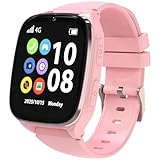
Overview:
This budget-friendly 4G LTE smartwatch targets kids aged 4–12 with basic calling, SOS alerts, and entertainment features. Notably, its title misleadingly advertises “GPS Tracker,” but the model specified explicitly lacks GPS—relying solely on cellular triangulation for location.
What Makes It Stand Out:
The inclusion of a pre-installed SIM card and dual straps offers immediate usability. School Mode auto-locks the watch during class hours, while 47 built-in games and a pedometer cater to playful engagement. Video chat and two-way calling provide essential connectivity.
Value for Money:
Its low price suits parents seeking minimal functionality without GPS precision. However, the absence of real GPS tracking severely limits safety utility, making it less valuable than GPS-equipped rivals at similar prices. Ideal only for casual use in confined areas.
Strengths and Weaknesses:
Strengths: Ready-to-use setup (SIM included); strong entertainment suite; School Mode focus; affordable. Weaknesses: No GPS (critical flaw for a “tracker” watch); location accuracy relies on unreliable cell towers; short 24-hour battery life; weaker parental controls.
Bottom Line:
A functional entertainment-focused watch, but the lack of GPS undermines its core safety promise. Avoid if location tracking is a priority; consider only for supervised, short-range use where cost is the primary factor.
8. TickTalk5 Smart Watch for Kids with GPS Tracker, Video Calling, Texting, and Parental App, 4G Smartwatch with Free Music, Phone Calls, and Reminders for Kids Ages 3-12

Overview:
Identical in features to Product #6, this TickTalk 5 variant emphasizes seamless integration of communication, safety, and parental oversight for children aged 3–12. It functions as a standalone 4G device with no phone dependency, focusing on real-world utility over frivolous extras.
What Makes It Stand Out:
SmartPin’s AI-driven location correction remains its crown jewel, delivering unmatched indoor/outdoor precision. Real SMS support—working even with non-TickTalk users—ensures universal contact. The 100+ hour battery and SignalBooster tech provide exceptional uptime across global networks.
Value for Money:
While pricier than entry-level models, its zero-cost music streaming, no-hidden-fee location services, and durable build offer superior longevity. Competitors often charge subscriptions for similar features, making TickTalk 5 a fiscally prudent choice for serious safety needs.
Strengths and Weaknesses:
Strengths: Industry-leading GPS accuracy; true SMS interoperability; military-grade encryption; 100+ hour standby; comprehensive parental app (T-Cloud backups, School Mode). Weaknesses: Steep initial cost; camera quality lags behind flagship phones; minimal gaming options.
Bottom Line:
The definitive safety smartwatch for parents demanding reliability. Its focus on core security features—backed by AI-enhanced tracking—easily outweighs its lack of games, warranting investment for peace of mind.
9. OKYUK Kids Smart Watch Gift for Girls Age 5-12, 4G Kids Watch 47 Games, HD Touch Screen Two-Way Calling Feature, School Settings, SOS, Birthday Gift for Boys and Girls Ages 7 8 9 10 (Black)
Overview:
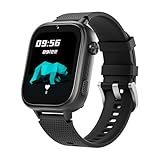
This feature-packed 4G watch targets kids aged 5–12 with heavy emphasis on entertainment (47 games) and safety basics like SOS calling. It includes a pre-provided SIM card and positions itself as an all-in-one gift for birthdays or holidays.
What Makes It Stand Out:
The sheer volume of built-in educational games—featuring math/picture challenges—sets it apart. A braided strap, silicone case, and necklace lanyard enhance durability and style. School Mode auto-disables games during class, balancing fun and focus.
Value for Money:
Its mid-range price is justified for gift-givers prioritizing entertainment. However, location tracking uses basic cellular triangulation (no true GPS), reducing safety value. Best for casual use where games outweigh precise monitoring needs.
Strengths and Weaknesses:
Strengths: Abundant educational games; stylish, rugged design; ready-to-use SIM; strong battery for play (6hrs); auto School Mode. Weaknesses: Inaccurate location tracking; no real GPS; short gameplay battery life; limited parental controls compared to TickTalk.
Bottom Line:
A compelling gift for play-focused kids, but not a reliable safety tool. Choose this for entertainment value in controlled environments; skip if GPS tracking is essential.
10. TICTIKY Smart Watch for Kids with Location Tracker (iOS Only), Fitness Tracker with Step Counter, Pedometer, Heart Rate, Sleep Tracker, IP68 Waterproof, Puzzle Games, Kids Watch for Boys 5-12

Overview:
This iOS-exclusive fitness tracker targets active kids aged 5–12 with health monitoring (heart rate, sleep) and light gaming. Unlike communication-focused rivals, it prioritizes wellness but lacks cellular calling or robust location services.
What Makes It Stand Out:
Deep health analytics—including REM sleep tracking and 80+ sports modes—make it unique. IP68 waterproofing supports swimming, while customizable watch faces (100+ options) boost engagement. Puzzle games subtly enhance cognitive skills.
Value for Money:
Priced accessibly, it delivers exceptional fitness features but suffers from critical limitations: iOS-only compatibility excludes Android users, and location tracking is rudimentary (no real-time GPS). Value hinges on prioritizing health over safety.
Strengths and Weaknesses:
Strengths: Advanced sleep/heart rate tracking; swimming-safe; creative watch customization; parental game controls; affordable. Weaknesses: iOS-only app (major exclusion); no cellular calling; inaccurate location data; sleep tracking requires 3+ hours of wear.
Bottom Line:
A niche fitness motivator for iOS households, but the lack of calling/GPS and platform restriction severely limit broader appeal. Opt for wellness-focused kids only; avoid for safety-centric use cases.
Understanding Your Core Needs: Safety vs. Independence
Before diving into technical specs, it’s crucial to define why you’re considering a wearable. Your child’s age, personality, and typical activities should directly shape your priorities. A device perfect for a cautious eight-year-old walking to school alone might overwhelm a shy five-year-old, while a tech-savvy ten-year-old might crave features that frustrate a younger sibling. Start by honestly assessing your primary goal: is it primarily for location awareness during after-school activities, enabling safe communication when they’re away from home, or monitoring well-being during sports? Clarity here prevents overspending on unnecessary bells and whistles or, worse, choosing a tool that fails when it matters most.
Defining Age-Appropriate Functionality
Children’s needs change rapidly between ages 5 and 12. For younger kids (5-8), simplicity is king: large buttons, voice call-only communication, robust geofencing with instant alerts, and minimal screen time potential are essential. Avoid devices with full internet browsers or social features at this stage. Older children (9-12) might responsibly handle limited text messaging, step counters, or even basic camera functions, but parental controls must remain ironclad. Always match features to demonstrated maturity—not just chronological age. A watch that’s “too advanced” often becomes a source of conflict or a security risk if the child disables safety settings.
Assessing Daily Routines and Risk Factors
Your child’s typical environment dictates critical features. Does she walk to school through a busy neighborhood? Real-time GPS with frequent updates becomes vital. Does he participate in after-school sports at a large facility? Reliable indoor location accuracy (like Wi-Fi or Bluetooth beacons) matters more than satellite precision. For kids frequently in parks or rural areas, satellite SOS capabilities could be a game-changer. Conversely, if your child is mostly supervised in controlled environments, a simpler model with basic check-in functions might suffice. Honestly evaluate where and how independence is granted to pinpoint which safety nets are non-negotiable.
Safety Features That Actually Deliver Peace of Mind
When it comes to child safety, vague promises like “location tracking” aren’t enough. You need concrete, reliable functionality that works consistently under real-world pressure. This means understanding the nuances between different tracking technologies and emergency protocols. A device that only updates location every 15 minutes is useless if your child darts across a street unexpectedly. Similarly, an SOS button buried under three menu layers won’t be pressed in a genuine panic. Prioritize hardware and software designed for immediate, idiot-proof safety actions.
Real-Time GPS Accuracy and Update Frequency
Not all GPS is created equal. Look for devices utilizing multiple satellite systems (GPS, GLONASS, Galileo) combined with Wi-Fi and cellular tower triangulation for the most consistent location, especially in urban canyons or indoors. Crucially, check the minimum update interval—some budget models only refresh every 5-10 minutes, creating dangerous blind spots. True real-time tracking should offer updates as frequently as every 15-30 seconds when movement is detected, with the ability for parents to manually refresh instantly via the app. Testimonials often reveal gaps; prioritize models with proven reliability in varied environments.
Geofencing That Works Reliably, Not Just in Theory
Geofencing (creating virtual boundaries on a map) is a cornerstone feature, but its effectiveness lives or dies by accuracy and alert speed. A poorly implemented system might trigger false alarms every time your child walks near the edge of a schoolyard, causing unnecessary panic, or worse, fail to alert when they genuinely leave a safe zone. Opt for systems allowing precise, customizable boundary shapes (not just circles) and immediate push notifications—within seconds—to your phone. Bonus points for features like “arrival/departure” alerts for specific locations (home, school, grandma’s) and the ability to set different zones for different days (e.g., school days vs. weekends).
Emergency SOS Systems: Speed and Simplicity Matter
A dedicated physical SOS button is essential—it must be impossible to press accidentally but effortless for a scared child to activate in a crisis. When pressed, the watch should immediately send an alert with the exact current location to all designated contacts, initiate a voice call to primary caregivers, and ideally, allow two-way audio so you can hear the situation. Avoid devices requiring multiple screen taps; in high-stress moments, muscle memory for a single button press saves critical seconds. Verify if the SOS function works even if the watch screen is locked or the battery is critically low.
Communication: Keeping Connections Controlled and Clear
The communication capabilities of a child’s wearable walk a tightrope between safety and distraction. Unfiltered access to the internet or open messaging creates significant risks, while overly restrictive systems might prevent a child from effectively signaling for help. The ideal balance offers parents complete control over who can contact the child and how, ensuring conversations remain secure, purposeful, and age-appropriate. Think of it as providing a lifeline, not a playground.
Pre-Approved Contact Lists and Call Management
The foundation of safe communication is absolute parental control over contacts. You should be able to add, remove, and categorize contacts (e.g., Mom, Dad, Grandma, Trusted Neighbor) within the companion app, with the watch only allowing calls or messages from and to these pre-approved numbers. Features like “quiet hours” (blocking non-emergency calls during school or sleep) and the ability to see call duration/logs add another layer of security and oversight. Avoid any model allowing the child to add new contacts independently.
Messaging: Text vs. Voice vs. Preset Options
Messaging functionality requires careful consideration. For younger children, preset quick-reply messages (“I’m at school,” “Going home now,” “Need pickup”) are often safer and less distracting than open text fields. As kids mature, limited text messaging to approved contacts might be appropriate, but scrutinize the interface—can it display emojis or links? (It shouldn’t). Voice messaging can be a great middle ground, offering more nuance than presets without the complexity of typing. Crucially, all messaging should be monitored in real-time via the parent app, with the ability to disable features instantly.
Why Full Internet Access is a Hard “No”
This cannot be overstated: a child’s safety watch should never have unrestricted web browsing, app stores, or social media access. The risks of exposure to inappropriate content, phishing scams, or communication with strangers are far too high. Any device marketed with “kid-safe internet” is inherently flawed—no filter is 100% reliable, and the cognitive load for a child to navigate even “filtered” spaces is inappropriate for this age group. Safety and communication should be the only purposes; anything else introduces unacceptable vulnerabilities.
Durability and Practicality: Built for Real Kids
If it can’t survive a tumble off the monkey bars or a dunk in the pool, it’s not a children’s watch—it’s a fragile liability. Parents need hardware engineered for the chaos of childhood, not the controlled environment of a tech showroom. Beyond just surviving impacts, consider how the device integrates into daily life: Is the screen readable in bright sunlight? Can your child operate it with cold fingers or wet hands? Does the band stay secure during vigorous play? Practicality is as critical as any digital feature.
Ruggedized Construction: More Than Just “Waterproof”
Look for explicit MIL-STD-810H certification (or similar military-grade durability standards) for shock, dust, and temperature resistance—marketing terms like “rugged” are meaningless without proof. Water resistance should be rated at least 5 ATM (suitable for swimming), not just 3 ATM (splash-resistant). The screen needs Gorilla Glass or equivalent scratch resistance. Pay attention to seal points around buttons and ports; a single weak gasket can doom the device after one real-world dunk. Read independent reviews focusing on long-term durability, not just initial unboxing.
Battery Life: Real-World Endurance vs. Lab Claims
Manufacturer battery claims (e.g., “72 hours”) are almost always based on ideal conditions with location tracking minimized. In reality, with frequent GPS updates, calls, and screen use, most watches last 1-2 days. For true peace of mind, especially for older kids at overnight events, aim for a device that realistically achieves 24-36 hours of active use. Fast charging (0-80% in under 60 minutes) is a major plus. Avoid models requiring proprietary chargers that are easily lost; standard magnetic pucks or USB-C are preferable. Consider if the watch allows the child to see battery level easily.
Comfort and Wearability for All-Day Use
A watch that’s uncomfortable gets taken off—and then it’s useless. Bands should be soft, hypoallergenic silicone (no cheap plastics causing rashes), adjustable for small wrists, and feature secure double-loop buckles or pin-and-tuck clasps that won’t snag. The watch face should be lightweight (<50g) and low-profile to avoid catching on clothing or equipment. For younger kids, vibrant colors and fun designs (with parental strap options) encourage consistent wear. Crucially, the device shouldn’t feel like a “prison bracelet”—it needs to be something the child wants to keep on.
Privacy and Security: Protecting Your Child’s Data
This isn’t just about your child’s location; it’s about safeguarding their digital footprint from the moment they start using connected tech. Children’s wearables collect highly sensitive data—precise location history, communication logs, even voice recordings—and this data is a prime target for hackers. A single breach could expose your child’s routines, school locations, and family contacts. Never assume privacy is standard; it must be a core design principle with transparent, robust safeguards that you can verify and control.
Data Encryption: Non-Negotiable Protection
All data transmitted between the watch, cellular networks, and the parent app must be encrypted end-to-end (E2EE). This means only the parent’s authenticated device and the watch can decrypt the information; not the company’s servers, hackers, or even rogue employees. Look for explicit mentions of AES-256 encryption or similar strong standards in the privacy policy. Avoid any service storing location history or messages in unencrypted databases. If the company can’t clearly explain their encryption, assume it’s inadequate.
Transparent Data Policies and Parental Control
The manufacturer’s privacy policy should be clear, concise, and written for humans—not legalese. It must explicitly state what data is collected (location, voice clips, usage stats?), how long it’s stored, who (if anyone) it’s shared with (e.g., third-party advertisers—this should be a hard “no”), and how to request permanent deletion. Crucially, parents should have full control within the app to view, manage, and delete stored data. Be wary of companies that monetize user data; subscription fees should cover service costs, not data harvesting.
Secure Account Management and Authentication
Your parent account is the gateway to your child’s safety. It must require strong, unique passwords and offer two-factor authentication (2FA) via SMS or authenticator app. Verify that the companion app logs out automatically after periods of inactivity and allows you to remotely wipe the watch if lost/stolen. Check if the company has a history of security breaches—and how they responded. A dedicated, responsive security team and regular firmware updates to patch vulnerabilities are essential indicators of a trustworthy provider.
The Hidden Cost: Subscriptions and Long-Term Value
That attractive upfront price tag is often just the entry fee. Most reliable children’s smartwatches require an ongoing cellular subscription to enable core safety features like real-time GPS and calls—this isn’t optional Wi-Fi tethering. Failing to factor in this recurring cost can lead to sticker shock and potentially abandoning the device when the subscription fee hits. Beyond the monthly bill, consider the device’s longevity: will it support your child through multiple school years, or become obsolete next season? True value lies in features that remain relevant and functional long-term.
Understanding Cellular Subscription Models
Unlike adult phones, these watches typically use low-bandwidth cellular connections (often LTE-M or NB-IoT) designed specifically for IoT devices, resulting in lower data usage but still requiring a dedicated plan. Subscription costs vary widely ($5-$20/month) based on features (e.g., unlimited calls vs. limited minutes, international coverage). Be crystal clear on what the plan includes: Does it cover only the US? Are there overage fees? Can you pause it during summer break? Avoid annual contracts; month-to-month flexibility is vital as your child’s needs change. Factor this into your total 2-3 year cost.
Evaluating Longevity and Software Support
A $100 watch with a 2-year software support cycle is a poor investment compared to a $150 model guaranteed 4+ years of updates. Outdated software means unpatched security flaws and features that stop working as cellular networks evolve (e.g., 3G shutdowns). Research the manufacturer’s track record: Do they provide regular, timely firmware updates? How long do they typically support a model? Does the device use standard network bands that will remain active for years? Future-proofing avoids the expense and hassle of replacing the watch prematurely.
Total Cost of Ownership: Beyond the Price Tag
Calculate the true cost: Device price + (Subscription cost x 24 or 36 months) + potential accessory costs (extra bands, screen protectors). A $120 watch on a $15/month plan totals $480 over two years—significantly more than a $180 watch on a $8/month plan ($372 total). Also, consider hidden costs like international roaming fees if you travel, or the frustration (and potential safety gap) if you skip a subscription payment. Prioritize transparency and predictable pricing over the lowest initial hardware cost.
Setting Up for Success: Parental Controls and Family Integration
Buying the watch is just step one. The real value—and peace of mind—comes from thoughtful setup and ongoing management. This involves more than just downloading an app; it requires establishing clear family rules, configuring controls to match your child’s maturity, and fostering open communication about why the device exists. A poorly configured watch can create false security or breed resentment, while a well-integrated system becomes a trusted tool that empowers both parent and child.
Granular Control Settings: Tailoring to Maturity
Avoid one-size-fits-all setups. Use the companion app to adjust settings based on your child’s age and responsibility level. For a new user, disable screen time completely and restrict communication to only parents. As they demonstrate reliability, you might gradually enable preset messages or limited contact lists. Set location update frequency higher during unfamiliar outings and lower for routine commutes. Utilize “school mode” to silence non-essential notifications during class hours. The goal is progressive responsibility, not constant surveillance.
Establishing Family Rules and Expectations
Before the watch is worn, have a calm, age-appropriate conversation. Explain why it’s used (“So I know you got to soccer practice safely, like we practiced together”), what it can and cannot do, and the rules for its use (“Always keep it charged,” “Don’t share your PIN,” “Press SOS only for real emergencies”). Emphasize it’s a tool for safety, not punishment. Involve your child in setting boundaries where appropriate (e.g., choosing quiet hours). This builds trust and cooperation, making them more likely to actually wear and use it correctly.
Integrating with Family Routines and Emergency Plans
The watch should complement, not replace, existing safety practices. Ensure all caregivers (parents, grandparents, babysitters) have the companion app installed and understand emergency protocols. Practice using the SOS feature together (without triggering real alerts!). Sync geofences with your family calendar (e.g., update “school” zone when there’s a field trip). Discuss what happens if the battery dies—do they call from a friend’s house? Have a backup plan. The watch is one layer; it works best when embedded in a broader safety strategy.
Navigating Common Pitfalls and Misconceptions
The market is rife with misleading claims and overlooked realities that can undermine your safety goals. Assuming “more features” equals better safety is a common trap—often, complexity introduces failure points. Similarly, placing blind faith in marketing promises without verifying real-world performance can leave critical gaps. Awareness of these pitfalls empowers you to ask the right questions and avoid costly mistakes that compromise the very peace of mind you seek.
The “More Features” Fallacy: Simplicity Wins for Safety
A watch boasting games, cameras, and social feeds is not a safety device—it’s a distraction with location tracking. Every additional feature increases battery drain, security vulnerabilities, and potential points of failure. A child fiddling with a camera during an emergency situation is a terrifying prospect. Prioritize devices laser-focused on core safety and communication. If your child needs a separate device for games or photos, that’s fine—but it shouldn’t be their safety tracker. Complexity is the enemy of reliability in critical moments.
Overestimating Location Accuracy in Challenging Environments
GPS signals struggle indoors, underground, in dense urban areas, or under heavy tree cover. Many parents don’t realize their watch might show their child “at school” when they’re actually in the basement cafeteria, or lag significantly during rapid movement. Understand the limitations: no consumer device offers perfect indoor accuracy. Look for models using Wi-Fi positioning or Bluetooth beacon support for better indoor performance, but always have a backup plan (e.g., “Call me when you reach the school office”). Never assume the map location is 100% precise at all times.
Ignoring the Reliance on Cellular Networks
These watches depend entirely on cellular coverage. In remote areas, during natural disasters, or even in buildings with poor signal, location tracking and communication can fail entirely. A satellite SOS feature (like those using Globalstar or Iridium networks) is the only true solution for complete coverage, but it’s rare and often more expensive. Check coverage maps for the specific carrier the watch uses in your child’s typical locations. Have a low-tech backup (e.g., a physical address card in their pocket) for areas with known spotty service.
Future-Proofing: What to Watch for in 2026 and Beyond
Technology evolves rapidly, and the smartwatch landscape in 2026 will likely introduce advancements that redefine safety standards. While avoiding hype is wise, understanding emerging trends helps you choose a device with a longer useful life or anticipate future needs. Focus on innovations that solve genuine safety pain points—like eliminating dead zones or enhancing emergency response—rather than gimmicks. Being informed ensures your investment stays relevant as connectivity and safety expectations advance.
Enhanced Satellite Connectivity Becoming Standard
Expect satellite-based emergency messaging (beyond just SOS) to move from premium novelty to essential feature, especially for families in rural areas or frequent travelers. By 2026, more models may offer basic satellite texting for location updates when cellular is unavailable, drastically reducing dangerous coverage gaps. While full satellite calling might remain niche due to cost and antenna size, even limited satellite data could be a lifesaver. Check if newer models support upcoming satellite standards.
AI-Powered Safety Alerts and Context Awareness
Artificial intelligence could move beyond simple location tracking to understand context. Imagine a watch that detects unusual movement patterns (like a sudden fall) combined with location (e.g., near a busy road) to trigger an automatic alert, or recognizes the sound of breaking glass and prompts an SOS check. While privacy concerns are paramount, responsibly implemented AI could provide proactive safety layers. Look for companies transparent about on-device processing (data stays on the watch) versus cloud analysis.
Stronger Regulatory Focus on Children’s Privacy
Growing awareness of data risks for minors will likely drive stricter regulations (beyond COPPA) mandating higher security standards, data minimization, and longer parental control. By 2026, expect clearer labeling of privacy compliance and potentially government-certified “safe for kids” seals. Prioritize brands proactively exceeding current standards—they’re more likely to navigate future regulations smoothly, ensuring your device’s features remain functional without sudden policy changes.
Frequently Asked Questions
Frequently Asked Questions
How much should I realistically budget for a reliable children’s smartwatch, including ongoing costs? Consider $100-$200 for the device plus $8-$15 monthly for cellular. Calculate the total 2-3 year cost (device + subscription) to compare value, as low upfront prices often hide high subscription fees.
Can these watches work without a cellular subscription plan? No. Core safety features like real-time GPS tracking and voice calls require a cellular connection. Wi-Fi-only models exist but are severely limited (only work near home networks) and not suitable for true safety tracking during outings.
What’s the minimum age recommended for a child to use one safely? Most experts suggest waiting until age 6-7, when a child understands basic safety concepts, follows instructions consistently, and has a demonstrated need for independent travel (e.g., walking to a nearby friend’s house). Younger children often remove the watch or misuse features.
Do I need to worry about radiation exposure from these devices? All reputable watches comply with strict RF exposure limits (SAR values) set for children. While research is ongoing, current evidence suggests levels from these low-power devices are well within safe margins. If concerned, choose models with airplane mode options for school hours.
How do I prevent my child from accidentally disabling location tracking or safety features? Look for watches requiring a parent app PIN to change critical settings like location services or SOS functionality. Enable “tamper alerts” that notify you if the watch is forcibly removed or powered off unexpectedly.
Are screen time controls effective on these devices? Yes, but implementation varies. Top models offer robust controls: set daily screen time limits, schedule “focus hours” where only calls/SOS work, and disable the screen entirely except for safety functions. Avoid devices without granular screen management.
What happens if the watch battery dies while my child is out? This is why clear family rules are vital. Train your child to call you from a trusted location (friend’s house, store, school office) if the battery is low. Choose a watch with long battery life (24+ hours active use) and fast charging. Always have a low-tech backup plan.
Can other people track my child’s location through the watch? Only if you explicitly grant them access via the parent app (e.g., co-parents, grandparents). Reputable services require your authorization for each additional user. The watch itself does not broadcast location publicly; it’s securely transmitted only to your approved app.
How secure are the voice calls made through the watch? Calls typically use the cellular network (like a regular phone call) and are as secure as standard mobile voice channels. Ensure your subscription plan doesn’t route calls through less secure VoIP services. Avoid watches using unencrypted Wi-Fi calling for primary communication.
Is water resistance enough for swimming or showering? Check the specific rating: 5 ATM (50m) is generally safe for swimming and showering, while 3 ATM (30m) only handles splashes and rain. Even with 5 ATM, avoid hot water (showers), soap, or diving, as heat and chemicals can degrade seals over time. Always rinse with fresh water after pool/ocean use.
See Also
- 10 Best Children’s Smartwatches with Calling Features for Parents in 2026
- 10 Best Hybrid Smartwatches for Seniors Who Want Simplicity and Connectivity in 2026
- 2026’s Top 10 Educational Smartwatches for Kids Who Love Learning
- 10 Best Children’s Smartwatches for Safe Outdoor Play in 2026
- 10 Most Durable Children’s Smartwatches Based on Real User Reviews in 2026