Table of Contents
Understanding your heart health has never been more accessible, yet navigating the world of personal ECG devices can feel overwhelming. With heart conditions remaining a leading global health concern, the ability to capture snapshots of your cardiac activity outside a clinical setting offers invaluable peace of mind and crucial data for your healthcare team. These compact tools bridge a vital gap, transforming fleeting symptoms like palpitations or dizziness into concrete evidence, moving beyond guesswork to informed medical discussions. It’s not about replacing your doctor; it’s about empowering you with actionable insights during those critical moments when symptoms strike.
Gone are the days when heart monitoring required bulky hospital equipment. Today’s portable ECG recorders fit seamlessly into daily life, offering sophisticated technology in palm-sized formats. However, the surge in available options brings its own challenge: discerning which features truly matter for your specific health needs and lifestyle. Choosing the right device isn’t a one-size-fits-all decision; it hinges on understanding your unique cardiac monitoring requirements, technical comfort level, and how seamlessly the tool integrates into your routine. This guide cuts through the marketing noise, focusing squarely on the essential knowledge you need to make a confident, informed choice for proactive heart health management.
Top 10 ECG Recording Devices for Patients
Detailed Product Reviews
1. EMAY 6L Portable ECG Monitor | Record ECG and Heart Rate in 6 Channels | Compatible with Smartphone and PC | No Subscription Required

Overview:
This OTC portable ECG monitor enables home heart health tracking with 6-channel recording capability. It captures and stores ECG signals and heart rate data via Bluetooth (smartphone) or USB (PC), powered by a rechargeable battery. Designed for personal use, it explicitly excludes pacemaker users and isn’t a diagnostic substitute for clinical ECGs.
What Makes It Stand Out:
The 6-channel depth provides significantly more cardiac data than single-lead alternatives, offering a more comprehensive view of heart activity. Its standout feature is zero subscription requirements—full functionality is free via the companion app for case review, measurement, and storage. Cross-platform compatibility (iOS/Android/PC) adds versatility.
Value for Money:
Positioned as a budget-friendly 6-lead option, it undercuts premium brands like KardiaMobile. While lacking FDA clearance, the absence of hidden fees or mandatory subscriptions delivers transparent value for basic home monitoring, though it may lack clinical validation for high-risk users.
Strengths and Weaknesses:
Strengths: True 6-lead recording; no subscription costs; reusable battery; PC/smartphone flexibility; clear data review tools.
Weaknesses: Not FDA-cleared; limited clinical credibility; no arrhythmia detection beyond basic rate; unsuitable for pacemaker users; software may lack polish vs. established brands.
Bottom Line:
A cost-effective entry into multi-lead home ECG monitoring for health-conscious users without pacemakers, ideal for trend tracking—but prioritize clinical devices for medical concerns. Avoid if FDA validation is essential.
2. EMAY Portable ECG Monitor | Record ECG and Heart Rate | Compatible with Smartphone and PC

Overview:
This single-lead (Lead I) OTC ECG monitor offers basic home heart rate and ECG recording via Bluetooth or USB. Like its sibling model, it uses a rechargeable battery and companion app for data storage and analysis, targeting personal wellness tracking with no subscription fees.
What Makes It Stand Out:
Its simplicity and affordability distinguish it, focusing purely on Lead I data—sufficient for detecting major irregularities like AFib. The zero-cost app ecosystem (no subscriptions) and dual connectivity (PC/smartphone) provide accessible, no-frills monitoring for casual users.
Value for Money:
As a budget single-lead option, it competes with smartwatch ECGs but offers dedicated medical-style recording. While cheaper than multi-lead devices, its value hinges on needing only rudimentary heart checks; those seeking detailed diagnostics may find it underpowered.
Strengths and Weaknesses:
Strengths: Extremely affordable; no hidden costs; easy smartphone/PC syncing; portable; reusable battery.
Weaknesses: Single-lead limits diagnostic insight; no FDA clearance; basic arrhythmia detection; app features less refined than premium apps; not for pacemaker users.
Bottom Line:
A practical, low-cost tool for occasional heart rhythm checks at home, best for users already tracking health metrics casually. Not recommended for those with known cardiac conditions needing detailed analysis.
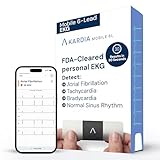
3. KardiaMobile 6L EKG Monitor, Medical-Grade, FDA-Cleared Heart Monitor, 6 Views of The Heart, Results in 30 Seconds, Unlimited Recordings, Works with Smartphones, HSA&FSA Eligible, Pocket-Size
Overview:
This FDA-cleared, pocket-sized ECG monitor delivers medical-grade 6-lead readings in 30 seconds. Compatible with smartphones via Bluetooth, it detects AFib, Bradycardia, Tachycardia, and Normal Sinus Rhythm. HSA/FSA-eligible, it’s designed for proactive heart health tracking without mandatory subscriptions.
What Makes It Stand Out:
Six-lead capability captures six times more data than single-lead devices, enabling nuanced arrhythmia detection. Its FDA clearance, cardiologist endorsements (350M+ EKGs recorded), and HSA/FSA eligibility bolster credibility. The free Kardia app supports unlimited recordings and doctor sharing—though advanced features require a paid KardiaCare subscription.
Value for Money:
Priced higher than non-cleared alternatives, its value lies in clinical-grade accuracy and portability. The optional subscription (for PVC/SVE detection or cardiologist reviews) is flexible, making it cost-effective for baseline monitoring. Ideal for those prioritizing reliability over budget.
Strengths and Weaknesses:
Strengths: FDA-cleared 6-lead accuracy; compact/portable; no mandatory subscription; HSA/FSA eligible; robust arrhythmia detection; trusted by cardiologists.
Weaknesses: Subscription needed for advanced features; Bluetooth pairing occasionally finicky; finger/knee placement less intuitive than wrist devices.
Bottom Line:
The gold standard for at-home ECG monitoring—highly recommended for users seeking clinically validated heart data, especially those with arrhythmia risks or under medical supervision.
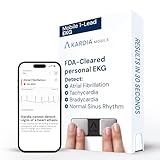
4. KardiaMobile 1-Lead EKG Monitor, Medical-Grade FDA-Cleared Personal Heart Monitor, Detects Normal, AFib & Arrhythmias, Unlimited Recordings, 30 Second Results, Works with most Smartphones, Pocket-size
Overview:
This FDA-cleared, single-lead ECG monitor fits in your pocket, delivering 30-second medical-grade readings via smartphone. It detects AFib, Bradycardia, Tachycardia, and Normal Sinus Rhythm—perfect for quick checks without subscriptions, cords, or Wi-Fi.
What Makes It Stand Out:
Its ultra-portability (under 1 oz) and simplicity shine: place fingers on sensors, wait 30 seconds, and get results. The free app enables unlimited storage and doctor sharing. While limited to one lead, it’s FDA-cleared for core arrhythmias, making it the most accessible entry point in Kardia’s lineup.
Value for Money:
As the most affordable FDA-cleared personal ECG, it offers exceptional value for basic rhythm screening. Though less detailed than 6-lead models, it outperforms smartwatch ECGs in accuracy. Optional KardiaCare adds value for ongoing cardiac care without locking core functionality behind paywalls.
Strengths and Weaknesses:
Strengths: FDA-cleared reliability; unmatched portability; subscription-free core features; HSA/FSA eligible; intuitive finger-sensor design.
Weaknesses: Single-lead data lacks depth for complex conditions; limited to four arrhythmia detections; no PC compatibility; subscription needed for advanced insights.
Bottom Line:
The best choice for travelers or beginners needing a no-fuss, clinically backed tool to spot common arrhythmias—ideal for AFib screening but insufficient for comprehensive cardiac assessment.
5. KardiaMobile 6L Max EKG Monitor, FDA-Cleared Heart Monitor, Medical-Grade Results in 30 Seconds, Unlimited Recordings, Works with Smartphones and Tablets, Includes One-Year KardiaCare Subscription

Overview:
This premium 6-lead ECG monitor includes a one-year KardiaCare subscription, delivering FDA-cleared 30-second readings with six-lead accuracy. It detects six arrhythmias (including PVCs and SVE) and enables automatic email sharing to doctors via the Kardia app.
What Makes It Stand Out:
The bundled KardiaCare subscription is key—it unlocks advanced arrhythmia detection (20+ types), quarterly cardiologist reviews, and automatic EKG emailing. Unlike the base 6L model, activation requires subscription enrollment (though the included year negates immediate cost), making it a turnkey clinical-grade solution.
Value for Money:
Priced at a premium, the included KardiaCare subscription (typically $99/year) adds significant value. For users wanting immediate access to cardiologist reviews and advanced analytics, it’s more economical than buying the 6L + subscription separately. Essential for high-risk patients needing expert oversight.
Strengths and Weaknesses:
Strengths: Comprehensive 6-lead data; subscription-inclusive value; cardiologist EKG reviews; automatic email sharing; detects nuanced arrhythmias (PVCs/SVE).
Weaknesses: Mandatory subscription activation (payment details requested); higher upfront cost; subscription lapses after one year; complex setup for non-tech users.
Bottom Line:
Highly recommended for users requiring clinical-depth insights and cardiologist validation—worth the investment if you’ll utilize KardiaCare features, but overkill for basic rhythm checks.
6. Monerr Portable ECG Monitor | Record and Store One-Lead ECG Signals | Monitor and Display Heart Rate for Home Health Care Use -White

Overview:
The Monerr Portable ECG Monitor is a budget-friendly, home-use device for adults to track basic heart metrics like heart rate, P-waves, and PR-intervals via Lead I ECG. It connects via Bluetooth to iOS/Android apps for unlimited data storage and sharing, powered by a rechargeable battery. Not intended for medical diagnosis or users with pacemakers.
What Makes It Stand Out:
Its standout features include zero subscription fees, comprehensive metric tracking (including QTc), and 30-second readings. The focus on user-friendly data sharing with healthcare providers and suitability for fitness enthusiasts or seniors seeking routine checks adds practical value.
Value for Money:
Priced competitively under $100, it offers strong value for casual monitoring compared to pricier alternatives. However, the one-lead limitation and lack of advanced arrhythmia detection make it less suitable for users needing clinical insights, positioning it as an entry-level option.
Strengths and Weaknesses:
Strengths: No subscription costs; easy Bluetooth pairing; portable; detailed metric display; ideal for basic home checks. Weaknesses: Requires skin prep (alcohol/salve) for accuracy; not for pacemaker users; lacks arrhythmia alerts; one-lead data limits diagnostic utility.
Bottom Line:
A reliable, affordable tool for proactive heart health tracking at home, but best for low-risk users seeking supplemental data—not a replacement for medical devices. Recommended for budget-conscious beginners.
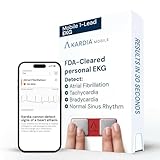
7. KardiaMobile 1-Lead EKG Monitor, Medical-Grade FDA-Cleared Personal Heart Monitor, Detects Normal, AFib & Arrhythmias, Unlimited Recordings, 30 Second Results, Works with most Smartphones, Pocket-size
Overview:
KardiaMobile is a pocket-sized, FDA-cleared EKG monitor that captures medical-grade single-lead readings in 30 seconds. It detects AFib, bradycardia, tachycardia, and normal rhythms, syncing directly with smartphones. No cords or Wi-Fi are needed, and it’s FSA/HSA-eligible.
What Makes It Stand Out:
As the #1 cardiologist-recommended brand (350M+ EKGs recorded), its speed, portability (<1 oz), and instant arrhythmia detection set it apart. The free app provides clear results and email sharing, while KardiaCare (paid) adds advanced analytics and doctor reviews.
Value for Money:
Priced at $99, it’s a premium but justifiable investment for frequent monitoring. The free tier covers essentials, though KardiaCare’s $119/year subscription is needed for full potential. Beats hospital visit costs for chronic AFib patients but overkill for casual users.
Strengths and Weaknesses:
Strengths: Ultra-portable; FDA-cleared accuracy; detects key arrhythmias; no setup complexity; trusted by professionals. Weaknesses: Subscription needed for full features; one-lead limits depth; occasional false positives in noisy environments.
Bottom Line:
Ideal for AFib patients or those with arrhythmia history. Its reliability and speed justify the cost, but casual users may prefer cheaper alternatives. Highly recommended for targeted heart rhythm monitoring.
8. Beurer Cardio Companion EKG Monitor - 3-Lead Portable ECG Machine, Detects Irregular Heart Rhythms, Fast Results in 30 Seconds, Bluetooth with App, Rechargeable Battery, FSA/HSA Eligible, ME75

Overview:
This German-engineered, FDA-cleared 3-lead ECG monitor delivers clinical-grade heart rhythm analysis in 30 seconds. It features a color display, Bluetooth app integration, and local storage for 100 readings. Designed for home use but excludes pacemaker users.
What Makes It Stand Out:
The 3-lead capability provides more detailed data than one-lead competitors, enhancing arrhythmia detection accuracy. Four measurement modes (hand-to-hand, wrist, etc.) and real-time irregular rhythm alerts offer flexibility, while German engineering signals reliability.
Value for Money:
At $150–$200, it’s pricier than one-lead models but justified by superior 3-lead diagnostics. The free app (optional) enables unlimited cloud storage, avoiding subscription fees. Excellent value for users prioritizing accuracy over portability.
Strengths and Weaknesses:
Strengths: 3-lead precision; bright color display; no subscription; multiple measurement options; robust build. Weaknesses: Bulky for pocket carry; USB-B charging (outdated); skin contact must avoid during use; limited app dependency for full features.
Bottom Line:
A top choice for medically conscious users needing detailed home ECGs. The 3-lead advantage outweighs minor portability flaws—recommended for those seeking hospital-like insights without subscriptions.
9. Livenpace 1-Lead Heart Health Monitor at Home, Portable 24 Hours Chest Lead Device with Free AI Analysis & PC Report, Rechargeable Recorder, HHM1

Overview:
Livenpace HHM1 is a 24-hour continuous chest-strap ECG recorder with AI analysis for 16 heart conditions. It stores 10 recordings (30 hours total), syncs via PC software for PDF reports, and requires no subscription. Targets users needing extended rhythm tracking.
What Makes It Stand Out:
All-day monitoring and AI-powered analysis of 16 arrhythmia categories differentiate it from spot-check devices. Automatic recording via chest strap and free PC software (no mobile app) cater to users prioritizing longitudinal data over instant results.
Value for Money:
Priced around $120, it offers unique 24-hour tracking at a fraction of Holter monitor costs. However, limited onboard storage (10 recordings) and PC-only software reduce convenience. Best value for intermittent 24-hour checks, not daily use.
Strengths and Weaknesses:
Strengths: 24-hour continuous monitoring; free AI analysis; no subscriptions; comfortable strap; detailed PC reports. Weaknesses: PC/Mac only (no mobile); low storage capacity; no real-time alerts; setup less intuitive than app-based rivals.
Bottom Line:
Niche appeal for users needing occasional extended monitoring. Avoid if you prefer mobile apps or daily spot checks—ideal for symptom-correlated 24-hour studies without recurring fees.
10. Eko CORE 500™ Digital Stethoscope — 40x Amplification, Active Noise Cancellation, 3-Lead ECG, FDA-Cleared AI with Eko+, Full-Color Display, Reimbursement Eligible — Silver, COR501

Overview:
The Eko CORE 500 merges a digital stethoscope with 3-lead ECG, targeting healthcare professionals. It features 40x amplification, noise cancellation, FDA-cleared AI for murmur/AFib detection, and a color display. Includes a 14-day Eko+ trial ($119.99/year after).
What Makes It Stand Out:
Its dual functionality—high-fidelity auscultation plus 3-lead ECG—is unmatched. Real-time waveform visualization, exam recording, and AI diagnostics (via Eko+) provide clinical depth. The built-in display and reimbursement eligibility cater to medical workflows.
Value for Money:
At $999, it’s a significant investment but justified for clinicians replacing traditional tools. The free basic app features (audio filters, recording) retain utility without Eko+, though AI requires the subscription. Cheaper than separate ECG/stethoscope purchases.
Strengths and Weaknesses:
Strengths: Integrated ECG/stethoscope; superior audio clarity; actionable AI insights; no Bluetooth needed for core functions; professional-grade build. Weaknesses: Prohibitively expensive for consumers; Eko+ subscription essential for AI; steep learning curve for non-clinicians.
Bottom Line:
A revolutionary tool for medical professionals, not home users. The clinical utility and AI justify the cost for clinics—but over-engineered for personal use. Strongly recommended for healthcare settings only.
Understanding ECG Technology and Its Patient Applications
What an ECG Actually Measures and Why It Matters
An electrocardiogram (ECG or EKG) records the electrical impulses generated by your heart muscle as it contracts and relaxes. This non-invasive test captures the timing and strength of these signals traveling through different heart chambers, creating a distinctive waveform pattern. Recognizing deviations from a normal rhythm – like atrial fibrillation, bradycardia, or tachycardia – is fundamental. For patients, this means translating subjective feelings like skipped beats or fluttering into objective data your doctor can analyze, significantly aiding in diagnosis and treatment planning for various cardiac conditions.
Single-Lead vs. Multi-Lead Recordings: Decoding the Difference
Most consumer devices utilize single-lead technology, typically capturing the electrical signal between two points (often fingertips or hand-to-chest placement). While excellent for detecting common arrhythmias like AFib, they provide a limited “snapshot” view. Multi-lead systems, often requiring more placement points or a chest strap, offer a broader perspective of the heart’s electrical activity from multiple angles, similar to a standard clinical 12-lead but simplified. Understanding this distinction is critical; single-lead suffices for basic rhythm checks, but specific diagnostic questions might necessitate the more comprehensive data multi-lead systems provide, though they are less common in personal use.
The Critical Role of FDA Clearance and Regulatory Standards
Not all heart monitors are created equal, especially regarding reliability. Prioritizing devices that have received formal clearance from regulatory bodies like the FDA (in the US) or CE marking (in Europe) is non-negotiable for medical-grade accuracy. This clearance signifies the device has undergone rigorous independent testing to prove its ability to reliably detect specific cardiac rhythms under defined conditions. Avoid novelty gadgets or “wellness” trackers making unverified heart rhythm claims; your cardiac data demands clinically validated technology you and your physician can trust.
Essential Features to Evaluate for Personal Use
Accuracy and Reliability: Beyond the Marketing Hype
The core value of any ECG device lies in its ability to produce consistent, correct readings. Look for clear documentation of clinical validation studies specific to the arrhythmias it claims to detect (e.g., AFib, bradycardia). Consider factors influencing real-world accuracy: how sensitive is it to minor hand movements? Does it require perfect skin contact? Does it clearly indicate when a recording is unusable due to poor signal? A device that frequently generates “noise” or false positives causes unnecessary anxiety and wastes valuable consultation time.
User Interface and Ease of Operation
When experiencing heart palpitations, simplicity is paramount. Evaluate the physical design: Is it intuitive to hold correctly? Are buttons large and responsive, especially for users with dexterity challenges? How clear and immediate is the on-device feedback – does it confirm a good recording instantly? The companion app interface is equally crucial; it should present the ECG trace clearly, allow easy timestamping of symptoms, and facilitate straightforward data sharing without complex navigation. Avoid overly technical jargon in the user experience.
Connectivity and Data Management Capabilities
Seamless data flow is essential for clinical utility. Assess how recordings are stored and shared: Does the device sync automatically via Bluetooth to a secure app? Can you easily email a PDF report directly to your doctor? Is there cloud storage with robust privacy protections? Consider long-term data trends – can the app show historical readings over weeks or months? Reliable connectivity ensures your critical symptom-triggered recordings reach your healthcare provider promptly and are integrated into your medical record.
Battery Life and Charging Practicality
Nothing defeats the purpose of an on-demand monitor like a dead battery during a symptomatic episode. Evaluate both the device’s battery life on a single charge and the recharging method. Does it use a common USB cable, or a proprietary charger you might not have handy? How quickly does it recharge? For infrequent users, a long standby time is vital; frequent users need a reasonable active usage duration between charges. Factor in the inconvenience of frequent recharging versus the anxiety of a potential power failure.
Practical Considerations for Daily Integration
Portability and Discreet Design Factors
Since you need the device when symptoms occur, its size and weight matter significantly. Will it fit comfortably in a pocket, purse, or even a wallet? Is it lightweight enough to carry effortlessly all day? Consider discretion too – some users prefer a device that doesn’t look overtly medical to avoid drawing attention during use, especially in public settings. Durability is also part of portability; can it withstand the occasional bump or drop in your bag?
Compatibility with Your Existing Tech Ecosystem
Your new ECG recorder needs to play nicely with your smartphone or tablet. Verify the companion app’s compatibility with your specific phone’s operating system (iOS or Android) and its version. Check if the app requires a specific minimum OS version that your device might not support. Also, consider storage space on your phone for the app and accumulated ECG data. A device incompatible with your primary tech tool renders its connectivity features useless.
Subscription Models and Long-Term Costs
Beware of hidden ongoing expenses. While the device itself has a purchase price, some manufacturers require mandatory subscription fees for app access, cloud storage, or advanced features like automatic rhythm analysis. Scrutinize the total cost of ownership over 1-2 years. Are there any fees for sharing reports with your doctor? Is the core functionality (recording and basic viewing) available without a subscription? Understand exactly what you pay for upfront versus ongoing.
Special Needs and Usage Scenarios
Features Beneficial for Elderly Users
For older adults, larger buttons, high-contrast displays, simplified app interfaces with bigger text, and voice-guided instructions can be game-changers. Consider devices with minimal setup steps after the initial configuration. Reliable Bluetooth connectivity that doesn’t frequently drop is crucial, as is the option for family members or caregivers to potentially access data (with appropriate permissions) if the user needs assistance operating the device or sharing results.
Travel-Friendly Device Characteristics
Frequent travelers need compactness and universal power compatibility (look for USB-C charging). Check if the device operates effectively across different electrical standards worldwide. Consider battery life for long journeys without charging access. Some regions might have specific regulatory requirements for medical devices; verify if the device you choose is approved for use in your common travel destinations to avoid confiscation at security.
Managing Intermittent Symptoms Effectively
The primary strength of personal ECG devices is capturing fleeting arrhythmias. Evaluate how quickly the device powers on and is ready to record – seconds matter during a sudden symptom. Does it have a dedicated, easily accessible button for instant recording? How long must you hold the correct position? Devices requiring complex setup during an episode are far less practical for diagnosing paroxysmal (intermittent) conditions like sporadic AFib.
Setting Up and Using Your Device Correctly
Optimizing Placement for Clear Readings
Proper sensor placement is fundamental for signal quality. Meticulously follow the manufacturer’s instructions – fingertip placement pressure, hand positioning, or chest electrode placement significantly impacts results. Ensure clean, dry skin contact; lotions or excessive hair can cause interference. Practice the correct technique when not symptomatic to build muscle memory, so you can execute it flawlessly when symptoms strike unexpectedly.
Interpreting Basic Results and Recognizing Limitations
While devices often provide preliminary rhythm labels (e.g., “Sinus Rhythm,” “Possible AFib”), these are screening tools, not diagnostic. Understand that the device might occasionally misclassify rhythms or fail to detect an abnormality (false negative). The primary value is providing your doctor with a clear trace to interpret. Never self-diagnose or alter medication based solely on the device’s preliminary reading; always consult your healthcare provider with the recorded data.
Integrating Data into Your Healthcare Routine
Maximize the benefit by establishing a simple routine: record immediately when symptoms occur, note the time and activity in the app, and share relevant recordings proactively with your doctor before your next appointment. Don’t wait for annual check-ups; timely data sharing allows for quicker assessment. Discuss with your physician how often they want you to send recordings and the preferred method (email, patient portal, printed report).
Understanding the Data and Working with Your Doctor
What Your Doctor Needs From Your Recordings
Provide context alongside the ECG trace. Note the exact time symptoms started, what you were doing (resting, exercising, stressed), symptom duration, and description (racing, skipping, fluttering, dizziness). This contextual information, paired with the electrical data, gives your doctor the complete picture needed for accurate correlation. A trace without symptom timing is far less useful for diagnosing intermittent issues.
Distinguishing Screening from Diagnosis
It’s vital to grasp that personal ECG devices are screening aids. They excel at capturing rhythm during symptoms to suggest the presence of an arrhythmia, prompting further clinical evaluation. They do not replace comprehensive diagnostic tests like a full 12-lead ECG in a clinic, a Holter monitor, or an event monitor ordered by your cardiologist, which provide extended, multi-angle data under controlled conditions for definitive diagnosis and treatment planning.
Building a Collaborative Monitoring Strategy
The most effective approach uses the personal device as part of a broader heart health plan developed with your doctor. Discuss why you want to use one, what specific symptoms you’re targeting, and how the data will be used. Your doctor might recommend specific usage patterns or confirm if a personal device is the right tool versus a prescription monitor. This collaboration ensures the data collected directly addresses your clinical needs.
Frequently Asked Questions
Frequently Asked Questions
How often should I use my personal ECG device if I feel fine? Only use the device when experiencing specific cardiac symptoms like palpitations, dizziness, or chest discomfort. Routine recording without symptoms generally provides little clinical value and can lead to unnecessary anxiety over normal variations.
Can a personal ECG device detect a heart attack? No. Personal single-lead ECG devices are designed to detect rhythm abnormalities (arrhythmias), not the acute changes in heart muscle blood flow that signal a heart attack (myocardial infarction). Chest pain or pressure requires immediate emergency medical attention, not device use.
Is the data from my personal ECG secure and private? Reputable, FDA-cleared devices prioritize data security with encryption and compliance with health privacy laws (like HIPAA in the US). Always review the manufacturer’s privacy policy regarding data storage, transmission, and sharing practices before purchase and use.
Do I need a prescription to buy a personal ECG monitor? Most single-lead personal ECG devices for consumer purchase do not require a prescription. However, multi-lead systems or devices intended for specific medical conditions might be prescription-only. Check the regulatory status and sales requirements for the specific device type.
How accurate are the automatic rhythm interpretations on the device? Automatic interpretations are screening aids with varying accuracy. They can produce false positives (indicating a problem when none exists) or false negatives (missing an actual arrhythmia). Always consider the preliminary result as a prompt to share the raw trace with your doctor for professional interpretation.
Can I use the device if I have a pacemaker or ICD? Some devices may be compatible, but others can misinterpret the electrical signals from implanted devices. Consult your cardiologist before purchasing or using a personal ECG monitor if you have a pacemaker, ICD, or other implanted cardiac device.
Will my insurance cover the cost of a personal ECG device? Typically, insurance (including Medicare) does not cover over-the-counter personal ECG devices purchased directly by consumers. Coverage is usually limited to prescription monitors ordered and managed by a healthcare provider for specific diagnosed conditions.
How long should I record each time I have symptoms? Follow the device’s specific instructions, but generally, record for the full duration recommended (often 30 seconds to 1 minute), even if symptoms stop sooner. Capturing the onset, peak, and resolution of the rhythm provides the most valuable data for your doctor.
Can stress or anxiety cause abnormal readings on the device? Yes. Significant stress or anxiety can trigger temporary, benign heart rhythm changes (like sinus tachycardia) that the device will accurately record. Context about your emotional state when recording is crucial for your doctor to differentiate between physiological stress responses and true pathological arrhythmias.
What should I do if the device shows an abnormal result? Remain calm. Most abnormal readings require medical evaluation but are not emergencies. Note your symptoms and time, save the recording, and contact your doctor’s office during business hours to discuss the result and determine the next steps. Seek emergency care only for severe, ongoing symptoms like chest pain, severe shortness of breath, or fainting.
See Also
- 10 Game-Changing ECG Recording Devices for Telehealth Patients in 2026
- The 10 Most Revolutionary ECG Recording Devices of 2026
- 10 Game-Changing ECG Recording Devices for Remote Patient Monitoring in 2026
- 10 Premium Wearable ECG Monitors for Cardiologists’ Home Patients (Worth the Investment)
- 10 Premium Wearable ECG Monitors for Cardiologists and Patients (Worth the Investment)