Table of Contents
Conquering 100-mile trails under a relentless sun, navigating technical singletrack in the dead of night, or pushing through the final, grueling miles of an unsupported mountain route—ultramarathoning isn’t just running; it’s a profound test of human endurance where every decision carries weight. In this demanding world, your gear isn’t just equipment; it’s your lifeline, your navigator, and your silent coach. Among all the essentials stuffed into your hydration vest, the GPS running watch strapped to your wrist plays an outsized role, transforming from a simple timekeeper into a critical survival and performance tool. Choosing the wrong one can mean missed turns in the fog, a dead display when you need navigation most, or simply the crushing disappointment of a battery dying miles from the finish. For ultrarunners, this tiny device must be engineered for extremes far beyond the Sunday 10K.
The unique demands of ultra-distance trail running—extreme battery drain from constant GPS use, treacherous terrain requiring precise navigation, unpredictable weather battering your gear, and the sheer physical toll on your body—demand a watch built differently. Forget the sleek, feature-laden smartwatches designed for the gym or city streets; ultrarunners need rugged companions focused on reliability, longevity, and core performance metrics that matter when every step counts. It’s not about app ecosystems or payment systems; it’s about knowing your elevation gain is accurate when the trail vanishes, trusting your location when the map is confusing, and having the power to outlast the longest race. Understanding the specific features that translate directly to safety, efficiency, and confidence on the trail is the only way to cut through the marketing noise and find the tool that will truly serve you when the miles stretch endlessly ahead.
Top 10 GPS Running Watches for Ultramarathoners
Detailed Product Reviews
1. Garmin Forerunner 55, GPS Running Watch with Daily Suggested Workouts, Up to 2 Weeks of Battery Life, Black - 010-02562-00

Overview:
The Garmin Forerunner 55 is a streamlined GPS running watch targeting beginners and casual runners seeking reliable performance metrics without overwhelming complexity. It focuses on core running dynamics, daily training guidance, and exceptional battery life in a lightweight, unobtrusive design.
What Makes It Stand Out:
Garmin’s trusted GPS accuracy and wrist-based heart rate monitoring form the foundation, but the standout feature is PacePro. This intelligent pacing tool provides GPS-based guidance for race strategy on open courses. Daily suggested workouts adapt to your fitness level, while the 20-hour GPS battery life and 2-week smartwatch endurance outperform many competitors. Extensive sport profiles, including niche activities like breathwork, add versatility.
Value for Money:
Priced mid-range, it offers exceptional value by prioritizing proven Garmin reliability and essential running analytics over smartwatch frills. While cheaper alternatives exist, they often compromise on GPS accuracy, battery longevity, or software maturity. For runners focused on improvement without splurging on advanced metrics, it’s a cost-effective entry into serious training tools.
Strengths and Weaknesses:
Strengths: Outstanding battery life, intuitive interface, accurate GPS/HR tracking, valuable PacePro guidance, durable build.
Weaknesses: Basic AMOLED display (monochrome), limited third-party app integration, no music storage, training metrics less deep than premium Garmin models.
Bottom Line:
An ideal first GPS running watch for committed beginners seeking Garmin’s trusted ecosystem, smart daily coaching, and marathon-ready battery life. Skip if you need advanced recovery analytics or smartphone-like features.
2. afoloery GPS Running Watch, Rugged Military Smart Watch, IP68, Long Battery Life, Multi-GNSS Support, Tracback Routing and More, Training Metrics and Recovery Insights, Answer/Make Call

Overview:
The afoloery GPS Running Watch aggressively markets itself as a rugged, military-grade smartwatch packed with features like multi-GNSS tracking, 100+ sports modes, and call functionality. It targets budget-conscious outdoor enthusiasts seeking durability and extensive specs on a tight budget.
What Makes It Stand Out:
Its primary selling point is the claimed “military-grade” durability (MIL-STD-810H), suggesting resilience against extreme temps, shocks, and elements. Dual-band GPS (L1/L5) across six satellite systems promises superior accuracy, while the 1.75-inch AMOLED display and built-in call answering differentiate it from basic trackers. The 100+ sport modes and comprehensive health monitoring (including sleep staging) add perceived value.
Value for Money:
Positioned as a premium-features-for-less option, it appears highly cost-effective on paper. However, the lack of brand reputation and independent verification of military specs or GPS accuracy raises questions. It’s compelling for casual users prioritizing features over proven reliability, but likely falls short of Garmin/Suunto equivalents in real-world performance consistency.
Strengths and Weaknesses:
Strengths: Aggressive feature set (calls, AMOLED, multi-GNSS), robust durability claims, extensive sport modes, bright display.
Weaknesses: Unverified military claims, potential software/app instability, call quality likely poor without phone proximity, questionable long-term support.
Bottom Line:
A high-spec budget option for feature hunters, but tread cautiously due to unproven durability and accuracy claims. Better suited for casual use than serious training where data reliability is critical.
3. afoloery GPS Running Watch and Outdoor Smartwatch, AMOLED Display, Built-in LED Flashlight,Multisport GPS Smartwatch,5ATM Waterproof,Fitness Tracker up to 15 Days of Battery

Overview:
This afoloery model emphasizes outdoor versatility with a built-in LED flashlight, 5ATM waterproofing, and 15-day battery life. It positions itself as an all-in-one multisport and adventure companion, blending fitness tracking with practical outdoor tools.
What Makes It Stand Out:
The integrated LED flashlight is a rare and genuinely useful feature for trail runners or campers. Combined with dual-satellite GPS (GPS+BeiDou), a compass, altimeter, and 5ATM rating (suitable for swimming), it caters specifically to outdoor adventurers. Continuous health monitoring (SpO2, stress, HRV) and female health tracking further broaden its appeal beyond pure running.
Value for Money:
Offering flashlight functionality and strong outdoor specs at a budget price creates solid perceived value. The 15-day battery life competes well with premium brands. However, like its sibling model, the afoloery brand’s lack of ecosystem maturity (vs. Garmin Connect) and unverified sensor accuracy diminish its long-term utility for data-driven athletes, despite the attractive spec sheet.
Strengths and Weaknesses:
Strengths: Unique LED flashlight, strong outdoor specs (5ATM, altimeter), 15-day battery, broad health metrics, flashlight.
Weaknesses: Questionable GPS/health data accuracy, flashlight likely low-power, app experience potentially clunky, brand reliability concerns.
Bottom Line:
A compelling budget pick for casual outdoor enthusiasts needing basic tracking and the novelty of a flashlight, but insufficiently precise or reliable for dedicated runners or serious mountaineers.
4. mibro GS Active2 Running GPS Smartwatch with 46mm AMOLED, Lightweight and 15-Day Battery, Supports Training Guidance and Dual-Band GNSS, 150+ Sport Modes (Dark Gray)

Overview:
The Mibro GS Active2 focuses on lightweight comfort and data-driven running guidance. Its 39g design, dual-band GNSS, and Mibro Coach training plans target runners who prioritize minimal weight and actionable performance insights without breaking the bank.
What Makes It Stand Out:
Extreme lightness (39g) is its crowning achievement, eliminating wrist fatigue during long runs. Dual-frequency positioning ensures fast, accurate GPS tracking, while Mibro Coach provides adaptive, goal-based training plans (5K to half-marathon) with VO₂ Max analysis. The 150+ sport modes and 15-day battery life add significant versatility for its size and price point.
Value for Money:
It delivers exceptional value for runners seeking a featherlight, capable training partner. The combination of dual-band GNSS, structured coaching, and marathon-friendly battery life undercuts competitors like Garmin by a significant margin. While lacking some premium analytics, it covers 90% of core running needs at a fraction of the cost.
Strengths and Weaknesses:
Strengths: Unbeatable lightweight design, accurate dual-band GPS, excellent Mibro Coach training plans, strong 15-day battery, versatile sport modes.
Weaknesses: Limited third-party app integration, recovery insights less detailed than Garmin, build quality may not match premium brands.
Bottom Line:
A top-tier budget running watch that excels in comfort and intelligent training guidance. Highly recommended for runners prioritizing weight and structured plans over ecosystem depth.
5. EZON GPS Running Watch with Distance Pace Alarm and Calorie Counter and Stopwatch for Men T031B01 Black

Overview:
The EZON T031B01 is a no-frills, dedicated sports watch focused purely on essential running metrics. Eschewing smart features, it delivers straightforward GPS tracking, stopwatch functionality, and basic fitness data for runners who value simplicity and affordability.
What Makes It Stand Out:
Its core strength is laser focus on fundamental running tools: precise GPS distance/pace tracking, customizable pace alarms, and a robust 99-hour stopwatch with lap memory (50 laps). GPS auto time sync and personalized profile calibration (height/weight/age) enhance basic data accuracy without unnecessary complexity or smartphone dependency.
Value for Money:
As one of the most affordable GPS watches here, it offers unbeatable value for runners needing only core timing and distance metrics. It lacks battery-hungry smart features, ensuring reliable function for pure training sessions. While alternatives offer more, the EZON is ideal for budget-conscious athletes or those overwhelmed by feature-rich watches.
Strengths and Weaknesses:
Strengths: Extremely affordable, simple and intuitive interface, reliable basic GPS tracking, excellent stopwatch functionality, long battery life for core use.
Weaknesses: No smart features (calls, apps), limited data storage (10 workouts), basic monochrome display, no advanced metrics (VO₂ Max, recovery).
Bottom Line:
The perfect minimalist GPS watch for beginners or purists who want accurate pace/distance tracking without distractions or high cost. Avoid if you seek advanced analytics or smart connectivity.
6. Garmin Forerunner 55, GPS Running Watch with Daily Suggested Workouts, Up to 2 Weeks of Battery Life, White

Overview: The Garmin Forerunner 55 is a dedicated running smartwatch targeting beginners and casual runners, offering core performance metrics in a streamlined package. It tracks wrist-based heart rate (non-medical) and leverages GPS for accurate distance, pace, and route mapping during runs. What Makes It Stand Out: Its standout feature is the Daily Suggested Workout, which intelligently tailors run plans based on your fitness level and recent activity. The exceptional 2-week smartwatch battery life and 20-hour GPS runtime eliminate constant charging worries. PacePro guidance and race time predictions provide valuable strategic insights beyond basic tracking. Value for Money: Positioned as an entry-level running watch, it delivers significant value by including Garmin’s trusted training ecosystem at a lower cost than advanced Forerunner models. While lacking music storage or advanced recovery metrics, it covers essential running analytics better than most generic smartwatches at this price point. Strengths and Weaknesses: Strengths: Long battery life; intuitive training guidance; reliable GPS; lightweight comfort; diverse activity profiles. Weaknesses: Basic monochrome display; no onboard music; limited smart features; optical HR less accurate during high-intensity intervals. Bottom Line: An excellent, no-fuss running companion for newcomers seeking reliable performance tracking and smart training advice without overspending. Ideal for runners prioritizing function over smartwatch frills.
7. Garmin Forerunner 55, GPS Running Watch with Daily Suggested Workouts, Up to 2 Weeks of Battery Life, Aqua
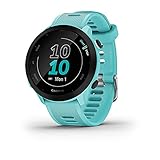
Overview: This aqua-hued Garmin Forerunner 55 variant offers identical core functionality to the white model, focusing squarely on accessible running metrics. It uses GPS for precise outdoor run tracking and wrist-based heart rate monitoring (non-medical), wrapped in a sporty, color-accented design. What Makes It Stand Out: The Daily Suggested Workout feature dynamically adjusts your training plan based on daily readiness, a rarity in this price tier. Combined with up to 20 hours of GPS battery life and intuitive PacePro pacing guidance, it empowers runners to train smarter. The aqua color provides a fresh aesthetic option without sacrificing performance. Value for Money: It justifies its cost by delivering Garmin’s proven running analytics platform affordably. Compared to fitness bands or basic smartwatches, it offers superior run-specific insights and training tools, making it a cost-effective upgrade for serious beginners. Strengths and Weaknesses: Strengths: Excellent battery longevity; actionable training recommendations; comfortable daily wear; robust GPS accuracy; versatile sport modes. Weaknesses: Display lacks vibrancy; no music playback; basic smart notifications; HR accuracy dips during sprints. Bottom Line: A top-tier entry-level running watch. The aqua color adds style, but the real value lies in its intelligent training features and reliability, making it highly recommended for runners starting their fitness journey.
8. Military GPS Smart Watch: 1.43” AMOLED Always On Display, Built-In GPS, Compass, Altimeter, Barometer, Fitness/Path Tracker, BT Call, 150+ Sports, IP69K, Voice Assist, Long Battery Life, Android/iOS

Overview: The CyberX military smartwatch packs an AMOLED display, multi-band GPS, and extensive outdoor sensors into a rugged package. It targets adventurers with navigation tools (altimeter, barometer, compass) and broad activity tracking, alongside basic smart features like Bluetooth calls. What Makes It Stand Out: Multi-band GPS (GPS/BDS/GLONASS/GALILEO) ensures exceptional location accuracy in challenging terrain. The 1.43" sharp AMOLED AOD screen and claimed IP69K rating (unusually high) promise visibility and durability. Support for 150+ sports and detailed post-workout analysis via GloryFitPro app adds versatility. Value for Money: Competitively priced for its feature set, it undercuts premium brands while offering specialized outdoor tools. However, the unverified “military” claims and reliance on a third-party app slightly diminish value compared to more established ecosystems like Garmin. Strengths and Weaknesses: Strengths: Precise multi-band GPS; vibrant, readable display; comprehensive navigation suite; extensive sport modes; long battery life. Weaknesses: IP69K claim likely overstated; app experience may lack polish; blood pressure monitoring accuracy questionable; no onboard music storage. Bottom Line: A compelling, feature-rich option for outdoor enthusiasts needing robust GPS and sensors at a mid-range price, though verify ruggedness claims. Best for users prioritizing navigation over smartwatch refinement.
9. PUBU Smart Watch for Men, Built-in GPS with Map(Answer/Make Call/Text), AI Smartwatch for Android Phones/iPhone, 100+ Sport Mode Fitness Tracker with Health/Sleep Monitor, Compass/Barometer(2 Bands)

Overview: The PUBU smartwatch combines built-in GPS with offline map functionality, Bluetooth calling, and AI features, aiming to be an all-in-one outdoor and communication tool for Android and iOS users. What Makes It Stand Out: Its standout feature is the offline map support with route planning sans phone signal—rare in this segment. AI integration enables voice-to-text replies, AI watch face generation, and translation. The inclusion of compass/barometer and 100+ sports modes broadens its appeal beyond typical fitness trackers. Value for Money: Offers exceptional feature density (GPS maps, calls, AI) at a budget price. While the build and sensor accuracy may not match premium brands, the sheer utility—especially the offline navigation—provides strong value for casual adventurers and value seekers. Strengths and Weaknesses: Strengths: Genuine offline maps; versatile Bluetooth calling/texting; innovative AI tools; large battery; dual straps included. Weaknesses: Blood pressure monitoring unreliable; map interface likely basic; app ecosystem less mature; GPS accuracy may lag behind dedicated devices. Bottom Line: A remarkably feature-packed budget smartwatch, especially valuable for its offline maps and communication features. Ideal for users needing navigation and calls on a trail without constant phone reliance, accepting some sensor trade-offs.
10. Military Smart Watches Built-in GPS, 170+ Sport Modes for Men with Flashlight, Smartwatch for Android Phones and iPhone, 1.43" AMOLED Screen Bluetooth Call Compass Altimeter (Black & Orange (2 Bands))

Overview: The Tiwain military smartwatch emphasizes ruggedness with a built-in LED flashlight, 170+ sports modes, and core navigation tools (GPS, compass, altimeter), targeting outdoor users needing durability and basic health tracking. What Makes It Stand Out: The integrated 20-meter LED flashlight is a unique, practical tool for night hikes or emergencies. Military-grade durability claims (MIL-STD-810H) and six-satellite GPS positioning aim for reliability in harsh conditions. The AMOLED screen ensures readability outdoors. Value for Money: Delivers niche features like the flashlight and high sport mode count at a mid-range cost. It competes well on utility for outdoor tasks, though health metrics (like blood pressure) lack clinical validation, slightly reducing value for pure fitness focus. Strengths and Weaknesses: Strengths: Practical flashlight; robust build quality; bright AMOLED display; extensive sport tracking; multi-satellite GPS. Weaknesses: Blood pressure monitoring inaccurate; notifications receive-only; flashlight drains battery; altimeter/barometer less precise than dedicated tools. Bottom Line: A solid choice for outdoor enthusiasts prioritizing ruggedness and the unique flashlight feature. Best suited for adventurers needing basic navigation and emergency light, not for those seeking medical-grade health data.
Core Performance Pillars for Ultra-Distance Running
Uncompromising Battery Life: The Non-Negotiable Foundation
For ultrarunners, battery life isn’t a nice-to-have spec; it’s the absolute baseline requirement. Imagine your display fading to black during hour 30 of a 100-miler, leaving you without navigation, pacing data, or emergency location tracking. Real-world ultra battery performance depends heavily on usage: constant GPS tracking, elevation sensors, heart rate monitoring, and communication features drain power rapidly. Look for devices that clearly state battery life under ultra-specific conditions (e.g., “GPS mode with music” or “multi-band GNSS enabled”). True ultra-focused watches often offer extended battery modes that disable non-essential features like the optical heart rate sensor or continuous elevation tracking to maximize runtime, sometimes stretching beyond 100 hours.
Multi-Band GNSS and Advanced Satellite Systems: Pinpoint Accuracy in the Wild
Relying solely on GPS signals is risky in deep canyons, dense forests, or under heavy cloud cover—common ultra scenarios where signals bounce or vanish. Multi-band GNSS technology (utilizing multiple frequency bands from GPS, GLONASS, Galileo, and BeiDou constellations) dramatically improves signal acquisition speed and positional accuracy, especially in challenging terrain. This translates directly to fewer missed turns on intricate trail networks, more reliable distance and pace calculations on winding paths, and crucially, a more precise location for emergency services if needed. Don’t overlook the importance of a robust antenna design within the watch itself; it’s the hardware component that physically captures those vital satellite signals.
Intelligent Power Management: Extending Your Lifeline Strategically
Beyond raw battery capacity, how the watch manages that power is critical. Sophisticated power management systems allow runners to tailor functionality to the specific stage of their race or training. This might mean enabling full multi-band GNSS and heart rate monitoring for a critical navigation section, then switching to a “battery saver” mode that uses only basic GPS and disables the optical sensor for the next long, familiar stretch. Some advanced systems even learn your typical usage patterns and suggest optimal settings. The ability to dynamically adjust settings on the fly—without stopping to fumble with complex menus—is a game-changer for preserving battery during the critical final hours.
Essential Navigation and Trail-Specific Features
Comprehensive Topographic Mapping and Route Following
A simple breadcrumb trail isn’t enough for complex ultra routes. Pre-loaded, detailed topographic maps showing contour lines, water sources, trail junctions, and elevation profiles are essential for situational awareness. The ability to easily load custom GPX routes (often created from race organizers or mapping software) and have the watch actively guide you along them with clear turn prompts and “off-course” warnings is non-negotiable. Look for intuitive interfaces that allow quick zooming, panning, and accessing map details even with cold or gloved hands. Screen readability in direct sunlight is equally vital—high-resolution, transflective displays that remain visible without maxing out brightness save precious battery.
Real-Time Elevation and Grade Metrics: Understanding the Terrain’s Toll
Accurate elevation data is paramount for pacing strategy and safety on mountainous ultras. Barometric altimeters provide far more precise and responsive elevation readings than GPS-derived data alone, crucial for tracking cumulative gain/loss and understanding the true difficulty of the upcoming climb or descent. Advanced metrics like current grade percentage (%) help runners adjust effort in real-time—knowing a sustained 15% climb is approaching allows for smarter energy conservation. Verify the device uses a barometric sensor, not just GPS altitude, and check reviews for accuracy consistency, especially during rapid weather changes which can affect barometric readings.
Weather Insights and Storm Alerts: Staying Ahead of the Elements
Ultrarunners are at the mercy of the elements for extended periods. While not a replacement for proper pre-race forecasting, watches with access to on-device or connected weather services provide critical real-time updates. Features like current temperature, wind speed/direction, and crucially, lightning or severe storm alerts delivered directly to your wrist can be lifesavers, allowing you to seek shelter or adjust your route proactively. Ensure the method of receiving these alerts (via paired phone or cellular connection on the watch itself) aligns with your typical race or training environment, as connectivity can be spotty in remote areas.
Durability, Comfort, and Physical Resilience
Military-Grade Toughness and Weatherproofing
Ultrarunning exposes gear to relentless punishment: submersion in streams, impacts against rocks, extreme temperature swings, and constant exposure to mud, dust, and sweat. Watches must meet rigorous standards like MIL-STD-810H for shock, thermal, and water resistance (typically rated to 100m). This isn’t just about surviving a dunk; it’s about enduring years of abuse without cracked screens, leaking seals, or malfunctioning buttons. Corrosion-resistant materials for the case and bezel are essential for longevity, especially if running near saltwater or in high-humidity environments. Don’t underestimate the importance of physical button controls alongside touchscreens—buttons work reliably with wet, muddy, or gloved fingers when touchscreens fail.
Optimized Weight and Ergonomic Design for All-Day Wear
Carrying unnecessary weight becomes noticeable over 50, 70, or 100 miles. While ruggedness is key, excessive bulk adds fatigue. Seek a balance: a sturdy titanium or reinforced polymer case that minimizes grams without sacrificing durability. The watch should sit low and snug on the wrist to prevent snagging on vegetation or causing chafing during repetitive arm swings. Strap comfort is equally critical; quick-drying, antimicrobial silicone or woven nylon straps that won’t absorb water weight or cause irritation over hours are ideal. A slightly smaller footprint can also enhance comfort without sacrificing screen readability for core data.
Screen Visibility Under Any Condition
From the blinding glare of high-altitude sun to the dim twilight of a forest canopy or the inky blackness of headlamp beams at 3 AM, your display must be instantly readable. Transflective screens (which use ambient light rather than just a backlight) are superior for sunlight visibility without draining the battery. High maximum brightness levels are necessary, but true ultra watches optimize this with automatic adjustments. Consider screen resolution and layout—clear, high-contrast fonts and the ability to customize data fields ensure you can glance at your pace, elevation, or battery percentage in a fraction of a second without squinting or stopping.
Physiological Monitoring and Recovery Insights
Reliable Heart Rate Monitoring in Dynamic Conditions
Optical heart rate sensors on the wrist face challenges during trail running: rapid changes in wrist position, varying pressure from terrain, and extreme temperatures can cause inaccuracies. Look for watches employing advanced sensor technology (like multi-path LED arrays and sophisticated motion artifact filtering) specifically tuned for running dynamics. While chest straps remain the gold standard for absolute precision, a high-quality optical sensor that provides trend data reliably (showing if your effort is increasing or decreasing) is invaluable for pacing on long climbs or during heat stress. Understand the limitations—don’t expect lab-grade accuracy on technical descents.
Advanced Recovery and Readiness Metrics
Ultramarathons place extraordinary stress on the body. Watches that go beyond simple sleep tracking to provide metrics like Training Load Focus, Body Battery energy monitoring, or Recovery Time estimates help runners make smarter decisions about when to push hard and when essential rest is needed. These features analyze heart rate variability (HRV), sleep quality, activity levels, and stress indicators to offer a holistic view of physiological readiness. While not infallible, used as one data point among others (how you feel, muscle soreness), they provide objective insights to prevent overtraining and optimize tapering before a major event.
Hydration and Environmental Stress Tracking
Managing hydration and core temperature is critical for avoiding dangerous conditions like hyponatremia or heatstroke during long races. Some advanced devices estimate sweat loss based on activity, duration, and environmental data (like temperature and humidity from the watch’s sensors or connected weather services), offering personalized hydration reminders. While not a direct replacement for listening to your body and established hydration plans, this data provides an additional layer of awareness. Similarly, tracking how environmental heat or cold impacts your perceived effort and heart rate helps in adjusting pace and gear choices proactively.
Connectivity, Data Management, and Race Support
Robust Trail Incident Detection and Assistance
Safety is paramount when running alone in remote locations for extended periods. Automatic incident detection that uses motion sensors to identify a potential fall or prolonged lack of movement, then triggers an alert to emergency contacts with your location, is a vital feature. Ensure the system allows for customization (e.g., sensitivity settings to avoid false alarms on technical trails) and understand the communication method required (typically needing a paired smartphone with cellular service, or an LTE-enabled watch). The peace of mind knowing help can be summoned if you’re incapacitated is invaluable.
Seamless Data Syncing and Post-Run Analysis
The value of the data collected during training and racing is only realized through effective analysis. A watch ecosystem that syncs reliably and quickly to a comprehensive training platform is essential. Look for platforms that allow deep dives into your ultra-specific metrics: elevation profile analysis alongside heart rate and pace, segment comparisons on repeated trails, detailed recovery timelines, and the ability to easily share routes or data with coaches. Smooth integration with third-party apps (like Strava or training log software) ensures your data isn’t siloed.
Live Tracking for Crew and Family Engagement
For supported ultras, the ability for your crew or family to follow your progress in near real-time via live tracking significantly boosts morale and logistical support. Check the reliability and update frequency of the live tracking feature, and ensure it doesn’t excessively drain the watch battery. Some systems allow followers to see your current pace, distance covered, and even send pre-set encouragement messages directly to your watch, providing a powerful psychological boost during tough sections.
Making Your Informed Choice
Aligning Features with Your Specific Ultra Discipline
Not all ultras are created equal. A fast, well-marked 50k on forest trails has different demands than a rugged, self-supported 200-mile mountain route. Honestly assess your typical races: Do you need extreme battery life above all else? Is complex navigation your biggest challenge? Are you often in areas with zero phone signal, making satellite communication critical? Prioritize the features that solve your most pressing problems. A watch overloaded with features you’ll never use adds unnecessary cost and complexity; focus on the core capabilities that directly enhance your safety and performance for the distances and terrains you tackle.
Future-Proofing Through Software Updates and Ecosystem
Technology evolves, and your watch should grow with you. Choose a platform known for regular, meaningful firmware updates that add new features, improve accuracy, or extend battery life over time. Consider the health of the supporting ecosystem: Is the companion app actively developed? Does the company have a track record of long-term support for its devices? A watch with a strong ecosystem ensures your investment remains valuable for years, potentially adapting to new ultra-running challenges or data analysis needs that emerge.
Frequently Asked Questions
How critical is multi-band GNSS for trail ultramarathons compared to standard GPS?
Multi-band GNSS is significantly more critical for trail ultras due to the prevalence of signal-challenging environments like deep valleys, dense forests, and urban canyons often found on point-to-point routes. It provides faster signal acquisition, greater positional accuracy (often within 3-5 meters vs. 10+ for standard GPS), and much more reliable tracking on winding singletrack, directly reducing the risk of getting lost.
Can I rely solely on the watch’s battery life estimates for a 100-mile race?
No, you should never rely solely on the manufacturer’s battery life estimate for an ultra. These are typically measured under ideal lab conditions. Always conduct real-world testing during long training runs with your intended settings (GPS mode, HR monitoring, etc.). Factor in variables like cold temperatures (which reduce battery capacity) and add a significant safety margin (e.g., if the estimate is 50 hours for your settings, assume 40 hours max in race conditions).
Are topographic maps on the watch necessary if I have a physical map and compass?
While physical maps and compass skills are essential backups and should never be abandoned, pre-loaded topographic maps on your watch provide immediate, dynamic situational awareness that a static paper map cannot. They show your exact real-time location on the trail, track your progress, and provide turn-by-turn guidance, significantly reducing cognitive load and navigation errors during fatigue, especially in complex or poorly marked sections.
Do optical heart rate monitors work accurately enough for pacing during ultras?
Modern optical sensors can provide useful trend data for pacing during ultras, showing if your effort is increasing or decreasing relative to your fitness level. However, they are less accurate during rapid changes in terrain (steep climbs/descents) or extreme temperatures. Don’t treat the number as absolute truth; focus on the relative changes and how you feel. For critical pacing on technical sections, perceived exertion often trumps the HR number.
How much does screen readability impact safety and performance on long runs?
Poor screen readability is a major safety and performance hazard. Struggling to see your navigation cues, battery level, or pace in bright sun or low light forces you to stop frequently, increasing fatigue and the risk of missing critical turns. It also causes unnecessary stress. A transflective display with high maximum brightness and excellent contrast is a non-negotiable safety feature for ultras, ensuring instant data access without stopping.
Are live tracking features worth the potential battery drain during a race?
For supported ultras with crew, live tracking is often worth a moderate battery drain for the significant safety and logistical benefits. It allows your crew to anticipate your arrival at aid stations, provide targeted encouragement, and offer critical updates. However, adjust the update frequency to balance battery life (e.g., 2-5 minute intervals instead of 1-minute); constant high-frequency updates can drain 10-20% of battery over 24 hours.
What’s the most important durability feature for an ultra-running watch?
Beyond basic water resistance, the most critical durability feature is MIL-STD-810H certification for shock resistance. Ultras involve constant impacts from rocks, roots, falls, and general abuse. This certification ensures the watch can withstand repeated drops and vibrations that would damage lesser devices. A scratch-resistant sapphire glass lens and a corrosion-resistant case material (like titanium) are also vital for long-term usability.
Can recovery metrics from a watch prevent overtraining for ultra runners?
Recovery metrics (like HRV trends, sleep scores, and training load focus) are valuable indicators that, when combined with how you feel, can help identify potential overtraining or inadequate recovery. They provide objective data to complement subjective feelings. However, they are not foolproof predictors. Use them as one tool among many (listen to your body, monitor resting heart rate, track mood/energy) to guide your training volume and rest days, but don’t rely on them exclusively.
Is satellite communication (like SOS) essential for all ultramarathons?
Satellite communication (SOS and two-way messaging) is highly recommended for unsupported ultras, remote wilderness routes, or any race where cell coverage is unreliable or non-existent. For well-marked, supported races on trails with consistent cell service near roads, it might be less critical, but the peace of mind it offers for any unexpected emergency (serious injury, getting lost far off course) makes it an increasingly valuable safety net for most serious ultrarunners.
How do I test if a watch’s navigation features are intuitive enough for me under fatigue?
The only reliable way is real-world testing during long training runs in terrain similar to your races. Load a GPX route of a familiar trail and deliberately look away from the trail occasionally, relying only on the watch’s navigation prompts to find turns. Practice changing settings, zooming the map, and accessing key data while moving and when you’re already tired (e.g., after 2+ hours of running). If the interface requires too much concentration or fumbling when fatigued, it’s not suitable for race day.
See Also
- Best GPS Running Watches for Beginners: 10 Expert Picks for 2026
- Best GPS Running Watches for Triathletes: 10 Expert Picks for 2026
- 10 Expert-Recommended GPS Running Watches for Ultramarathons in 2026
- 10 Expert-Recommended GPS Running Watches for Endurance Athletes in 2026
- Stop GPS Drift with the 10 Best Outdoor Running Watches This Year