Table of Contents
Imagine standing atop a windswept ridge, the trail map on your phone flickering out as the battery dies. You glance down at your wrist, where a rugged smartwatch confidently guides you onward with precise turn-by-turn navigation, even as clouds obscure the satellite view. This isn’t just convenience—it’s the difference between a triumphant summit and a stressful scramble back to safety. For outdoor enthusiasts, a reliable GPS smartwatch has evolved from a luxury gadget to an essential piece of gear, silently mapping your journey while withstanding the elements that would cripple lesser devices. Whether you’re navigating dense forests, tracking multi-day treks, or simply wanting peace of mind on solo runs, the right wearable companion transforms uncertainty into confidence.
The market buzzes with promises of “adventure-ready” tech, but not all GPS watches deliver when it truly counts. Many prioritize sleek city styling over trail toughness, sacrificing battery life for flashy apps or offering navigation that falters the moment you leave paved paths. Choosing the wrong device can mean missed waypoints, frozen screens in freezing rain, or worst of all, a dead battery miles from help. This guide cuts through the marketing noise to focus on what actually matters when selecting a GPS smartwatch built for the wild. We’ll explore the non-negotiable features, demystify technical jargon, and help you identify the capabilities that align with your specific adventures—because your safety and enjoyment depend on gear that performs when adventure calls.
Top 10 GPS Smartwatches for Outdoor Adventures
Detailed Product Reviews
1. Garmin Instinct® E 45mm, Rugged Outdoor GPS Smartwatch, 24/7 Health Monitoring, Wrist-Based Heart Rate, Up to 16 Days of Battery Life, Charcoal

Overview:
The Garmin Instinct E 45mm is a rugged, midsize GPS smartwatch engineered for outdoor enthusiasts seeking reliability without frills. It prioritizes durability and essential health/sports tracking over smart features, targeting hikers, climbers, and fitness-focused users.
What Makes It Stand Out:
Its standout features include MIL-STD-810 certification for extreme thermal/shock resistance, 10 ATM water resistance, and a robust 16-day battery life. The comprehensive health suite—wrist-based heart rate, Pulse Ox, advanced sleep monitoring—and multi-GNSS navigation (GPS, GLONASS, Galileo) ensure versatility in remote environments. The monochrome display remains highly readable in direct sunlight.
Value for Money:
Priced mid-to-high range, it justifies cost through exceptional durability and battery longevity unmatched by most competitors. While pricier than budget military watches, it delivers superior accuracy in health metrics and navigation, avoiding the “toy-like” feel of ultra-cheap alternatives. Ideal for users prioritizing reliability over app ecosystems.
Strengths and Weaknesses:
Strengths: Exceptional battery life; military-grade toughness; accurate multi-GNSS tracking; comprehensive health suite; sunlight-readable display.
Weaknesses: Limited smart features (no onboard music/app store); monochrome display lacks visual appeal; Pulse Ox restrictions in some regions; no built-in flashlight.
Bottom Line:
A top-tier choice for serious outdoor adventurers needing dependable, long-lasting performance. Avoid if you prioritize smartwatch aesthetics or extensive app integration; opt for this if ruggedness and battery endurance are non-negotiable.
2. Military Smart Watch for Men(Answer/Make Calls),Outdoor Smartwatch with 100 Days Battery/Flashlight/Compass/Heart Rate/SpO2/Sleep Monitor/2 Straps, Rugged Fitness Watch for iPhone/Android Phones

Overview:
This Blackview military smartwatch targets budget-conscious outdoor users with extreme battery claims and rugged styling. It promises call functionality, health tracking, and essential tools like a flashlight compass at an accessible price point.
What Makes It Stand Out:
The headline feature is its claimed 100-day standby battery (30-day active use) via a 960mAh cell—a rarity in wearables. The integrated LED flashlight, dual straps for versatility, and 1.45" customizable display add practical appeal. Support for 100+ sports modes and direct call handling via the “Da Fit” app enhances utility for adventurers.
Value for Money:
It offers remarkable value for its price, packing features like flashlight, compass, and call capability typically found in costlier models. However, the IP68 rating limits water resistance (no swimming), and health metric accuracy may lag behind premium brands. Best for users needing basic tools without investment in high-end sensors.
Strengths and Weaknesses:
Strengths: Unbeatable battery life claims; integrated flashlight; dual straps; call/message functionality; affordable price.
Weaknesses: IP68 not swim-proof; health tracking likely less accurate; “Da Fit” app dependency; display durability concerns; no GPS signal reception (relies on phone).
Bottom Line:
An excellent budget pick for casual adventurers prioritizing battery life and flashlight utility over precision health data or swim-proofing. Ideal as a secondary “workhorse” watch but not for serious athletic training.
3. Garmin Instinct® 3 45mm, Solar Charged Display, Rugged Outdoor GPS Smartwatch, Metal-Reinforced Bezel, Built-in Flashlight, Black

Overview:
Garmin’s Instinct 3 Solar elevates the rugged smartwatch with solar charging and a built-in flashlight, targeting extreme outdoor users who demand perpetual power and enhanced navigation tools in a tough package.
What Makes It Stand Out:
The solar-charged display enables “unlimited battery life” in optimal conditions—a game-changer for multi-day expeditions. The integrated LED flashlight (with strobe mode) is a rare, practical addition for dark environments. Metal-reinforced bezel, multi-band GPS with SatIQ, and MIL-STD-810 certification further bolster its adventure-ready credentials.
Value for Money:
Priced higher than the Instinct E, it justifies the premium with solar charging and the unique flashlight—features absent in most competitors. While budget military watches offer longer nominal battery life, Garmin’s accuracy in GPS/health tracking and genuine solar efficiency provide superior long-term reliability for serious users.
Strengths and Weaknesses:
Strengths: Solar charging enables near-limitless battery; built-in flashlight; multi-band GPS accuracy; metal-reinforced durability; advanced health suite.
Weaknesses: Higher cost; solar requires consistent sunlight exposure; display smaller than budget alternatives; no music storage.
Bottom Line:
The definitive choice for expeditionists needing reliable, solar-sustained power and integrated lighting. Worth the investment for frequent outdoorspeople; skip if you rarely venture beyond day hikes or prioritize smart features.
4. Military Smart Watch for Men Built-in GPS with LED Flashlight Compass, 1.43" AMOLED Display 5ATM Waterproof Fitness Tracker with Heart Rate/Sleep/Blood Oxygen, Watches for Android/iPhone, Black

Overview:
This military-grade smartwatch combines AMOLED vibrancy with genuine outdoor tools, featuring built-in GPS, 5ATM waterproofing, and a bright display. It targets users wanting style and substance in a single rugged device.
What Makes It Stand Out:
Its integrated GPS (supporting six satellite systems) eliminates phone dependency for route tracking—a rarity in budget military watches. The 1.43" AMOLED “always-on” display offers superior color and visibility, while 5ATM waterproofing allows swimming. The high-precision compass and LED flashlight enhance navigation safety.
Value for Money:
It bridges the gap between premium and budget segments. The AMOLED screen and true built-in GPS outperform cheaper rivals, while 7–10 day battery life balances functionality. Though pricier than no-GPS models, it delivers genuine multi-sport utility without Garmin’s cost, making it ideal for swimmers and hikers.
Strengths and Weaknesses:
Strengths: Built-in multi-system GPS; vibrant AMOLED display; 5ATM swim-proof rating; quick 2-hour charging; bright flashlight.
Weaknesses: Shorter battery than solar/ultra-budget watches; compass accuracy may vary; health tracking less refined than Garmin; app ecosystem limited.
Bottom Line:
A compelling all-rounder for swimmers and trail users needing built-in GPS and a vivid display. Choose over basic military watches for true aquatic use and navigation independence, but expect compromises in health-data precision.
5. Jooeniok Waterproof Outdoor Smartwatch with 1.46-inch Display, GPS, Led Flashlight, Compass, 540mah Battery, 100+ Sports Modes and Bluetooth Calling for Fitness and Adventure

Overview:
The Jooeniok smartwatch is an entry-level outdoor-focused device emphasizing versatility with Bluetooth calling, GPS, and a large display. It caters to casual adventurers seeking basic smart features at a modest price.
What Makes It Stand Out:
Its integration of Bluetooth calling, built-in GPS, and a bright LED flashlight in a sub-$100 package stands out. The 1.46-inch display and 100+ sports modes offer broad activity tracking, while waterproofing supports everyday outdoor use. The dual focus on communication and navigation at this price is notable.
Value for Money:
Excellent value for budget buyers. It includes features like GPS and calling typically found in costlier models, though accuracy may be moderate. Compared to similarly priced watches, its comprehensive sports tracking and flashlight add utility. Best for cost-sensitive users who don’t require medical-grade sensors.
Strengths and Weaknesses:
Strengths: Bluetooth calling; built-in GPS; large display; affordable; LED flashlight; 100+ sports modes.
Weaknesses: Battery life unspecified beyond “long-lasting” (likely 5–7 days); GPS accuracy unproven; health tracking likely basic; no mention of MIL-STD durability.
Bottom Line:
A solid budget option for casual users wanting call functionality and GPS without breaking the bank. Opt for this if price is critical, but consider Garmin for proven navigation reliability or the AMOLED military watch for better displays.
6. Military Smart Watch with GPS/Compass,Smartwatch with GPT Voice Assistant,1.56" AMOLED Screen Smart Watch for Men,Compatible with Android & iOS (Bluetooth Call Answer/Dial), Multiple Sports Modes
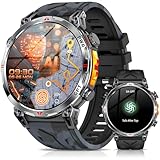
Overview: This rugged smartwatch targets outdoor enthusiasts with military-grade durability and advanced navigation features. It combines precise GPS tracking, health monitoring, and AI integration in a stylish zinc-alloy frame, compatible with both iOS and Android devices.
What Makes It Stand Out: The six-satellite GPS system (including NAVIC and QZSS) ensures exceptional accuracy in challenging environments like dense forests or urban canyons. The standout GPT voice assistant delivers instant answers to complex queries, while the AI watch face generator transforms personal photos into dynamic displays via the DaFit app. The 1.56" AMOLED screen offers superior sunlight visibility.
Value for Money: Priced competitively against mid-range fitness trackers, it justifies cost with premium materials, military-grade durability, and unique AI features absent in rivals. Though pricier than basic fitness bands, the GPS precision and voice assistant add tangible value for adventurers.
Strengths and Weaknesses:
Strengths: Unmatched satellite coverage, responsive GPT assistant, vivid AMOLED display, robust zinc-alloy build, effective call/message handling.
Weaknesses: Swimming-incompatible (despite IP68), GPS accuracy hindered by magnetic bands, limited battery life (2-3 days).
Bottom Line: An exceptional choice for tech-savvy adventurers seeking AI-powered navigation and communication. Despite the no-swim limitation, its satellite precision and GPT integration make it a worthy investment for serious outdoor use.
7. Military GPS Smart Watch for Men Pressure/Altitude/Compass,Fitness Smart Watch for Android Phones and iPhone,Outdoor Waterproof Fitness Tracker with Blood Oxygen/Heart Rate/Sleep/100+ Sport Modes

Overview: This versatile fitness tracker emphasizes outdoor navigation and comprehensive health metrics. It features essential military-grade sensors (altimeter, barometer, compass) alongside broad smartphone compatibility and extensive sport tracking for active users.
What Makes It Stand Out: The 100+ sport modes cater to niche activities beyond standard running/cycling, while integrated stress, emotion, and fatigue monitoring provide holistic health insights. Seamless call/music control and multi-app notifications enhance daily utility without requiring phone access.
Value for Money: Offers remarkable breadth at a mid-tier price. The inclusion of navigation tools typically found in premium models—plus advanced health metrics—delivers strong value versus single-purpose fitness bands. Lacks the AI flair of competitors but excels in reliability.
Strengths and Weaknesses:
Strengths: Extensive sport/activity tracking, comprehensive health suite (stress/fatigue), solid GPS performance, intuitive daily smart features.
Weaknesses: GPS lock time inconsistent (8-40 sec), no standout battery innovation (2-4 days), screen visibility struggles in direct sun.
Bottom Line: A reliable, feature-packed workhorse for fitness-focused users prioritizing health metrics and navigation. Ideal for those seeking no-nonsense durability and broad sport support without AI gimmicks.
8. Military Smart Watch with GPS, Pressure/Altitude/Compass, Rugged Smartwatch for Men with 650mAh Extra-Large Battery, Answer/Make Call, 100+ Sports Mode, Metal Body Fitness Tracker for Android iOS

Overview: Engineered for extreme conditions, this watch boasts military-grade toughness and an industry-leading 650mAh battery. It merges professional-grade durability with practical smart features like call handling and voice commands for labor-intensive or remote work environments.
What Makes It Stand Out: The 650mAh battery (twice standard capacity) enables 14-day regular use and 90-day standby—revolutionary for GPS watches. Its -40°F to 176°F tolerance and 7H scratch-resistant screen withstand hammers/drops, while 1ATM waterproofing supports swimming. The metal body and Bluetooth 5.3 calling solidify its rugged utility.
Value for Money: Priced at the premium end, it justifies cost through unparalleled battery life and certified extreme-environment resilience. Blue-collar workers and explorers will find long-term savings in reduced charging needs and replacement frequency.
Strengths and Weaknesses:
Strengths: Exceptional battery longevity, unmatched durability (shock/temperature/water), swim-compatible, reliable calling.
Weaknesses: Bulky design, limited AI features versus competitors, compass calibration can be finicky.
Bottom Line: The definitive choice for professionals in harsh environments needing all-day reliability. Sacrifices some smart features for survival-ready toughness and battery prowess—essential for mechanics, hikers, or emergency responders.
9. COROS NOMAD Outdoor GPS Smartwatch, 1.3" MIP Touchscreen, Global maps with Turn-by-Turn Navigation, 22 Days Battery Life, Microphone Records Voice Notes, Real-time Weather, and Safety alerts (Brown)

Overview: A premium outdoor specialist, the NOMAD prioritizes navigation and adventure documentation. Its sunlight-readable MIP display, global maps, and industry-leading 22-day battery cater specifically to hikers, anglers, and expeditioners.
What Makes It Stand Out: The “Adventure Journal” feature—recording voice notes, photos, and location tags during activities—is unmatched. Pre-loaded global maps with turn-by-turn navigation and real-time safety alerts (weather/emergencies) provide critical trailside utility. The 50-hour GPS battery life dwarfs competitors.
Value for Money: Commands a high price but delivers professional-grade outdoor functionality. Serious adventurers will value the navigation depth and battery life over general fitness features, though casual users may find it over-specified.
Strengths and Weaknesses:
Strengths: Legendary battery efficiency, superior MIP screen visibility, comprehensive navigation suite, creative adventure logging.
Weaknesses: Limited health tracking (no SpO2), fewer smart features (no calls), higher cost than fitness-focused rivals.
Bottom Line: The ultimate tool for dedicated outdoor explorers. If navigation reliability and multi-day battery are non-negotiable, the NOMAD’s specialized feature set justifies its premium price—despite weaker daily smart capabilities.
10. Mingdaln GPS Military Smart Watch for Men,GPT Voice Assistant,Smartwatch with LED Flashlight,2.01" HD Display Bluetooth Call,Fitness Tracke with Multiple Sports Modes,Compatible with Android & iOS

Overview: This feature-dense watch blends AI assistance with practical outdoor tools, highlighted by an oversized display and emergency LED lighting. It targets adventurers needing visibility aids and instant information in low-light scenarios.
What Makes It Stand Out: The 2.01" HD screen is among the largest in its class, while the triple-mode LED flashlight (including SOS beacon) addresses critical safety gaps. Six-satellite GPS ensures urban/jungle accuracy, and the GPT assistant provides on-the-spot guidance—like muscle-building tips—without phone reliance.
Value for Money: Competitively priced for its screen size and lighting utility. The flashlight adds unique emergency value, though the 5-day battery lags behind rivals like Product 8. Ideal for campers prioritizing visibility over extreme battery life.
Strengths and Weaknesses:
Strengths: Large, clear display, versatile LED flashlight (SOS mode), effective GPT assistant, dual-straps for versatility.
Weaknesses: Shorter battery life (5 days), swimming-incompatible, GPS accuracy requires non-magnetic bands.
Bottom Line: A compelling pick for night hikers and campers needing reliable illumination and AI support. While battery life is modest, the flashlight and expansive screen deliver niche utility that justifies purchase for specific outdoor scenarios.
Understanding Core GPS Capabilities for the Outdoors
How Multi-Band and Multi-Constellation Systems Improve Accuracy
Traditional GPS relies on signals from a single satellite frequency band, which can bounce off terrain or structures, causing location drift. Modern outdoor-focused watches now incorporate multi-band technology, receiving signals across multiple frequencies (like L1 and L5). This, combined with multi-constellation support (accessing GPS, GLONASS, Galileo, and BeiDou satellites simultaneously), dramatically reduces errors. You’ll experience pinpoint accuracy even in challenging environments like deep canyons or dense tree cover, ensuring your recorded path matches your actual route and navigation cues remain trustworthy when visibility is low.
The Critical Role of Built-In Topographic Maps
While basic location tracking is standard, serious outdoor navigation demands detailed topographic maps directly on your wrist. Look for watches offering preloaded or downloadable topo maps showing elevation contours, trails, water sources, and landmarks. This eliminates constant phone use, preserving its battery for emergencies. Crucially, verify if the maps support offline caching for extended trips and whether they include critical data like trail difficulty ratings or seasonal access points—features that turn a simple location dot into a comprehensive navigation tool.
Why Barometric Altimeters and Compasses Are Non-Negotiable
GPS altitude readings alone are notoriously unreliable, often fluctuating wildly. A built-in barometric altimeter measures atmospheric pressure to provide highly accurate, real-time elevation data and track cumulative ascent/descent—vital for gauging exertion on mountain hikes. Paired with a three-axis compass that accounts for tilt and movement, this combo delivers precise heading information even when stationary. Together, they enable advanced features like storm alerts (based on rapid pressure drops) and true navigation confidence when GPS signals momentarily fade under heavy canopy.
Durability and Environmental Resilience Considerations
MIL-STD-810 Ratings: What They Actually Mean for You
Many watches tout MIL-STD-810 compliance, suggesting military-grade toughness. This standard tests resilience against specific environmental stresses like shock, vibration, temperature extremes, and humidity. However, it’s not a single pass/fail mark—manufacturers select which tests to pursue. Scrutinize which specific tests the device passed (e.g., Method 516.7 for shock resistance). True outdoor reliability requires certification against multiple harsh conditions, ensuring the watch survives drops onto rocks, submersion in streams, or exposure to freezing temperatures without failure.
Water Resistance Beyond the Basics: ISO Standards Decoded
“Waterproof” is a misleading term. For serious water exposure—like river crossings or torrential downpours—seek watches certified to ISO 22810:2010 standards. A rating of 10 ATM (100 meters) is the minimum for meaningful water safety, indicating suitability for swimming and snorkeling. Crucially, verify if the rating covers thermal shock (sudden temperature changes) and mechanical stress (like operating buttons underwater). Lesser “splash-resistant” claims often fail during actual submersion, risking catastrophic internal damage when you need your device most.
Display Visibility in Extreme Light Conditions
A high-resolution screen is useless if you can’t read it under a blazing sun or in flat, overcast mountain light. Prioritize displays using transflective memory-in-pixel (MIP) technology. Unlike power-hungry OLEDs that wash out in sunlight, MIP screens leverage ambient light, becoming more visible as conditions brighten—critical for glancing at navigation without stopping to shade the display. Always check real-world reviews focusing on sunlight legibility, as lab specifications rarely reflect the harsh glare of alpine environments.
Battery Life Realities for Extended Expeditions
GPS Mode Variability: Standard vs. Multi-Band Impact
Battery claims often hinge on “smartwatch mode,” but outdoor use drains power rapidly in GPS tracking. Understand the significant difference between standard GPS (using one frequency) and multi-band/multi-constellation modes. While multi-band offers superior accuracy, it can consume 20-40% more power. For multi-day trips, ensure the watch offers adjustable GPS settings—like reducing satellite usage in open terrain—to extend battery life. Some models even feature expedition modes that disable non-essential functions, stretching runtime to 30+ days.
Solar Charging: Practical Benefits vs. Marketing Hype
Solar charging is increasingly common, but its real-world utility varies. Small solar cells primarily supplement battery life during extended use rather than fully recharge a dead watch quickly. In practice, consistent exposure to bright sunlight (not just cloudy days) might add 10-30% extra runtime per day of heavy GPS use. For true off-grid reliability, view solar as a valuable buffer against unexpected delays, not a replacement for adequate base battery capacity. Always prioritize a strong non-solar battery life first.
Power Management Strategies for Critical Situations
When battery levels plummet mid-trip, strategic power management becomes crucial. Look for watches with dedicated “battery saver” modes that maintain core GPS and location tracking while disabling the display backlight, heart rate monitoring, and notifications. Some even allow custom power profiles, letting you disable specific sensors (like the compass) you won’t need for the final leg home. Knowing these features exist—and how to activate them swiftly—can be the difference between completing your route or waiting for rescue.
Activity-Specific Features Worth Prioritizing
Trail Running vs. Mountaineering: Tailoring Your Tech
Not all outdoor pursuits demand identical features. Trail runners benefit most from lightweight designs, advanced running dynamics (like stride length and vertical oscillation), and instant route guidance. Mountaineers, however, require robust altimeter/compass integration, ice axe-compatible interfaces, and extreme cold tolerance. If you tackle technical climbs, check for fall detection and emergency SOS features with satellite connectivity. Aligning your watch’s strengths with your primary activity prevents paying for irrelevant bells and whistles while ensuring critical tools aren’t missing.
Marine and Winter Sports: Niche Capabilities Explained
Water-based adventures like kayaking or sailing introduce unique needs: tide graphs, sunrise/sunset times calculated for your exact location, and boat speed tracking via GPS. For winter sports, prioritize watches with snow depth tracking, avalanche safety features (like slope angle alerts), and glove-friendly touchscreens or oversized buttons. Cold-weather performance is paramount—some watches experience significant battery drain or screen lag below freezing. Verify low-temperature operation specs if you frequent sub-zero environments.
Multi-Sport Integration for Adventure Racers
If your adventures blend disciplines—like trail running followed by mountain biking or open-water swimming—seamless multi-sport mode is essential. This feature automatically transitions between activity profiles without stopping the timer, accurately capturing metrics for each segment. Ensure the watch supports your specific sport combinations and offers auto-pause/resume functionality. For complex events, look for the ability to preload entire race courses with split points and elevation profiles directly on the device.
Key Connectivity and Ecosystem Factors
Satellite Messaging: When Cellular Isn’t Enough
For true backcountry safety beyond cell coverage, satellite messaging capabilities (via services like Garmin inReach or ZOLEO) are transformative. These allow two-way text communication, location sharing, and SOS signals via global satellite networks. While often requiring a subscription, this feature provides unparalleled peace of mind on remote trails. Evaluate the antenna design—some watches integrate it directly, while others need external accessories—and message delivery reliability based on real user reports from similar terrain.
Smartphone Integration: Beyond Basic Notifications
While alerts for calls or messages are standard, deeper smartphone integration enhances safety and convenience. Key features include automatic incident detection (triggering an SOS if a fall is detected), location sharing with contacts in real-time, and weather forecasts pushed directly to your wrist. Ensure compatibility with your phone’s OS and assess how seamlessly these features work without excessive battery drain. Avoid watches where critical safety functions require constant phone proximity.
Data Syncing and Analysis Platforms
Your watch is only as good as the ecosystem supporting it. Evaluate the companion app’s ability to plan routes, analyze post-activity metrics (like elevation gain consistency or navigation accuracy), and integrate with popular platforms like Strava or Komoot. A robust platform should offer detailed recovery insights, training load metrics, and the ability to export GPX files for sharing routes. Poor data organization or limited export options significantly reduce the long-term value of your investment.
Future-Proofing Your Purchase
Software Update Longevity and Feature Roadmaps
Outdoor watches are significant investments, so longevity matters. Research the manufacturer’s track record: Do they provide multi-year software updates adding meaningful features (like new safety tools or map enhancements)? Companies committed to their outdoor lines often extend support for 5+ years, while others abandon models quickly. Check community forums for insights into update frequency and responsiveness to user feedback—this indicates whether your device will evolve alongside your needs.
Modular Design and Repairability Concerns
As environmental awareness grows, repairability is increasingly important. Investigate if the watch uses standard screws (not proprietary adhesives), if the battery is user-replaceable, and if the manufacturer offers official repair programs. Some brands now design with field-replaceable components like straps or bezels. While not always the sexiest feature, modular construction extends the device’s usable life and reduces e-waste—a crucial consideration for eco-conscious adventurers.
Emerging Sensor Technologies to Watch
The frontier of outdoor wearables is expanding rapidly. Keep an eye on developments like integrated pulse oximetry for altitude acclimatization monitoring, advanced skin temperature sensors for early heatstroke detection, or even rudimentary air quality measurements. While not yet essential, these features may become standard in future models. Understanding where the technology is heading helps you avoid buying a device that feels obsolete within a year.
Frequently Asked Questions
Frequently Asked Questions
How much battery life should I realistically expect during a full-day hike with GPS active? Expect 15-25 hours in standard GPS mode for most modern outdoor watches. Using multi-band GPS or continuous heart rate monitoring can reduce this by 30-50%. Always carry a compact power bank if your hike exceeds 12 hours.
Can I rely solely on my smartwatch for navigation, or should I still carry a physical map and compass? Always carry a physical map and compass as your primary navigation backup. Smartwatches can fail due to battery drain, software glitches, or extreme conditions. Your watch is a powerful tool, but never your only navigation source.
What’s the biggest difference between a “hiking watch” and a “trail running watch”? Hiking watches prioritize extended battery life, detailed topographic maps, and robust altimeter/compass tools for route finding. Trail running watches focus on lightweight design, advanced running dynamics, and instant pace/gradient feedback, often with shorter battery life.
Do I need a watch with satellite communication for day hikes? For well-marked, frequently traveled day hikes near civilization, satellite messaging is often unnecessary. However, if you venture into remote areas, experience poor cell coverage, or hike solo frequently, it provides critical emergency redundancy worth considering.
How accurate are the elevation profiles recorded by smartwatches? Elevation accuracy varies significantly. Watches with barometric altimeters typically achieve +/- 10 meters accuracy. GPS-only elevation can be off by 50+ meters. Consistent calibration against known points improves reliability, but don’t treat recorded ascent/descent as survey-grade data.
Will my watch work in extremely cold temperatures, like below freezing? Performance drops significantly below -10°C (14°F) for many models. Battery drain accelerates, touchscreens may become unresponsive, and LCD screens can slow down. Look for watches specifically rated for sub-zero operation and keep the device insulated against your body in extreme cold.
Are touchscreen interfaces practical when wearing gloves? Many outdoor watches offer glove-touch compatibility, but effectiveness varies. Transflective MIP screens often work better with gloves than power-hungry OLEDs. Physical buttons remain the most reliable interface in wet, cold, or gloved conditions—prioritize watches with a mix of both.
How do I know if a watch’s durability claims are trustworthy? Look beyond marketing terms. Verify specific certifications like MIL-STD-810H (and which tests were passed) and ISO 22810 water resistance. Seek real-world user reviews focusing on drop tests, submersion incidents, and long-term wear in harsh conditions, not just lab results.
Can I use third-party maps, or am I locked into the manufacturer’s ecosystem? Many watches support downloading custom maps via platforms like OpenStreetMap or Komoot, though the process varies. Some require specific file formats or have limited storage. Check the device’s compatibility with popular third-party routing apps before purchase if ecosystem flexibility is important.
What should I do if my GPS signal drops completely during a hike? First, ensure you have a physical map and compass. If the signal drops, stop moving, allow the device several minutes to reacquire satellites (sometimes moving slightly helps), and check for firmware updates. Regularly calibrate your compass and altimeter according to the manual to maintain baseline accuracy.