Table of Contents
Ever felt that sinking realization mid-run when your watch screen goes dark, or the GPS signal vanishes just as you hit your stride? You’re not alone. For runners, a reliable GPS smartwatch isn’t just a gadget—it’s a training partner, a safety net, and a data whisperer that transforms every mile from guesswork into measurable progress. Whether you’re chasing a personal best on the track or exploring unfamiliar trails, the right device seamlessly integrates into your rhythm, offering insights without interrupting the flow. It’s the difference between wondering how far you’ve gone and knowing exactly how to push your limits safely.
Choosing the wrong watch, however, can turn that potential ally into a frustrating burden. Weak battery life means cutting runs short, inaccurate distance tracking skews your hard-earned metrics, and a clunky interface pulls you out of the zone when you need focus most. The market buzzes with promises of “ultimate running tech,” but what truly matters isn’t flashy specs—it’s how well a device aligns with your unique running style, environment, and goals. This guide cuts through the noise, focusing on the foundational features that make a GPS smartwatch genuinely valuable for runners, so you invest in performance that lasts beyond the hype cycle.
Top 10 GPS Smartwatches for Runners
Detailed Product Reviews
1. mibro GS Active2 Running GPS Smartwatch with 46mm AMOLED, Lightweight and 15-Day Battery, Supports Training Guidance and Dual-Band GNSS, 150+ Sport Modes (Dark Gray)

Overview: The Mibro GS Active2 is a lightweight running-focused smartwatch targeting budget-conscious athletes. Its 46mm AMOLED display, ultra-slim 11.7mm profile, and featherlight 39g build prioritize comfort during extended wear, while dual-band GNSS and 15-day battery life cater to serious runners seeking reliable performance without premium pricing.
What Makes It Stand Out: Dual-band GNSS ensures exceptional outdoor tracking accuracy, while its standout feature is the AI-powered Mibro Coach. This provides adaptive, goal-based training plans (5k to half-marathon) and real-time running metrics like VO₂ Max, stride analysis, and cadence feedback—functionality typically found in higher-end models. The 150+ sport modes add versatility beyond running.
Value for Money: Positioned significantly below Garmin’s entry points, the Active2 delivers remarkable value. Its professional running analytics and 15-day battery (15 hours in GPS mode) rival watches costing twice as much, though the companion app ecosystem isn’t as polished as established brands. Ideal for runners prioritizing core training tools over smart features.
Strengths and Weaknesses: Strengths: Exceptional battery life, accurate dual-band positioning, lightweight comfort, and robust running-specific coaching. Weaknesses: Limited third-party app integration, basic smart notifications, and AMOLED brightness can struggle in direct sunlight. Health tracking (e.g., sleep) is functional but less refined than Garmin.
Bottom Line: An outstanding value proposition for runners seeking advanced training guidance and long battery life without breaking the bank. Best suited for fitness-focused users who prioritize running metrics over comprehensive smartwatch capabilities. Highly recommended for beginners to intermediates.
2. afoloery GPS Running Watch and Outdoor Smartwatch, AMOLED Display, Built-in LED Flashlight,Multisport GPS Smartwatch,5ATM Waterproof,Fitness Tracker up to 15 Days of Battery

Overview: The Afoloery GPS Running Watch is a feature-packed, budget-friendly multisport smartwatch emphasizing outdoor versatility. With an AMOLED display, 5ATM waterproofing, and a unique built-in LED flashlight, it targets adventurers needing reliable tracking and utility features across running, hiking, and swimming, all backed by 15-day battery life.
What Makes It Stand Out: The integrated LED flashlight is a rare, practical addition for trail runners or campers. Dual-satellite GPS (GPS + BeiDou) ensures solid route accuracy, while comprehensive 24/7 health monitoring—including HRV, stress tracking, and female health—exceeds expectations at this price. Seamless Google Fit/Apple Health sync consolidates data effectively.
Value for Money: Offering Garmin-like features (multi-sport tracking, health insights) at a fraction of the cost, it’s a steal for casual athletes. The 15-day battery and 5ATM rating eliminate frequent charging/swim worries. However, GPS accuracy lags slightly behind premium brands, and the flashlight, while useful, feels gimmicky for some.
Strengths and Weaknesses: Strengths: LED flashlight utility, strong battery life, broad health metrics, 100+ sport modes, and excellent app compatibility. Weaknesses: GPS precision inconsistent in dense forests, basic Bluetooth call quality, and the zinc alloy case feels less premium than stated. Health data lacks clinical validation.
Bottom Line: A versatile, no-frills fitness companion ideal for outdoor enthusiasts wanting extended battery life and practical extras like the flashlight. While not a Garmin rival for serious athletes, it’s a compelling budget pick for casual users seeking all-in-one functionality.
3. Garmin Forerunner 55 GPS Running Smartwatch, Black

Overview: The Garmin Forerunner 55 is a streamlined entry-level GPS running watch designed for beginners seeking essential metrics without complexity. It delivers core running dynamics—pace, distance, heart rate—and 2-week battery life in a lightweight, unobtrusive package, focusing purely on foundational run tracking.
What Makes It Stand Out: Garmin’s trusted GPS accuracy and responsive optical heart rate sensor set it apart in its class. The “Daily Suggested Workout” feature intelligently adapts run plans based on recovery, while incident detection adds peace of mind. Its simplicity—no touchscreen or AMOLED—ensures intuitive button navigation.
Value for Money: Priced moderately above budget brands like Mibro, it justifies cost through Garmin’s proven reliability, rugged build, and seamless ecosystem integration (Garmin Connect). Lacks advanced analytics of higher-end models but excels as a dependable, no-nonsense starter watch.
Strengths and Weaknesses: Strengths: Exceptional GPS consistency, user-friendly interface, multi-day battery life, and robust incident detection. Weaknesses: No AMOLED (basic LCD display), limited health metrics (no sleep score/HRV), and no advanced running dynamics like cadence alerts.
Bottom Line: The ideal first running watch for newcomers prioritizing reliability and core tracking over smart features. While basic, Garmin’s ecosystem and accuracy make it a worthwhile investment for dedicated beginners transitioning from phone-based tracking.
4. Garmin vívoactive® 6, Health and Fitness GPS Smartwatch, AMOLED Display, Up to 11 Days of Battery, Slate with Black Band

Overview: The Garmin vívoactive 6 bridges fitness and holistic health monitoring with a vibrant AMOLED display and comprehensive wellness focus. It targets users seeking deeper health insights—beyond steps and sleep—into metrics like Body Battery energy levels and HRV status, all while maintaining solid GPS functionality for casual athletes.
What Makes It Stand Out: Body Battery energy monitoring, which quantifies daily readiness using stress, sleep, and activity data, is its crown jewel. Combined with personalized sleep coaching, HRV status tracking, and a smart wake alarm, it offers unparalleled daily health context. The bright AMOLED display enhances readability significantly over predecessors.
Value for Money: Priced mid-range, it costs more than basic trackers but delivers exceptional value for health-conscious users. The AMOLED screen and advanced metrics (like HRV status) typically appear in pricier models. Battery life (11 days) lags slightly behind rivals like Mibro, but Garmin’s data accuracy justifies the trade-off.
Strengths and Weaknesses: Strengths: Best-in-class health insights (Body Battery, sleep coaching), bright AMOLED display, and broad sport modes. Weaknesses: GPS battery life (~8 hours) is modest for long runs, and advanced metrics require consistent wear for accuracy. Lacks music storage.
Bottom Line: A top choice for users prioritizing holistic health tracking over hardcore running analytics. Its wellness focus and AMOLED screen make it a standout for everyday health optimization, though serious runners may prefer the Forerunner series.
5. Garmin Forerunner® 255, GPS Running Smartwatch, Advanced Insights, Long-Lasting Battery, Slate Gray

Overview: The Garmin Forerunner 255 is a premium running smartwatch engineered for data-driven athletes seeking race-day precision and recovery intelligence. With dual-band GPS, advanced training load analytics, and a sunlight-readable display, it delivers professional-grade insights for marathoners and triathletes.
What Makes It Stand Out: The Morning Report consolidates sleep, HRV status, and daily workout suggestions instantly upon waking—a game-changer for planning. Race predictor tools estimate finish times using course elevation and weather, while adaptive weekly training plans evolve based on real-time performance and recovery metrics.
Value for Money: At a premium price, it competes with high-end Suuntos and Coros. Justification lies in Garmin’s unrivaled training ecosystem: metrics like Training Status and Load Focus prevent overtraining. The 14-day battery (30h GPS) outperforms many rivals, making it ideal for multi-day events.
Strengths and Weaknesses: Strengths: Unmatched training analytics, exceptional GPS accuracy, adaptive coaching, and robust battery life. Weaknesses: Expensive; AMOLED absent (memory-in-pixel display); charging time is lengthy. Sleep data, while detailed, can misinterpret naps.
Bottom Line: The definitive choice for serious runners investing in performance gains. Its intelligent training adaptations and race tools justify the cost for competitive athletes, though casual users may find it over-specified. A near-perfect blend of science and practicality.
6. Amazfit Active 2 Premium Smart Watch Fitness Tracker (Round) for Android & iPhone, 10 Day Battery, Water Resistant, GPS Maps, Heart & Sleep Monitor, HYROX Mode, Sapphire Glass, Leather + Sport Strap

Overview: The Amazfit Active 2 merges elegant design with robust fitness tracking in a round premium smartwatch. Tailored for both daily wear and intense workouts, it features a sapphire glass display, dual straps, and comprehensive health monitoring for Android and iOS users.
What Makes It Stand Out: Its standout features include HYROX-specific training modes, free downloadable GPS maps with ski resort navigation, and BioTracker 4.0 for clinically validated heart rate/sleep tracking. The 10-day battery life and sunlight-readable AMOLED display outperform most mid-range competitors.
Value for Money: Priced below $200, it offers exceptional value with premium materials (stainless steel, sapphire glass), multi-sport accuracy, and no subscription fees for maps or analytics—beating pricier rivals like Garmin in battery longevity.
Strengths and Weaknesses:
- Strengths: Exceptional battery life; accurate multi-GNSS GPS; HYROX/ski-specific features; dual-band straps included; bright AMOLED screen.
- Weaknesses: Limited third-party app ecosystem; no onboard music storage; basic call notifications (no mic/speaker).
Bottom Line: Ideal for fitness enthusiasts prioritizing battery life and specialized training metrics, this watch delivers premium features at a mid-tier price—highly recommended for runners, skiers, and HYROX athletes seeking reliability without compromise.
7. Smart Watch for Women Men with Text and Call, 2025 New AI Smartwatches with Heart Rate/SpO2/Sleep/Stress Monitor, 100+ Sports Modes, GPS Fitness Watches Compatible with iOS/Android (Map, Pink)

Overview: This budget-friendly AI smartwatch targets wellness-focused users with holistic health tracking, hands-free calling, and generative AI features. Its vibrant pink design and broad compatibility make it accessible for fitness beginners and tech-curious consumers.
What Makes It Stand Out: The integrated AI suite—featuring real-time translation, Q&A knowledge access, and customizable watch faces—sets it apart. Mood/stress monitoring with proactive breathing reminders addresses mental wellness, a rarity in sub-$100 wearables.
Value for Money: At $70-$90, it’s a steal for Bluetooth calling, 100+ sports modes, and AI tools typically found in $200+ models. However, map functionality requires phone tethering, slightly diminishing standalone utility versus premium alternatives.
Strengths and Weaknesses:
- Strengths: Affordable AI capabilities; 7-day battery; IP68 waterproofing; stress/mood tracking; seamless iOS/Android integration.
- Weaknesses: GPS accuracy lags behind dedicated trackers; translation limited to basic phrases; no offline map storage.
Bottom Line: A compelling entry for AI novices and casual fitness users, though serious athletes should consider higher-end GPS options—excellent value if AI features and stress management are priorities.
8. Military Smart Watch with GPS/Compass,Smartwatch with GPT Voice Assistant,1.56" AMOLED Screen Smart Watch for Men,Compatible with Android & iOS (Bluetooth Call Answer/Dial), Multiple Sports Modes
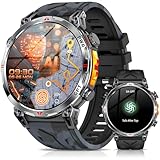
Overview: Engineered for adventurers, this rugged smartwatch combines military-grade durability with GPT-powered AI assistance. Its zinc-alloy frame, dual-band GPS, and outdoor-focused sensors cater to hikers, climbers, and extreme-environment users.
What Makes It Stand Out: Six-satellite positioning (including NAVIC/QZSS) ensures precision in remote areas, while the GPT voice assistant provides instant answers without phone dependency. The AI watch-face generator turns personal photos into dynamic displays—a unique creative touch.
Value for Money: Priced around $120, it justifies cost with unparalleled satellite coverage, barometric altimeter, and military toughness. Though pricier than basic fitness trackers, its niche outdoor utility competes with $300 Garmin models.
Strengths and Weaknesses:
- Strengths: Exceptional GPS reliability; rugged zinc-alloy build; innovative GPT integration; dual silicone straps; comprehensive outdoor metrics.
- Weaknesses: Not swim-proof; battery drains faster with GPS/AI use; limited iOS health app syncing.
Bottom Line: A top pick for outdoor enthusiasts needing military-grade navigation and AI assistance—skip if you prioritize swim tracking or iOS ecosystem cohesion, but essential for serious trail explorers.
9. Garmin vívoactive® 6, Health and Fitness GPS Smartwatch, AMOLED Display, Up to 11 Days of Battery, Pebble Gray with Slate Band

Overview: Garmin’s vívoactive 6 refines the health-focused smartwatch formula with an AMOLED display and expanded biomarker tracking. It targets data-driven users seeking deep health insights without sacrificing battery longevity or sport versatility.
What Makes It Stand Out: Body Battery energy scoring and HRV status tracking provide unparalleled recovery insights, while the smart wake alarm optimizes sleep cycles. Eleven-day battery life with AMOLED brightness sets it apart in Garmin’s mid-tier lineup.
Value for Money: At $349, it’s costly versus budget watches but justified for accuracy-focused athletes. Outperforms Amazfit in health analytics depth, though lacks AI features found in similarly priced competitors—ideal for Garmin ecosystem loyalists.
Strengths and Weaknesses:
- Strengths: Industry-leading health metrics; 11-day battery; 80+ sports apps; precise GPS; seamless Garmin Connect integration.
- Weaknesses: No voice assistant; limited third-party apps; premium price for basic smart features.
Bottom Line: The definitive choice for health optimization and multisport tracking—worth the investment for serious athletes, though casual users may find it over-engineered for daily use.
10. BRUBOSES GPS Smart Watch for Men (Answer/Make Calls), 2.01’’ Military Rugged Smartwatches for Android iPhone Fitness Tracker with Compass/10 Days Battery/Heart Rate/Sleep/100+ Sport Modes(2 Straps)

Overview: This rugged BRUBOSES watch merges utility-focused design with fitness tracking, featuring an oversized display, LED flashlight, and military-inspired durability. Aimed at outdoor workers and adventurers, it emphasizes practicality over elegance.
What Makes It Stand Out: The built-in 6-10m LED flashlight and dual-band GPS positioning (8-45 seconds) are unmatched in its price range. Customizable DIY watch faces and Bluetooth 5.3 calling enhance daily usability for hands-free scenarios.
Value for Money: Under $100, it offers extraordinary utility with altitude/air pressure sensors, 10-day battery, and dual straps. While GPS accuracy trails Garmin, the flashlight and ruggedness provide unmatched value for budget-conscious outdoor users.
Strengths and Weaknesses:
- Strengths: Integrated flashlight; ultra-long battery; 2.01" HD screen; extensive sports modes; affordable AI voice assistant.
- Weaknesses: Basic compass calibration issues; screen glare in direct sun; no swimming support despite rugged claims.
Bottom Line: A standout for budget adventurers needing flashlight functionality and reliable GPS—opt for this over flashier alternatives if practicality and battery life are non-negotiable, but avoid for aquatic activities.
Understanding Core GPS Technology for Running Accuracy
How GPS Chips Translate to Real-World Distance Tracking
Modern smartwatches use multi-band or multi-constellation GPS (like Galileo or GLONASS alongside standard GPS) to lock onto satellite signals faster and maintain accuracy in challenging environments. This matters immensely when weaving through city skyscrapers or dense forest canopies where signals bounce or weaken. A watch with advanced chipsets minimizes “drift”—those frustrating instances where your recorded route zigzags off the actual path, inflating your distance. Look for models emphasizing signal stability in technical specifications, as this directly impacts whether your 5K feels like a true 5K.
The Role of Assisted Sensors in Smoothing Data Gaps
When GPS momentarily drops—common in tunnels, under thick tree cover, or during sharp turns—integrated sensors like accelerometers and barometers step in. These fill data gaps by estimating movement based on your stride pattern and elevation changes, preventing sudden “jumps” in your recorded route. While not a replacement for strong GPS, this sensor fusion ensures your pace and distance metrics remain surprisingly consistent even when satellite signals hiccup.
Why Elevation Tracking Demands Specialized Barometric Altimeters
Basic GPS struggles with vertical accuracy, often misreading elevation gain by 30% or more. Dedicated barometric altimeters measure atmospheric pressure changes to track climbs and descents with far greater precision. For trail runners or hill-repeat enthusiasts, this isn’t just about bragging rights—it’s critical for understanding effort intensity and preparing for race-day terrain. Ensure the watch specifies a built-in barometer, not just GPS-derived elevation.
Battery Life: Beyond the Marketing Numbers
Real-World Usage vs. Lab-Tested Durability Claims
Manufacturers often quote battery life under ideal conditions (like “30 hours with GPS”), but real-world factors—cold weather, continuous heart rate monitoring, music storage, or using color screens—can slash that by half. If your long runs exceed 2 hours, prioritize watches with verified endurance under mixed-use scenarios. Check independent reviews focusing on battery performance during extended GPS sessions, not just daily wear.
Strategies for Maximizing Runtime During Critical Workouts
Some watches offer power-saving modes that disable non-essential features (like smart notifications or full-color maps) while preserving core GPS and heart rate tracking. Learning to toggle these before a key race or ultra-run can extend battery life significantly. Also, consider if the watch supports quick-charging—a 15-minute top-up that adds hours of GPS time is invaluable when you forget to charge overnight.
The Hidden Impact of Software Updates on Power Consumption
New watch firmware can sometimes increase battery drain, especially if it adds resource-heavy features. While updates often improve accuracy, be aware that longevity isn’t always static. Opt for brands with a history of optimizing software for efficiency, and monitor community forums for user-reported battery changes post-update.
Durability and Environmental Resilience
MIL-STD Ratings: What They Actually Mean for Runners
A MIL-STD-810H rating indicates the watch survived rigorous lab tests for shock, temperature extremes, and humidity. For trail runners, this translates to confidence when navigating rocky terrain or enduring sudden downpours. While not a guarantee against damage, it’s a reliable benchmark for build quality—especially compared to watches with minimal durability claims.
Water Resistance Nuances for Swim-Trackers and Rainy Runs
“50m water resistance” sounds robust, but it often means splash-proof for swimming, not deep diving. True swim-tracking requires 5ATM or 10ATM ratings (50m-100m). For runners, even 5ATM is overkill for rain, but it ensures the watch survives accidental dunks in puddles or post-run rinses. Crucially, verify if water resistance is maintained after prolonged use—gaskets degrade over time.
Screen Visibility Under Harsh Sunlight and Low Light
OLED screens offer vibrant colors but can wash out in direct sun, while transflective LCDs (like Garmin’s MIP displays) use ambient light to stay readable without draining battery. For mountain or desert runners, prioritize high-nit brightness ratings (1,000+ nits) and matte screen coatings to avoid squinting during midday efforts.
Essential Running Metrics and Analytics
Beyond Pace: Why Cadence and Ground Contact Time Matter
While pace is obvious, advanced metrics reveal how you run. Cadence (steps per minute) helps identify inefficient stride patterns, while ground contact time indicates how long your foot stays planted—shorter contact often correlates with faster, more economical running. These subtle insights allow for targeted form adjustments that prevent injury and boost speed over time.
The Value of Recovery Metrics for Sustainable Progress
Overtraining derails more runners than undertraining. Watches measuring HRV (Heart Rate Variability), stress scores, and recovery time use overnight data to suggest when to push hard or take a rest day. This isn’t just convenience—it’s science-backed injury prevention. Look for algorithms that personalize feedback based on your historical data, not generic templates.
Route Navigation Features That Prevent Trail Panic
Basic turn-by-turn directions are standard, but advanced navigation includes back-to-start functionality, breadcrumb trails, and offline topographic maps. For trail runners, the ability to see upcoming elevation profiles on-wrist prevents surprise climbs and builds mental preparedness. Ensure maps are downloadable without constant phone tethering.
Compatibility and Ecosystem Integration
Syncing Seamlessly with Training Platforms You Already Use
Your watch is useless if it doesn’t talk to Strava, TrainingPeaks, or your coach’s preferred app. Verify two-way sync capabilities before buying—some brands restrict deep integration to their own platforms. Also, check if manual workout uploads are straightforward if automatic sync fails (a common frustration).
Smartphone Notifications: Balancing Awareness and Distraction
Getting critical texts or calls mid-run is useful, but constant social media pings break focus. The best running watches let you customize which notifications appear (e.g., only contacts saved as “Favorites”), with vibration patterns for quick identification. Avoid watches forcing all alerts—their “convenience” becomes a liability.
Music Storage and Playback Independence
Storing playlists directly on the watch eliminates phone-tethering, but not all models support offline streaming services like Spotify Premium. If you rely on music, confirm file format compatibility (MP3 vs. AAC) and storage capacity—2GB might hold 500 songs, but 4GB gives breathing room for podcast lovers.
Budget Considerations and Long-Term Value
When to Prioritize Future-Proofing Over Price
Entry-level watches often lack upgradable software or advanced metrics that emerge years later. If you plan to keep the watch 3+ years, mid-tier models with robust app ecosystems often deliver better longevity than cheap alternatives that become obsolete. Ask: “Will this still support new running features in 2026?”
Hidden Costs of Accessories and Subscriptions
Some brands charge for cloud storage of activities beyond 30 days or advanced analytics like race predictors. Factor in potential subscription fees if you want post-workout video analysis or personalized coaching. Also, consider band replacement costs—proprietary designs can cost $50+ versus standard 20mm bands at $10.
Resale Value Factors in the Secondhand Market
Brands with strong software support (like regular firmware updates for older models) retain value better. Watches known for battery degradation after 2 years (common with early smartwatches) plummet in resale value. Research recent eBay or marketplace prices for previous-gen models to gauge depreciation.
Frequently Asked Questions
How accurate is GPS tracking on smartwatches for short distances like track intervals?
Most modern watches achieve 95-98% accuracy for distances over 1km, but track intervals under 400m can vary by 2-5% due to signal latency. For precise interval work, pair your watch with a foot pod sensor for instant lap splits.
Can GPS smartwatches reliably track treadmill runs without satellite signals?
Yes, but they rely solely on accelerometers, which often overestimate distance. Calibrate by running a known distance outdoors first, or use the watch’s built-in treadmill mode that adjusts for belt speed. Some models sync with gym equipment for direct data feed.
Do all GPS watches measure VO2 max, and how useful is it for amateur runners?
Most mid-to-high-end models estimate VO2 max using heart rate and pace data during runs. While it’s a solid indicator of cardiovascular fitness, focus on trends over time—not the absolute number—as algorithms vary significantly between brands and aren’t lab-accurate.
Is optical heart rate monitoring accurate enough for interval training?
Chest straps remain the gold standard, but newer optical sensors (especially multi-LED models) are 90-95% accurate during steady runs. For high-intensity intervals with rapid HR changes, expect slight lag (5-10 seconds). Always warm up before starting HR-dependent zones.
How does weather affect GPS signal strength during runs?
Heavy rain or snow rarely impacts GPS, but dense cloud cover can cause minor signal drift. Extreme cold (below -10°C/14°F) may temporarily reduce battery efficiency, leading to faster drain—not signal loss.
Can I use a GPS smartwatch for trail running if I’m not tech-savvy?
Absolutely. Prioritize watches with intuitive button controls (not just touchscreens) and simple navigation like “find my way back.” Avoid models requiring constant app tweaking—look for brands emphasizing “out-of-the-box” trail usability.
What’s the difference between GPS-only and dual-frequency GPS watches?
Dual-frequency (L1+L5) GPS reduces signal errors from atmospheric interference, improving accuracy in urban canyons or valleys. It’s most beneficial for precision-focused activities like orienteering, but adds cost and battery drain—often unnecessary for road runners.
How often should I replace my GPS smartwatch for optimal performance?
Most runners get 3-5 years of reliable service. Replace when battery life drops below 50% of original capacity, software updates cease, or critical sensors (like optical HR) become inconsistent. Avoid upgrading solely for minor feature additions.
Are expensive GPS watches worth it for casual weekend runners?
Not necessarily. If you only run 10 miles weekly and prioritize step counting over advanced metrics, a budget model suffices. Invest in premium features only if you actively use race predictors, recovery analytics, or detailed form metrics.
Do GPS watches work internationally without additional setup?
Yes—GPS is global. However, cellular-connected models may require local SIM cards for maps/navigation abroad. Always download offline maps for your destination country beforehand to avoid roaming charges or dead zones.
See Also
- How to Choose the 10 Best GPS Smartwatches for Runners in 2026
- 10 Game-Changing GPS Smartwatches for Long-Distance Runners in 2026
- 10 Best Tempered Glass Screen Protectors for Smartwatches This Year
- How to Solve Parental Anxiety with the 10 Best GPS Smartwatches for Kids in 2026
- 10 Best GPS Smartwatches for Outdoor Adventure Enthusiasts in 2026