Table of Contents
Triathletes know the agony of a tech failure mid-race: a watch that stutters through the swim-to-bike transition, loses GPS signal on the open road, or worse, dies before the final kilometer of the run. That sinking feeling when your primary data source – the device meant to guide your effort and pace – becomes unreliable is more than frustrating; it can derail months of training. Your watch isn’t just a timepiece; it’s your co-pilot through three distinct disciplines, demanding seamless performance when your body is pushed to its absolute limit. Choosing the wrong tool isn’t just an inconvenience; it’s a potential race-day disaster waiting to happen.
Yet, navigating the sea of technical specifications and marketing hype can feel almost as grueling as a long brick session. Terms like “multi-band GNSS” or “advanced recovery metrics” sound impressive, but what do they actually mean for your specific needs during a chaotic transition zone or a hilly bike leg? Forget generic running watches – triathletes require specialized functionality that most manufacturers gloss over in their standard features. The key lies in understanding which capabilities are non-negotiable for multisport efficiency and which are simply flashy extras that drain battery life without adding real value to your race strategy. Let’s cut through the noise and focus on what truly matters when your next race depends on it.
Top 10 GPS Running Watches for Triathletes
Detailed Product Reviews
1. Garmin Forerunner® 955, GPS Running Smartwatch, Tailored to Triathletes, Long-Lasting Battery, Whitestone

Overview: The Garmin Forerunner 955 in Whitestone is a premium multisport GPS smartwatch engineered for triathletes and serious runners, offering advanced training metrics, robust navigation, and exceptional battery life in a lightweight, sunlight-readable package.
What Makes It Stand Out: Its standout features include the dual-control interface (buttons + responsive touchscreen), multi-band GNSS for superior accuracy in challenging environments like urban canyons or dense forests, full-color mapping, and an impressive 42-hour GPS battery life. The always-on display remains clear in direct sun, crucial for outdoor endurance events.
Value for Money: Priced at a premium, it justifies cost with triathlon-specific tools, comprehensive health tracking across 15-day smartwatch mode, and mapping that rivals dedicated cycling computers. It outperforms older models like the 945 in battery and accuracy, making it a future-proof investment for dedicated athletes.
Strengths and Weaknesses: Strengths: Unmatched battery longevity, multi-GNSS precision, intuitive dual controls, detailed performance analytics. Weaknesses: High price point, touchscreen can be fiddly mid-run, no built-in music storage (unlike 945).
Bottom Line: An elite triathlon and running companion; ideal for athletes prioritizing battery life, navigation accuracy, and in-depth metrics, despite the cost and lack of music storage.
2. Garmin Forerunner 945, Premium GPS Running/Triathlon Smartwatch with Music, Black - 010-02063-00

Overview: The Garmin Forerunner 945 is a feature-rich GPS smartwatch targeting triathletes and runners, distinguished by on-device music storage and contactless payments, though now succeeded by the 955 series.
What Makes It Stand Out: Built-in music storage (for offline playback via Spotify/Deezer) and Garmin Pay are key differentiators. It offers advanced metrics like VO2 max, training load focus, and recovery time, alongside full-color mapping and ANT+ sensor compatibility, all in a lightweight, swim-ready design.
Value for Money: While competitively priced for its era, its 10-hour GPS battery (with music) and single-band GNSS feel dated next to the 955’s multi-band accuracy and 42-hour endurance. Music storage adds niche value, but the 955 offers better overall performance for similar cost new.
Strengths and Weaknesses: Strengths: Music storage, Garmin Pay, comprehensive training analytics, long 60-hour UltraTrac battery. Weaknesses: Shorter GPS battery with music, inferior satellite accuracy vs. 955, no touchscreen, aging interface.
Bottom Line: A solid choice if found significantly discounted and music storage is essential, but the newer 955 models deliver superior value with longer battery and better navigation.
3. Garmin 010-02638-10 Forerunner® 955, GPS Running Smartwatch, Tailored to Triathletes, Long-Lasting Battery, Black

Overview: This black variant of the Forerunner 955 delivers identical high-end performance to its Whitestone counterpart, focusing on triathlon readiness, multi-day battery life, and advanced navigation in a sleek, waterproof design.
What Makes It Stand Out: Retains all core 955 advantages: multi-band GNSS for pinpoint accuracy in tough terrain, 42-hour GPS battery life, dual-button/touch interface, and full-color mapping. The always-on display excels in sunlight, while comprehensive health/sleep tracking spans 15 smartwatch days. Waterproofing (5 ATM) ensures reliability for swim segments.
Value for Money: Priced identically to the Whitestone model, it offers exceptional value for multisport athletes seeking durability and depth over color aesthetics. It outclasses the 945 in battery and accuracy while matching the Solar model’s core features (sans solar charging) at a lower cost.
Strengths and Weaknesses: Strengths: Industry-leading battery life, superior satellite accuracy, intuitive controls, robust triathlon metrics. Weaknesses: No music storage, premium price, touchscreen less responsive with wet hands.
Bottom Line: The definitive non-solar triathlon watch; identical performance to other 955s—choose based on color preference. A top-tier investment for serious endurance athletes.
4. Garmin Forerunner® 955 Solar, GPS Running Smartwatch with Solar Charging Capabilities, Tailored to Triathletes, Long-Lasting Battery, Black - 010-02638-00
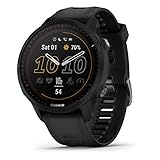
Overview: The Forerunner 955 Solar enhances the standard 955 with Power Glass solar charging, extending battery life significantly for ultramarathoners and adventure athletes who spend days outdoors.
What Makes It Stand Out: Solar charging boosts smartwatch battery to 20 days (vs. 15) and adds up to 7 extra hours in GPS mode under ideal sunlight. It retains all 955 strengths: multi-band GNSS, full-color maps, 42-hour base GPS battery, and dual controls. The solar lens is subtle yet effective for prolonged expeditions.
Value for Money: Priced higher than the standard 955, it’s justified for users needing maximum autonomy—e.g., multi-day trail runners or bikepackers. Casual users won’t recoup the premium, but serious adventurers gain meaningful resilience without sacrificing core 955 features.
Strengths and Weaknesses: Strengths: Extended solar-powered battery, unmatched navigation accuracy, triathlon-optimized metrics, durable design. Weaknesses: Minimal solar gains in cloudy/indoor conditions, heaviest 955 variant, no music storage.
Bottom Line: Essential for endurance athletes prioritizing battery longevity outdoors; otherwise, the standard 955 offers better value. A niche but powerful upgrade for sun-exposed adventures.
5. Garmin Forerunner 55, GPS Running Watch with Daily Suggested Workouts, Up to 2 Weeks of Battery Life, Black - 010-02562-00

Overview: The Forerunner 55 is Garmin’s accessible entry-level running watch, offering essential GPS tracking, daily workout suggestions, and reliable battery life for beginners and casual runners.
What Makes It Stand Out: Its simplicity shines with daily suggested workouts based on fitness level, a clear 2-week smartwatch battery, and PacePro pacing guidance. It covers core activities (running, cycling, swimming) with wrist-based heart rate and basic health metrics, avoiding overwhelming complexity.
Value for Money: Exceptional value under $200. While lacking maps and multi-GNSS of premium models, it outperforms cheaper fitness bands with accurate GPS, structured training tools, and 20-hour GPS battery. Ideal for runners seeking guidance without advanced triathlon features.
Strengths and Weaknesses: Strengths: Affordable, beginner-friendly interface, strong battery life, helpful daily coaching. Weaknesses: No maps or music, basic heart rate accuracy, limited metrics vs. 955, no touchscreen.
Bottom Line: The perfect first running watch—affordable, intuitive, and packed with essentials for new runners. Skip if you need advanced navigation or multisport depth.
6. Garmin Forerunner 745, GPS Running Watch, Detailed Training Stats and On-Device Workouts, Essential Smartwatch Functions, Black (010-02445-00) (Renewed)

Overview:
The renewed Garmin Forerunner 745 is a versatile multisport GPS watch tailored for triathletes and serious runners seeking advanced metrics without the premium price tag of flagship models. It excels in tracking swim, bike, and run activities with multi-GNSS support for reliable accuracy across diverse environments.
What Makes It Stand Out:
Its standout feature is personalized on-device training guidance, delivering daily run/cycle workouts based on your real-time training load and VO2 max. Seamless integration with platforms like TrainingPeaks and TrainerRoad allows structured workout syncing, while advanced dynamics for running, cycling, and swimming provide race-focused analytics competitors lack at this tier.
Value for Money:
As a renewed model, it offers exceptional value—delivering 95% of the Forerunner 955’s core training analytics at a significantly lower cost. It undercuts comparable Suunto or Polar models by $100+ while including triathlon-specific profiles and smart notifications, making it ideal for budget-conscious athletes prioritizing data depth over ultra-long battery life.
Strengths and Weaknesses:
Strengths: Comprehensive triathlon training suite; intuitive on-device workout suggestions; robust third-party app compatibility; lightweight design.
Weaknesses: Limited to 10 days battery life (smartwatch mode); no touchscreen; AMOLED display absent; no built-in speaker/mic for calls.
Bottom Line:
A near-perfect choice for triathletes and runners needing granular training insights without overspending. The renewed condition makes it a smart buy, though those needing cellular or longer battery should consider newer models.
7. Garmin Forerunner® 955, GPS Running Smartwatch, Tailored to Triathletes, Long-Lasting Battery, Whitestone (Renewed)

Overview:
The renewed Forerunner 955 is Garmin’s triathlon-focused powerhouse, combining sunlight-readable mapping, multi-frequency GNSS for pinpoint accuracy, and industry-leading battery life. It’s engineered for endurance athletes tackling ultramarathons or Ironman events where reliability is non-negotiable.
What Makes It Stand Out:
Solar charging extends GPS mode to 49 hours (110h in UltraTrac), while the dual-button/touchscreen interface simplifies trail navigation. Full-color topographic maps and multi-band satellite support ensure precise tracking in cities or dense forests—features rare in sub-$400 renewed watches. The training load optimizer adapts plans dynamically using physiological data.
Value for Money:
Despite being renewed, it delivers flagship-tier performance rivaling $500+ new models. The solar boost justifies its $50 premium over the 745 for ultrarunners, while triathletes gain unmatched mapping and multi-sport transition features absent in cheaper alternatives like the Coros Pace 3.
Strengths and Weaknesses:
Strengths: Exceptional 42h+ GPS battery; solar charging advantage; crisp color maps; robust multi-sport metrics; responsive touchscreen.
Weaknesses: Premium price (even renewed); slightly bulkier than 55/745; no AMOLED display; limited third-party app store.
Bottom Line:
A top-tier investment for serious triathletes and ultra-runners needing mapping, solar resilience, and marathon-long GPS stamina. The renewed version offers flagship capabilities at a pragmatic cost.
8. Garmin® Forerunner® 570, 42mm, Advanced GPS Running and Triathlon Smartwatch, AMOLED Display, Training and Recovery Features, Raspberry Aluminum with Translucent Bone/Mango Band

Overview:
The Forerunner 570 merges premium styling with pro-level training tech in a compact 42mm AMOLED package. Targeted at athletes with smaller wrists, it emphasizes recovery analytics and smart connectivity while supporting full triathlon training.
What Makes It Stand Out:
Its vibrant AMOLED screen—brighter and crisper than LCD predecessors—and built-in speaker/mic for calls/texts via smartphone set it apart. The training readiness score intelligently combines HRV, sleep, and load data to advise daily effort, while Garmin Coach delivers adaptive triathlon plans personalized to your progress.
Value for Money:
Priced between the 55 and 745, it justifies the premium with the only AMOLED display in Garmin’s mid-range lineup and cellular calling. Though newer models like the 55 SE offer similar battery life, the 570’s superior screen and triathlon-specific recovery tools provide tangible value for tech-savvy runners.
Strengths and Weaknesses:
Strengths: Stunning AMOLED display; on-wrist calling/texts; insightful training readiness metric; lightweight aluminum build; tailored Garmin Coach plans.
Weaknesses: Shorter 18h GPS battery vs. 955; no solar charging; limited to basic smartwatch functions; discontinued (harder to find renewed).
Bottom Line:
Ideal for style-conscious athletes prioritizing screen quality and recovery insights over marathon battery life. Best suited for those wanting a sleek, connected watch for daily training—not extreme endurance events.
9. Garmin Forerunner 55, GPS Running Watch with Daily Suggested Workouts, Up to 2 Weeks of Battery Life, White

Overview:
The Forerunner 55 is Garmin’s accessible entry point into GPS running, offering essential metrics like heart rate tracking, PacePro guidance, and two-week smartwatch battery life. Its simplicity targets beginners or casual runners avoiding complex training ecosystems.
What Makes It Stand Out:
Daily suggested workouts adapt to your fitness level without subscription fees, while PacePro provides grade-adjusted pacing for race strategy—a rarity at this price. The 20-hour GPS battery and broad activity profiles (HIIT, Pilates, breathwork) make it versatile for cross-training newbies.
Value for Money:
Outshines budget competitors like the Amazfit Bip 5 with superior GPS accuracy and Garmin’s trusted training algorithms. At $200 renewed, it’s 30% cheaper than the 745 while covering 80% of core running needs, though lacking triathlon or advanced metrics.
Strengths and Weaknesses:
Strengths: Unbeatable 14-day battery life; intuitive daily workout suggestions; PacePro race tool; lightweight comfort; broad activity tracking.
Weaknesses: Basic optical HR (inaccurate during intervals); no music storage; limited recovery analytics; no touchscreen.
Bottom Line:
A no-fuss, reliable starter watch for casual runners prioritizing battery life and simplicity. Skip if you need triathlon support or advanced physiology metrics.
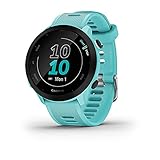
10. Garmin Forerunner 55, GPS Running Watch with Daily Suggested Workouts, Up to 2 Weeks of Battery Life, Aqua
Overview:
Identical to the white Forerunner 55 in functionality, this aqua-hued variant offers the same beginner-friendly GPS running experience with wrist-based heart rate, PacePro guidance, and a two-week smartwatch battery, now in a refreshing coastal-inspired colorway.
What Makes It Stand Out:
Beyond its vibrant aqua band and case accent, it retains all core strengths: adaptive daily workouts, 20-hour GPS battery life, and PacePro’s elevation-aware pacing. The color option appeals to style-focused users without sacrificing Garmin’s reliable entry-level training suite.
Value for Money:
Priced identically to the white model, the aqua version provides identical value—ideal for runners wanting personality in a no-frills watch. It undercuts similarly featured Coros Pace 3 bundles by $30 while offering Garmin’s polished ecosystem, though advanced athletes will outgrow its simplicity.
Strengths and Weaknesses:
Strengths: Same stellar 14-day battery; PacePro race tool; beginner-friendly adaptive plans; comfortable aqua band; broad activity tracking.
Weaknesses: Mediocre optical HR accuracy; no music or maps; limited training insights; no touchscreen.
Bottom Line:
Choose the aqua model purely for aesthetics—it’s functionally identical to the white 55. Still a superb entry-level pick for casual runners valuing battery life over advanced metrics.
Core Multisport Functionality Essentials
Seamless Sport Mode Transitions
The absolute cornerstone for any triathlon watch is the ability to switch instantly and accurately between swim, bike, and run modes, especially during frantic transitions. Manual toggling eats precious seconds you don’t have. Look for watches with dedicated, easily accessible multisport modes that automatically detect the end of one discipline (like finishing the swim) and prompt you for the next, minimizing fumbling with buttons while wet and stressed. This smooth handoff is critical for capturing continuous, accurate data across all three segments without gaps.
Advanced Swim Metrics Beyond Lap Counting
Pool and open water swimming present unique tracking challenges. Basic swim tracking often falls short for serious triathletes. Essential features include precise stroke detection (identifying your stroke type and counting strokes per length), SWOLF score calculation (a combined measure of stroke efficiency and time), and accurate distance measurement in open water using GPS or advanced algorithms, even in choppy conditions. Reliable pool length detection, regardless of pool size, is non-negotiable for structured training.
Bike Integration and Power Meter Compatibility
Your watch needs to be the central hub for bike data during the race. This means robust, stable connectivity (ANT+ and Bluetooth) to pair seamlessly with power meters, speed/cadence sensors, and even smart trainers for pre-race warm-ups. The ability to display and record critical power metrics like watts, normalized power, and cadence in real-time during the bike leg is vital for pacing. Ensure the interface allows quick access to these bike-specific data fields without diving through multiple menus mid-effort.
Battery Life: The Non-Negotiable Foundation
Race Duration Endurance Testing
Triathlon events vary massively in length – from sprint to Ironman. Your watch must reliably last the entire race plus a significant buffer, especially for longer distances. Don’t just rely on manufacturer claims under ideal lab conditions. Research real-world user experiences for your target race distance. An Ironman-distance watch needs substantially more endurance than one for sprint triathlons. Factor in GPS usage, heart rate monitoring, and data recording – all major battery drains during competition.
Strategic Power Management Features
Long races demand smart power conservation. Look for watches offering adjustable settings to extend life when needed. Key features include multiple GPS accuracy modes (e.g., “UltraTrac” for extended battery at the cost of pinpoint accuracy, sufficient for long bike legs), the ability to temporarily disable non-essential sensors like pulse ox, and clear battery level indicators that estimate remaining time based on current usage. Knowing you have 10 hours left at your current pace is far more useful than a simple percentage.
Charging Logistics for Multi-Day Events
If you’re racing double-Iron distances, stage races, or back-to-back events, charging logistics become critical. Consider how quickly the watch charges (a 30-minute charge yielding several hours of use is invaluable) and the port type (magnetic chargers are often easier to connect quickly than fiddly pins). Some watches offer solar charging, which can provide a meaningful top-up during long daylight hours on the bike course, though it shouldn’t be your primary reliance.
Data Accuracy and Performance Insights
Multi-Constellation GNSS Precision
Reliable GPS tracking is paramount, especially in challenging environments like dense tree cover on trails, urban canyons, or near large bodies of water. Watches supporting multiple satellite systems (GPS, GLONASS, Galileo, BeiDou) significantly improve signal acquisition speed and positional accuracy. Multi-band GNSS, while often found on higher-end models, offers even greater precision by correcting for atmospheric interference, crucial for accurately measuring long bike courses or open water swim distances.
Comprehensive Training Load Analysis
Triathlon training is complex, involving vastly different stresses on the body. Your watch should move beyond simple step counting to provide meaningful insights into your cumulative training load. Look for metrics that track “training stress” specific to each discipline, how your body is adapting (readiness scores), and indicators of potential overtraining. Understanding how your swim volume impacts your run performance days later is invaluable for planning recovery and avoiding injury.
Race-Specific Data Fields and Navigation
During the race, having the right information instantly visible is key. Customizable data screens allow you to prioritize critical metrics per discipline – pace and stroke count for swim, power and cadence for bike, pace and heart rate for run. For off-road triathlons or complex open water swims, basic navigation features like breadcrumb trails or turn-by-turn directions back to shore can be essential safety tools, preventing costly detours.
Durability and Practical Race-Day Use
Water Resistance Beyond the Basics
While 50m water resistance is standard for swim tracking, true triathlon durability requires more. Look for watches rated to at least 100m, ensuring they can handle the pressure of open water swimming, especially during dives or deep water starts, without issue. The watch should also be resistant to chlorine and saltwater corrosion – a common failure point. A secure, comfortable strap that won’t loosen during the swim or chafe during the run is equally important.
Transition Zone Usability and Readability
Transition zones are chaotic. Your watch needs a bright, high-contrast screen visible in direct, harsh sunlight and under dim conditions. A responsive touchscreen (even when wet) or well-placed physical buttons you can operate with damp fingers are crucial. The interface should be intuitive enough that you can glance at it for key data (like elapsed time or lap pace) without breaking stride, minimizing time spent fumbling in transition.
Comfort for Extended Wear
You’ll be wearing this watch for hours, potentially in extreme conditions. A lightweight design with a smooth bezel and comfortable strap material (silicone is standard, but consider textured options for grip) prevents chafing and distraction. The watch shouldn’t snag on wetsuits during the swim exit or feel cumbersome during the run. Consider the size – larger screens offer better readability but might feel bulky on smaller wrists.
Ecosystem and Long-Term Value
Meaningful Post-Workout Analysis Platform
The watch is just the data collector; the real value comes from the companion app and online platform. A robust ecosystem should provide deep, actionable analysis of your multisport sessions – comparing swim efficiency over time, analyzing power curves on the bike, or spotting trends in run pace decay. Look for platforms that allow easy comparison between disciplines and offer insights specific to triathlon training stress.
Third-Party App and Service Integration
Your training likely involves other tools. Seamless integration with popular platforms like Strava, TrainingPeaks, or Zwift is essential for consolidating your data and sharing sessions. Compatibility with advanced analysis services or coaching platforms adds significant long-term value, allowing your coach to see a complete picture of your multisport efforts without manual data entry.
Software Updates and Longevity
Technology evolves. Choose a brand known for providing regular, meaningful firmware updates that add genuine triathlon-specific features or improve accuracy over time. A watch that receives updates for several years protects your investment and ensures it stays relevant as your training needs grow more sophisticated. Check community forums for a brand’s historical update commitment.
Frequently Asked Questions
How critical is multi-band GNSS for triathlon compared to standard GPS?
Multi-band GNSS significantly improves accuracy in challenging environments like dense forests, urban areas, or near large bodies of water by correcting signal delays. While standard GPS is often sufficient for road runs, the precision gains for accurately measuring long bike courses or open water swim distances make multi-band highly valuable for serious triathletes, especially in non-ideal conditions.
Can I rely solely on my watch for open water swim navigation?
While some watches offer basic breadcrumb trails or compass headings, they should not be your primary open water navigation tool. Visibility is limited, and relying solely on a small wrist display can be dangerous and inefficient. Always prioritize sighting and course buoys; use the watch as a supplementary tool for confirming direction, not as your main guide.
How do I test if a watch’s battery life claims are realistic for my race?
Manufacturer claims are often optimistic. Seek out real-world reviews from triathletes who have used the watch for events matching your target distance. Pay attention to tests conducted with GPS, heart rate, and all necessary sensors active. If possible, simulate your race conditions during a long training session to gauge actual battery consumption.
Why do triathletes need specific recovery metrics beyond general fitness trackers?
Triathlon training imposes unique, cumulative stress across three distinct physiological systems. General recovery scores often don’t differentiate the impact of high swim volume versus intense bike intervals. Triathlon-focused metrics track discipline-specific stress loads and how they interact, providing a more accurate picture of readiness for your next swim, bike, or run session.
Are touchscreen watches practical for transitions and wet conditions?
Touchscreens can be problematic when wet or with sunscreen on your fingers. Many triathlon-focused watches prioritize physical button controls for critical race functions (like starting/stopping the timer or changing modes) because they remain reliable even when your hands are soaked or slippery. If a watch has a touchscreen, ensure physical buttons are present for essential operations.
What’s the minimum water resistance rating I should look for?
While 50m is standard for swim tracking, a minimum of 100m water resistance is strongly recommended for triathlon. This ensures the watch can handle the pressure of open water swimming, including dives and deep water starts, and provides a greater safety margin against water ingress from repeated exposure to chlorine and saltwater, which can degrade seals over time.
How important is power meter compatibility compared to just using speed/cadence?
For serious bike pacing, especially on courses with variable terrain or in windy conditions, power data is vastly superior to speed. Speed can be heavily influenced by wind, gradient, and drafting, while power directly measures your effort output. Accurate power meter compatibility is essential for maintaining optimal effort levels throughout the bike leg, regardless of external conditions.
Can I use a running watch with basic multisport mode for triathlon?
Basic multisport modes often lack the seamless, fast transitions, discipline-specific data customization, and robust data continuity needed for competitive triathlon. They might miss the precise moment you finish the swim or lose bike data during a transition. A watch designed specifically for multisport offers the reliability and tailored metrics crucial for race execution and post-race analysis.
What’s the biggest mistake triathletes make when choosing their first race watch?
Focusing too much on features they think they want (like music storage or app stores) while neglecting the core fundamentals: seamless multisport transitions, proven long-battery life under race conditions, and highly accurate GPS for all three disciplines. Prioritize race-day reliability and essential data over lifestyle extras.
How do I know if the companion app provides useful triathlon-specific analysis?
Look beyond basic charts. Does the platform break down training stress by swim, bike, and run? Can it show trends in swim efficiency (like SWOLF) over time? Does it correlate data across disciplines (e.g., how high swim volume impacts subsequent run pace)? Useful triathlon analysis connects the dots between your three sports, not just treat them as isolated activities.
See Also
- Best GPS Running Watches for Beginners: 10 Expert Picks for 2026
- Best GPS Running Watches for Ultramarathoners: 10 Expert Picks for 2026
- 10 Expert-Recommended GPS Running Watches for Ultramarathons in 2026
- 10 Expert-Recommended GPS Running Watches for Endurance Athletes in 2026
- Stop GPS Drift with the 10 Best Outdoor Running Watches This Year