Table of Contents
Imagine this: it’s 8:15 PM, your child should have been home from the park five minutes ago. The familiar knot of worry tightens in your stomach. You glance at your phone, hoping for a reassuring text, but silence. This scenario, all too common for modern parents, is precisely why wearable safety technology for kids has evolved from a novelty into a near-essential tool. Today’s connected world offers incredible freedom for children to explore, but it also brings understandable parental anxiety. The right safety-focused wearable can transform that knot of worry into a calm confidence, knowing you have a reliable line of communication and awareness when your child is beyond your immediate sight.
Gone are the days when “kids’ watches” meant simple plastic timepieces. The latest generation of child-safe wearables represents a sophisticated fusion of communication, location awareness, and emergency response, designed specifically with a child’s needs and safety in mind. Choosing the right one, however, isn’t as simple as picking the shiniest gadget. It requires understanding the critical features that genuinely enhance safety, navigating technical specifications that impact real-world reliability, and considering how the device integrates seamlessly into your family’s daily rhythm. This guide cuts through the marketing noise to focus on what truly matters: empowering you to select a device that provides genuine peace of mind through dependable safety features and thoughtful design.
Top 10 Kids Smartwatches for GPS Tracking
Detailed Product Reviews
1. JrTrack 5 Kids Smart Watch by Cosmo | Best Kid-Safe Phone Watch | Precision Real-Time GPS Tracking | Call, Text, Activity, School Settings | Spotify Music | Parental Controls | SOS & Safety Alerts

Overview: The JrTrack 5 is an award-winning kids’ smartwatch prioritizing safety and connectivity for ages 6+. It functions as a secure phone with real-time GPS tracking, parental controls, and essential communication features, all within a kid-focused ecosystem.
What Makes It Stand Out: Its HaloGPS technology delivers industry-leading location accuracy, while “True Texting” enables secure sharing of texts, images, and short videos exclusively with parent-approved contacts. The inclusion of Spotify integration and robust parental monitoring of messages sets it apart. Crucially, it blocks internet/social media access entirely.
Value for Money: Starting at $9.99/month for mandatory Cosmo Mobile service (unavoidable for full functionality), it’s competitively priced against similar cellular watches. The focus on security justifies the cost for parents prioritizing safety over open connectivity, though the carrier lock-in limits flexibility.
Strengths and Weaknesses:
Strengths: Unmatched GPS precision; comprehensive parental controls; secure multimedia messaging; no social media/internet risks; reliable US/Canada/Mexico coverage.
Weaknesses: Requires proprietary $9.99+/month plan; no third-party carrier compatibility; Spotify may overwhelm younger users.
Bottom Line: Ideal for safety-conscious parents seeking a secure, no-frills communication and tracking tool. The mandatory service fee is a drawback, but unparalleled location accuracy and strict content controls make it a top-tier investment for peace of mind.
2. Xipax 4G Kids Smart Watch for Boys Girls with GPS Tracker, Kid Smartwatch Phone Call SOS Video Call for Kids Birthday Gift Ages 4-12 (Pink 4G)

Overview: The Xipax 4G targets ages 4-12 with a feature-packed, ready-to-gift smartwatch emphasizing location tracking, communication, and school-friendly functionality. It includes a SIM card and spare strap for immediate setup.
What Makes It Stand Out: It bundles a physical SIM card (unlike eSIM rivals) and offers video calling—a rarity in budget kids’ watches. The “Class Mode” auto-locks distractions during school hours, while the SOS button triggers immediate alerts after a 5-second press, enhancing emergency response.
Value for Money: Positioned as an affordable all-in-one gift, its inclusion of SIM card, strap, and charger adds tangible value. While monthly plans are needed, the upfront cost is lower than premium models, making it accessible for casual use or younger children.
Strengths and Weaknesses:
Strengths: Ready-to-use SIM included; video call capability; effective Class Mode; SOS reliability; excellent gift packaging.
Weaknesses: GPS accuracy lags behind premium models; parental controls less granular; no mention of message/content monitoring.
Bottom Line: A solid, budget-friendly entry for parents needing basic tracking and communication. Best for younger kids or those testing the waters, though security features aren’t as rigorous as higher-end competitors. Avoid if pinpoint GPS is critical.
3. Veunti 4G Kids Smart Watch Boys with GPS Tracker & Video Calling Texting GPS Watch for Kids Age 5-12, 12/24 Hr SOS Call Voice Chat Alarm Clock Camera Pedometer Class Mode Boys Gifts(Black)

Overview: The Veunti 4G positions itself as a versatile 2025-upgraded tracker for ages 5-12, combining GPS, video calling, and extensive utilities like games and a pedometer via the JuniCare app.
What Makes It Stand Out: It boasts a rare trifecta of video calls, voice chat, and texting in one device, alongside 5 built-in puzzle games and a large 1.85" screen. The SOS button auto-cycles through three guardian numbers, and SafeZone geofencing alerts add layered security.
Value for Money: Competitively priced with robust features, but requires a separate SIM plan. The bundled strap and charger enhance value, though the “2025 upgraded” claim lacks technical specifics, slightly undermining credibility versus proven rivals like TickTalk.
Strengths and Weaknesses:
Strengths: Video calling capability; multi-guardian SOS; diverse educational features; large screen; geofencing.
Weaknesses: “Upgraded GPS” claims unverified; parental app (JuniCare) less documented than competitors; no eSIM flexibility.
Bottom Line: A feature-rich option for social kids who value video chats and games. Suitable as a gift, but parents prioritizing proven GPS accuracy or app maturity should consider alternatives with stronger track records.
4. TickTalk5 Smart Watch for Kids with GPS Tracker, Video Calling, Texting, and Parental App, 4G Smartwatch with Free Music, Phone Calls, and Reminders for Kids Ages 3-12

Overview: The TickTalk5 is a premium 4G smartwatch for ages 3-12, emphasizing military-grade security, AI-enhanced location tracking, and comprehensive parental controls via its dedicated app.
What Makes It Stand Out: Its AI-powered “SmartPin” location correction (using Google Maps) delivers exceptional indoor/outdoor accuracy. Real SMS support, end-to-end encrypted messaging, and “SignalBooster” for global coverage set new standards. Parental controls include T-Cloud backups and minute-level School Mode scheduling.
Value for Money: Higher upfront cost is justified by cutting-edge tech: 100+ hour battery life, free music, and robust security. Monthly plans are typical, but superior performance and peace of mind make it worth the investment for safety-focused families.
Strengths and Weaknesses:
Strengths: Unrivaled AI GPS accuracy; true SMS/group chats; strongest parental controls; 5MP HD video calls; global coverage.
Weaknesses: Premium price point; app complexity may overwhelm novice users.
Bottom Line: The gold standard for safety and reliability. Despite the cost, it’s indispensable for parents needing the most precise tracking and ironclad security—especially for adventurous or older kids.
5. Smart Watch for Kids, 1.85" Fitness Tracker with Heart Rate, Sleep Monitor, IP68 Waterproof Smartwatches with Video Music, Pedometer, Game, NO APP/Phone, Gift for Boys Girls. (Classic, Pink)

Overview: This non-cellular watch focuses on health tracking and entertainment for kids, requiring no app or phone pairing. It markets itself as a standalone fitness and fun device with “medical-grade” health monitoring.
What Makes It Stand Out: It uniquely emphasizes 24/7 health metrics (heart rate, sleep, blood oxygen) using a pediatric database and a “Reward Coins” gamification system for fitness goals. IP68 waterproofing and a drop-tested build add durability, while the “NO APP/PHONE” claim targets privacy-conscious buyers.
Value for Money: Affordable as a basic tracker, but lacks cellular/GPS—rendering it unsuitable for safety tracking. Health features are likely oversimplified for medical use, though the fitness/game focus offers decent value for casual, non-safety use.
Strengths and Weaknesses:
Strengths: No subscription fees; robust health/fitness suite; gamified rewards; IP68 waterproofing; no privacy concerns from cellular data.
Weaknesses: Zero GPS/location tracking; “blood oxygen” claims dubious for kids; no real communication features; SOS is non-emergency (local alarm only).
Bottom Line: A niche fitness toy, not a safety device. Only consider for health-conscious play—never as a tracker. Avoid if you need location, calls, or emergency SOS functionality; it fundamentally misunderstands core kids’ watch needs.
6. Tixpc 4G Kids Smart Watch with GPS Tracker Location Video Call Cell Phone SOS Calling Voice Chat Touch Screen Camera Alarm Clock Smartwatch Gifts for Age 5-12 Kids (Black)

Overview:
This budget-friendly 4G smartwatch combines essential safety features with entertainment for kids aged 5-12. It offers GPS tracking, communication tools, and basic smart functions in a durable black design, requiring a SIM card for cellular connectivity.
What Makes It Stand Out:
Real-time GPS positioning with safety fence alerts and historical route viewing provides reliable location monitoring. The triple positioning (GPS + LBS) ensures decent accuracy, while SOS emergency calling to three preset numbers offers critical peace of mind. Video calls, voice chat, and a built-in camera add versatile communication beyond basic tracking.
Value for Money:
Priced affordably, it delivers core safety features comparable to costlier models. However, the vague “triple positioning” claim lacks specifics (like Wi-Fi or北斗), and battery life details are omitted despite promising “long-lasting” performance. Ideal for parents prioritizing SOS and location tracking over premium precision.
Strengths and Weaknesses:
Strengths: Comprehensive feature set (calls, camera, games), easy setup, class mode for school, and broad Android/iOS compatibility. Weaknesses: GPS accuracy may lag in dense urban areas, camera quality is likely basic, and no mention of waterproofing limits outdoor durability. Battery longevity claims lack concrete hours.
Bottom Line:
A solid entry-level choice for essential safety tracking and communication. Best for budget-focused parents needing SOS and location features, but those requiring military-grade GPS precision should consider higher-end alternatives.
7. TICTIKY Smart Watch for Kids with Location Tracker (iOS Only), Fitness Tracker with Step Counter, Pedometer, Heart Rate, Sleep Tracker, IP68 Waterproof, Puzzle Games, Kids Watch for Boys 5-12

Overview:
This iOS-exclusive fitness tracker focuses on health and activity for active children aged 5-12. It emphasizes wellness over communication, featuring comprehensive health monitoring and IP68 waterproofing, with no GPS calling or cellular capabilities.
What Makes It Stand Out:
Advanced health tracking is its core strength: 24/7 heart rate monitoring, detailed sleep stage analysis (REM/deep/light), and 80+ sports modes—including swimming. The 1.83" HD customizable touchscreen and 100+ watch faces boost engagement, while parental controls restrict games during school hours.
Value for Money:
Offers exceptional health-tracking value without subscription fees. At its price point, the IP68 rating and extensive sports compatibility outperform many rivals. However, iOS-only limitation and lack of GPS/calling reduce versatility versus communication-focused watches.
Strengths and Weaknesses:
Strengths: Accurate health metrics, robust waterproofing, creative customization, and effective parental controls for screen time. Weaknesses: iOS-exclusive (excluding Android users), no location tracking or emergency SOS, and sleep data requires prolonged wear for accuracy.
Bottom Line:
The top pick for parents prioritizing fitness and health over safety tracking. Ideal for active kids needing motivation to exercise, but unsuitable for those requiring location monitoring or emergency communication.
8. Kipywatch Smart Watch for Kids - Kids Watch with GPS Tracker, Safe Zones Alert – Camera, Voice & Video Call, School Mode – Parental App, Subscription Required - Extra White Strap - Gifts for Girl 3-12

Overview:
Kipywatch delivers safety-focused tracking with video calling and parental controls, but requires a subscription. Marketed as a ready-to-gift solution for girls (3-12), it includes an extra white strap and screen protector.
What Makes It Stand Out:
School Mode intelligently silences notifications during class while enabling a reward system for routines. Real-time location with geofencing alerts and “Safe Zones” provides reliable tracking. The inclusion of a screen protector and IP67 rating (vs. typical IP68) enhances durability out-of-box.
Value for Money:
The mandatory subscription fee significantly impacts long-term value, making it costlier than one-time-purchase alternatives. While the extra strap and pre-applied screen protector add convenience, recurring costs undermine its budget appeal despite solid core features.
Strengths and Weaknesses:
Strengths: Intuitive School Mode with rewards, user-friendly geofencing, included accessories, and rounded-comfort design. Weaknesses: Subscription dependency inflates cost, IP67 (not IP68) limits water resistance, and vague GPS technology specs compared to competitors.
Bottom Line:
A polished gift option with thoughtful extras, but the subscription model makes it hard to recommend over subscription-free rivals. Choose only if School Mode rewards justify ongoing fees.
9. TickTalk5 Smart Watch for Kids with GPS Tracker, Video Calling, Texting, and Parental App, 4G Smartwatch with Free Music, Phone Calls, and Reminders for Kids Ages 3-12
Overview:
TickTalk5 is a premium 4G LTE smartwatch featuring AI-enhanced location tracking, real SMS support, and robust parental controls. It targets safety-conscious parents seeking military-grade precision for kids aged 3-12.
What Makes It Stand Out:
Google Maps integration with AI-powered “SmartPin” delivers unmatched indoor/outdoor GPS accuracy. Real SMS texting (without app dependency) and SignalBooster for global network coverage are unique. Free music streaming and 100+ hour battery life further differentiate it.
Value for Money:
Priced higher than budget models, but justifies cost with superior tech: end-to-end encrypted messaging, precise AI location correction, and true SMS capability. The lack of subscriptions (unlike Kipywatch) adds long-term savings despite the steep initial investment.
Strengths and Weaknesses:
Strengths: Best-in-class GPS accuracy, versatile communication (SMS/video), exceptional battery life, and comprehensive parental controls. Weaknesses: Premium price point, complex setup for less tech-savvy parents, and music streaming may drain battery faster.
Bottom Line:
The gold standard for safety and reliability. Worth the investment for parents prioritizing pinpoint location tracking and seamless communication, despite the higher cost.
10. Tixpc 4G Kids Smart Watch Boys with GPS Tracker Location Video Call Cell Phone SOS Calling Voice Chat Camera Alarm Clock Touch Screen SmartWatch Gifts for Age 5-12 Kids (Black)
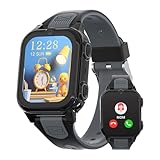
Overview:
Nearly identical to Product #6 but marketed specifically for boys, this Tixpc watch offers the same core safety and communication features in a black design for kids aged 5-12, requiring a SIM card.
What Makes It Stand Out:
Shares all key features with #6: real-time GPS tracking, SOS alerts, video calls, and triple positioning (GPS + LBS). The gendered “boys” labeling and inclusion of puzzle games aim to appeal to young users, though hardware appears unchanged from the unisex version.
Value for Money:
Priced similarly to #6, it offers identical functionality but risks overpaying due to targeted marketing. No tangible upgrades (e.g., enhanced battery or GPS) justify a potential price premium over the standard model, making it less cost-effective.
Strengths and Weaknesses:
Strengths: Same robust feature set as #6—reliable SOS, location history, and class mode—with no iOS/Android restrictions. Weaknesses: Redundant productization (vs. #6), unverified battery claims, and camera quality likely subpar for video calls.
Bottom Line:
Opt for the standard Tixpc model (#6) instead; this “boys” variant adds no meaningful improvements. A functional budget tracker, but avoid paying extra for identical tech with gendered branding.
Understanding the Core Purpose: Safety Beyond Simple Tracking
The primary driver for most parents seeking a child wearable is enhanced safety. It’s crucial to move beyond the basic idea of “GPS tracking” and understand the comprehensive safety ecosystem these devices aim to create. This involves reliable location sharing, instant communication channels, emergency response mechanisms, and features designed to deter potential risks, all wrapped in a package suitable for a child’s use.
Why Location Accuracy is Non-Negotiable
Not all GPS is created equal. Basic location services using only Wi-Fi or cell towers can be frustratingly inaccurate, placing your child blocks away from their actual location – useless in a genuine emergency. Look for devices that utilize multi-source positioning: combining GPS, GLONASS, Galileo, and BeiDou satellite systems with Wi-Fi positioning and cellular tower triangulation. This multi-constellation approach significantly improves accuracy, especially in challenging urban environments with tall buildings or dense foliage, providing a location pinpointed within meters, not city blocks.
The Critical Role of Real-Time Updates
Knowing your child’s location yesterday isn’t helpful. Safety depends on knowing right now. Real-time tracking with frequent, customizable update intervals (e.g., every 30 seconds, 2 minutes, 5 minutes) is vital. However, balance this with battery life – constant high-frequency updates drain power rapidly. The best systems offer smart location polling, increasing update frequency when movement is detected or during “safe zone” breaches, conserving battery during periods of rest.
Beyond the Map: Geofencing for Proactive Safety
Geofencing is a game-changer. It allows you to define virtual boundaries (safe zones) around places like home, school, or a friend’s house within the companion app. Instantly receive alerts the moment your child enters or exits these designated areas. This feature provides peace of mind for routine movements and acts as an early warning system if a child strays unexpectedly, allowing for swift, calm intervention before a situation escalates.
Communication Features: Staying Connected Safely
Reliable, controlled communication is the other pillar of child safety wearables. It’s not about replicating a full smartphone experience, but enabling essential, secure contact when needed most.
Two-Way Voice Calling: Simplicity and Security
The ability for your child to make and receive voice calls directly from the watch is fundamental. Crucially, this should be restricted to pre-approved contacts only (like parents, grandparents, trusted neighbors) – a closed network. Avoid devices that allow unrestricted calling or messaging, which can expose children to unwanted contact. Clear audio quality, even in moderately noisy environments, is essential for effective communication during moments of stress.
Emergency SOS: One-Touch Lifeline
A dedicated, physical SOS button is non-negotiable. It should be easily accessible to the child but designed to prevent accidental activation (e.g., requiring a long press). When activated, the watch should immediately: 1) Send an instant alert with precise location to all designated emergency contacts, 2) Initiate a loud alarm on the watch itself (potentially deterring a threat), and 3) Ideally, attempt to connect the child via voice call to a primary contact. This feature provides a critical lifeline during moments of fear or danger.
Voice Messages vs. Text: Child-Friendly Interaction
While full texting can be complex for younger children, the ability to send and receive pre-set voice messages or quick audio notes offers a fantastic middle ground. Parents can record simple prompts (“Time to head home!”), and children can respond with a quick “Okay!” or “Be home soon!” audio clip. This maintains connection without the complexity or potential pitfalls of open text messaging, suitable for ages where typing is difficult.
Essential Technical Considerations for Reliability
Safety features are only valuable if the device functions reliably when needed. Technical specifications directly impact real-world performance and user experience.
Network Connectivity: Cellular vs. Wi-Fi Reliance
This is a major differentiator. Wi-Fi-only devices are significantly limited; they only function reliably at home or in known Wi-Fi zones, becoming useless the moment a child steps outside that bubble. True safety requires cellular connectivity (LTE-M or NB-IoT). This provides constant location updates and communication capabilities anywhere within the cellular network coverage area, independent of finding Wi-Fi. Ensure the device uses a compatible network (e.g., works on major carriers in your region) and requires an active data plan.
Battery Life: Matching Usage to Reality
A dead watch is a useless watch. Evaluate battery life claims critically – manufacturer numbers often assume minimal usage. Real-world use with regular location updates, some calls, and notifications typically yields 1-3 days per charge for cellular models. Consider your child’s age and responsibility: younger kids might need daily charging, while older children can manage longer cycles. Fast charging capabilities are a significant bonus for quick top-ups.
Durability and Water Resistance: Built for Childhood
Children are tough on gear. The watch must withstand drops, bumps, and everyday playground adventures. Look for robust construction, a scratch-resistant screen (like Gorilla Glass), and a secure, comfortable strap. Essential water resistance (at minimum IP67 or IP68) is crucial – it should survive rain, handwashing, and accidental splashes. For active kids or those near water frequently, consider models rated for swimming (5 ATM or higher).
Design and Usability: Making it Work for Kids and Parents
The best technology fails if the child won’t wear it or the parent finds the app confusing. Design and user experience are paramount for long-term adoption and effectiveness.
Child-Centric Design: Comfort and Appeal
If the watch isn’t comfortable and appealing to the child, they won’t wear it consistently – rendering safety features moot. Consider size (not too bulky for small wrists), weight, strap material (soft silicone is often best), and design aesthetics that resonate with the child’s age and interests (colors, characters – though avoid overly “toy-like” for older kids). Adjustable straps ensure a secure, non-restrictive fit.
Intuitive Parental App: The Command Center
Your experience hinges on the companion smartphone app. It must be intuitive, visually clear, and provide immediate access to critical information: real-time location map, battery status, contact list management, geofence settings, and emergency logs. A cluttered, confusing app leads to frustration and missed alerts. Look for well-organized menus, customizable notification settings, and reliable push alerts.
Screen Visibility: Readable in All Conditions
A screen that washes out in sunlight is useless. Opt for devices with bright, high-contrast displays (AMOLED often excels here) that remain readable even on the brightest days. Adequate screen size is also important for the child to easily see caller info or simple messages, but shouldn’t be so large as to be unwieldy.
Critical Safety and Privacy Protections
With a device constantly connected and tracking a child, robust security and privacy measures are not optional; they are fundamental requirements.
Data Encryption: Securing the Lifeline
All location data, communication (calls, messages), and personal information transmitted between the watch, the app, and the servers must be protected by strong end-to-end encryption. This prevents unauthorized access or interception of your child’s location and communications by hackers or malicious actors. Verify the manufacturer’s stated encryption protocols (e.g., TLS 1.2+).
Secure Account Management: Protecting Access
Parental accounts should require strong, unique passwords and ideally offer two-factor authentication (2FA). This prevents unauthorized individuals from gaining access to the tracking app and potentially misusing the location data or communication features. Easy-to-bypass account security negates all other safety features.
Privacy by Design: Minimizing Data Footprint
Reputable manufacturers adhere to strict data privacy principles, especially concerning children. This means collecting only the data absolutely necessary for the device’s core safety functions, storing it securely for the minimal required time, and having clear, transparent privacy policies compliant with regulations like COPPA (Children’s Online Privacy Protection Act). Avoid companies with vague privacy terms or a history of data breaches.
Navigating Plans, Costs, and Long-Term Value
Owning a safety wearable involves ongoing considerations beyond the initial purchase price. Understanding the total cost of ownership is essential for making a sustainable choice.
Subscription Plans: The Hidden Cost of Connectivity
Cellular-enabled safety watches require an active data plan, typically billed monthly or annually. Costs vary significantly based on data usage (primarily driven by location update frequency), included features (like international roaming), and the cellular provider. Factor this recurring cost into your decision – a cheaper watch with a high monthly fee might cost more long-term than a slightly pricier device with a lower-cost plan. Understand the specific plan requirements before purchasing.
Upgradability and Longevity: Planning for Growth
Children grow, and their needs change. Consider how long the device will realistically serve your child. Does it have adjustable straps for wrist growth? Is the design age-appropriate for several years? Some platforms allow transferring the subscription/service to a newer model watch later, offering better long-term value than being locked into a specific hardware generation.
Warranty and Support: Peace of Mind for the Unexpected
Accidents happen. A solid manufacturer warranty (at least 1 year) covering defects is standard. Look for responsive customer support channels (phone, chat, email) specifically knowledgeable about the device and its service. Knowing you can get help quickly if the watch malfunctions or is lost provides significant peace of mind alongside the safety features themselves.
Integrating the Watch into Family Safety Practices
A smartwatch is a powerful tool, but it’s only one component of a comprehensive child safety strategy. It should enhance, not replace, fundamental safety education and communication.
Setting Clear Expectations and Boundaries
Before the watch is ever worn, have thorough conversations with your child. Explain why they have it (safety, not surveillance), how to use the SOS button appropriately, who they can contact, and the importance of keeping it charged and with them. Establish clear rules about when it should be worn (e.g., anytime away from home) and consequences for misuse (like taking it off intentionally). Transparency builds trust and ensures the child becomes an active participant in their own safety.
Complementing, Not Replacing, Parental Vigilance
The watch provides valuable information, but it doesn’t absolve parents of basic supervision, especially for younger children. It shouldn’t be used as a constant surveillance tool that erodes trust. Focus its use on specific safety scenarios: knowing when they arrive at school, checking in during longer walks, or enabling communication if they are late. Over-reliance on the technology can create a false sense of security.
Teaching Digital Literacy and Responsibility
Use the watch as an early opportunity to teach responsible tech use. Discuss privacy (why location sharing is limited), the seriousness of the SOS button, and respectful communication. As children grow older, these lessons become foundational for navigating the wider digital world safely and ethically.
Frequently Asked Questions
Frequently Asked Questions
How accurate is the GPS tracking really?
Real-world accuracy typically ranges from 5 to 20 meters under good conditions using multi-constellation GPS. Dense urban areas, heavy tree cover, or being indoors can reduce accuracy to 50-100 meters or more. Look for watches combining GPS with Wi-Fi and cellular positioning for the best possible results.
Can strangers track my child’s location?
Reputable safety watches use strong end-to-end encryption and require secure login to the parental app. Location data is only accessible to contacts explicitly approved by the parent through the app. Ensure you use a strong password and two-factor authentication on your account.
Is cellular connectivity really necessary, or is Wi-Fi enough?
For genuine safety and independence outside the home, cellular is essential. Wi-Fi-only watches only work reliably where known Wi-Fi networks exist, leaving your child untrackable and unreachable almost anywhere else, which defeats the core purpose.
How long does the battery typically last?
Expect 1-3 days for cellular models with moderate use (regular location updates, a few calls). Battery life plummets with constant real-time tracking. Wi-Fi-only models often last longer (3-5 days) but lack constant connectivity. Fast charging (0-80% in 30-60 mins) is very helpful.
What happens if the watch gets lost or stolen?
Good companion apps allow you to remotely lock the watch, erase personal data, and continue tracking its location (if powered on). Some offer a loud “lost mode” alarm. Immediately contact the cellular provider to suspend the SIM/data plan to prevent misuse.
Are these watches safe from hackers?
Reputable brands prioritize security with end-to-end encryption, regular security updates, and secure servers. Research the manufacturer’s security track record and update policy. Avoid obscure brands with poor security practices, as any connected device carries some inherent risk.
Can the watch be used at school?
School policies vary widely. Some ban all wearables, others allow them but require they be kept in bags (limiting safety features), and some permit them for safety. Check your school’s specific policy. Parental app controls can often disable non-essential features during school hours.
Do kids’ smartwatches emit harmful radiation?
All cellular devices emit non-ionizing RF radiation within regulated safety limits (SAR values). Reputable kids’ watches are designed to meet or exceed these strict safety standards. The SAR value is usually listed in the product specifications; compare it to regulatory limits for reassurance.
How do I know if the cellular coverage is good where my child spends time?
Check the carrier’s coverage map for the specific network the watch uses (not necessarily your phone’s carrier). Pay attention to coverage at school, parks, and common routes. Consider borrowing a demo unit or checking reviews from users in your specific area if coverage is a major concern.
Is the SOS button prone to accidental presses?
Quality watches design the SOS button to require a deliberate, sustained press (e.g., 3-5 seconds), often combined with a visual/audible confirmation step on the screen, to prevent accidental triggers from bumps or play. This balances ease of use in an emergency with minimizing false alarms.
See Also
- Top 10 Best Kids Smartwatches for GPS Tracking in 2026
- How to Solve Safety Concerns with the 10 Best GPS Smartwatches for Kids in 2026
- We Tested 50 Kids Watches with GPS Tracking - Here are the 10 Best for Safety
- How to Solve Parental Anxiety with the 10 Best GPS Smartwatches for Kids in 2026
- How to Use GPS Smartwatches for Accurate Outdoor Tracking