Table of Contents
Juggling day, evening, and night shifts isn’t just tiring—it rewires your entire relationship with sleep. While the world operates on a standard 9-to-5 rhythm, your schedule dances to a different, often chaotic, beat. This constant disruption throws your internal body clock, or circadian rhythm, into disarray, making restorative sleep feel like an elusive dream. You might find yourself battling insomnia during crucial daytime sleep windows or fighting overwhelming drowsiness while navigating complex tasks at 3 AM. It’s a unique challenge that standard sleep advice rarely addresses, leaving many shift workers feeling stranded without effective tools. Understanding the profound impact of this irregularity is the first step toward reclaiming rest.
Enter the potential of modern sleep tracking technology. While wearables have become common for monitoring general wellness, their true power for shift workers lies in moving beyond simple step counts. Imagine a device that doesn’t just record when you slept, but how well you slept amidst your unconventional hours. It could help decipher patterns obscured by rotating schedules, identify subtle environmental triggers sabotaging your rest, and provide personalized insights to optimize your limited sleep opportunities. This isn’t about chasing perfect sleep by conventional standards; it’s about strategically maximizing the quality and timing of sleep within your unique reality. The right wearable, used intelligently, becomes less of a gadget and more of a vital navigation tool for your circadian journey.
Top 10 Sleep Tracking Wearables
Detailed Product Reviews
1. Fitbit Inspire 3 Health &-Fitness-Tracker with Stress Management, Workout Intensity, Sleep Tracking, 24/7 Heart Rate and more, Midnight Zen/Black One Size (S & L Bands Included)

Overview:
The Fitbit Inspire 3 is a streamlined health tracker focused on holistic wellness. It emphasizes daily readiness, stress management, and sleep optimization alongside core fitness metrics, targeting users seeking actionable insights without overwhelming complexity. Its lightweight design and long battery life enhance all-day wearability.
What Makes It Stand Out:
Fitbit’s signature strength lies in its comprehensive yet intuitive ecosystem. The Daily Readiness Score intelligently combines activity, sleep, and heart rate data to guide daily exertion. Advanced stress tools—including a Stress Management Score and guided breathing sessions—plus detailed Sleep Profiles and automatic exercise detection set it apart from basic trackers. The inclusion of both small and large bands ensures universal fit.
Value for Money:
Priced mid-range, it offers exceptional breadth for occasional gym-goers and wellness-focused users. While lacking advanced metrics like VO2 Max, it outperforms cheaper alternatives with clinically validated sleep/stress features and a polished app. It’s a smarter investment than budget trackers but avoids the premium cost of subscription-based rivals like WHOOP.
Strengths and Weaknesses:
Strengths: 10-day battery, intuitive stress/sleep tools, comfortable all-day wear, no subscription required.
Weaknesses: GPS requires phone pairing, limited third-party app integration, no onboard music storage.
Bottom Line:
Ideal for beginners and wellness enthusiasts prioritizing sleep, stress, and activity balance. Its seamless integration of actionable health insights at a reasonable price makes it a top-tier choice for holistic daily tracking without recurring fees.
2. WHOOP One – 12-Month Membership – 5.0 Health and Fitness Wearable – 24/7 Activity Tracker with VO2 Max, Sleep Tracking, Personalized Coaching, Menstrual Cycle Insights – 14+ Days Battery Life

Overview:
WHOOP One delivers a premium, subscription-driven health optimization system centered on recovery and performance. It targets athletes and data-driven users with lab-grade biometric tracking, emphasizing how daily habits impact strain and recovery through its 12-month membership model.
What Makes It Stand Out:
Continuous monitoring of HRV, resting heart rate, and sleep staging provides unparalleled recovery insights. The WHOOP Journal correlates 160+ behaviors (e.g., caffeine, stress) with recovery metrics, while AI-powered coaching offers personalized strain/sleep recommendations. Its minimalist, screen-free band and 14-day battery prioritize discreet, long-term wear.
Value for Money:
The upfront cost includes a full year of membership, avoiding surprise fees. Though pricier initially than standalone devices, the depth of analytics and coaching justifies it for serious athletes. Cheaper trackers lack its scientific rigor, but casual users may find the subscription model prohibitive long-term.
Strengths and Weaknesses:
Strengths: Best-in-class recovery metrics, actionable habit journaling, exceptional battery life, no screen distractions.
Weaknesses: Mandatory subscription after 12 months, no on-device display, limited exercise mode specificity.
Bottom Line:
A must-have for performance-focused athletes seeking data-driven recovery optimization. While the subscription model isn’t for everyone, the depth of insights and coaching offers unmatched value for dedicated users committed to maximizing output.
3. Health Smart Bracelet,Fitness Tracker with Heart Rate, Sleep Monitoring, Blood Oxygen, Step Counting for iOS and Android, No Subscription Fee, Waterproof, Valentines Day Gifts for Her Him(Black)
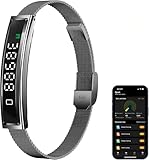
Overview:
This budget-friendly fitness tracker promises comprehensive health monitoring at an accessible price. It targets cost-conscious users with basic step, sleep, and heart rate tracking, plus blood oxygen and blood pressure estimates—though accuracy expectations should be tempered.
What Makes It Stand Out:
The standout feature is its zero-subscription model and 120+ exercise modes, including GPS-linked outdoor activities. The IP68 waterproofing and multi-week battery life (15-30 days) enhance practicality for swimmers and travelers. Its no-fee app removes recurring cost barriers common in premium trackers.
Value for Money:
Exceptional for under $50, outpacing similarly priced rivals in feature count. While metrics like blood pressure are indicative rather than medical-grade, it delivers solid step/sleep tracking for casual use. It’s ideal for users who prioritize affordability over clinical accuracy.
Strengths and Weaknesses:
Strengths: No subscription fees, impressive battery life, diverse exercise modes, waterproof design.
Weaknesses: Questionable accuracy for blood pressure/SpO2, basic app interface, limited smart features.
Bottom Line:
A pragmatic choice for beginners or secondary-device users needing reliable step/sleep tracking without subscriptions. Manage expectations for advanced health metrics, but its value for casual fitness goals is undeniable at this price.
4. Milavan Smart Health Ring for Women Men Fitness Tracker with Heart Rate, Blood Oxygen, Blood Pressure, Sleep Monitoring, Step Counting, IP68 Waterproof for iOS and Android, No APP Fee, Rose Gold 8

Overview:
Milavan’s ring format offers discreet 24/7 health tracking, targeting style-conscious users who prefer jewelry-like wearability. It focuses on continuous heart rate, SpO2, and blood pressure monitoring, with sleep and basic activity tracking—though its fitness capabilities are limited compared to wrist-based devices.
What Makes It Stand Out:
The ultra-slim 2mm design and polished interior ensure comfort for all-day wear, even during sleep. Automatic 30-minute health checks provide consistent data without manual input. Its ring form factor appeals to users averse to bulky wristbands, especially during sleep or formal occasions.
Value for Money:
Competitively priced for a health ring, it delivers solid sleep and passive health metrics. However, the lack of GPS, limited sports modes (only 8), and potential sizing issues reduce versatility. It’s worthwhile for ring-format enthusiasts but less compelling for active athletes needing robust exercise analytics.
Strengths and Weaknesses:
Strengths: Elegant, comfortable design; seamless all-night wear; continuous passive health monitoring.
Weaknesses: Inaccurate blood pressure estimates; limited exercise tracking; sizing challenges without a kit.
Bottom Line:
Best suited for users prioritizing discreet, continuous health monitoring over fitness precision. While innovative for passive tracking, its niche format and metric limitations make it a supplementary device rather than a primary fitness tool.
5. POLAR Loop – Smart Screen-Free Wearable Health & Fitness Band with 24/7 Heart Rate, Sleep & Activity Tracking, Automatic Training Detection, No Subscription, 8-Day Battery.

Overview:
POLAR Loop champions minimalist, distraction-free health tracking with a screenless design. It focuses on 24/7 heart rate, sleep, and recovery metrics using proven sensor tech, targeting users overwhelmed by smartwatch notifications who value simplicity and accuracy.
What Makes It Stand Out:
The absence of a screen eliminates distractions while enabling exceptional battery life (8 days). POLAR’s Precision Prime sensors deliver reliable heart rate data during sleep/workouts, and its Nightly Recharge feature provides science-backed recovery insights. The ultra-lightweight (29g) band ensures near-invisible wear.
Value for Money:
Its one-time purchase model with free Polar Flow app access offers long-term savings versus subscription services. While lacking GPS or smart features, it excels in core biometrics at a mid-range price. Serious sleep/recovery seekers get premium accuracy without recurring fees.
Strengths and Weaknesses:
Strengths: No subscriptions; accurate sleep/recovery metrics; lightweight comfort; 8-day battery.
Weaknesses: No screen for real-time feedback; basic app compared to Fitbit; limited smart features.
Bottom Line:
A superb choice for users prioritizing unobtrusive, accurate sleep and recovery tracking. Its no-nonsense design and zero fees make it a wise investment for wellness-focused individuals seeking reliable data without digital clutter.
6. SM SEVENMORE Smart Ring Health Fitness Tracker with GPS Route for Men Women, Step/Heart Rate/Blood Oxygen/Blood Pressure/Sleep Monitoring for iPhone & Andriod, No App Subscription (Sizing Kit Only)

Overview:
This offering is strictly a US-sizing reference kit for SM SEVENMORE’s Smart Ring, essential for ensuring proper fit before purchasing the actual wearable. It addresses a critical pain point: inaccurate ring sizing leading to compromised sensor accuracy and comfort. The kit helps users determine their precise US ring size to guarantee optimal health tracking performance.
What Makes It Stand Out:
Unlike competitors, SM SEVENMORE prioritizes fit accuracy upfront with a dedicated sizing solution, acknowledging that ill-fitting rings sabotage data reliability. The kit eliminates guesswork, directly supporting the ring’s core functionality—continuous health monitoring (heart rate, SpO₂, sleep)—which requires snug, consistent skin contact. No other smart ring brand emphasizes sizing as a prerequisite.
Value for Money:
Priced affordably as a standalone accessory, the kit prevents costly returns or ineffective usage of the main product. It’s invaluable for first-time ring buyers unfamiliar with US sizing, justifying its cost by ensuring the $150+ smart ring functions as intended. Skipping it risks wasted investment in the primary device.
Strengths and Weaknesses:
Strengths: Solves a universal smart ring adoption barrier; non-intrusive, reusable sizing tool; builds trust by prioritizing accuracy. Weaknesses: Not the actual tracker (potential confusion); limited utility if users already know their size; shipping delays if ordered separately.
Bottom Line:
Mandatory for sizing novices—this kit is a small but critical step to unlock the smart ring’s full potential. Skip it only if absolutely certain of your US ring size.
7. Fitness Tracker with Heart Rate/Blood Oxygen/Sleep Monitor, 20+ Sports Modes Smart Watches for Women/Men, Activity & Step Tracker Smart Watch for Android/iOS Phones (Dark Black)

Overview:
This unisex smartwatch delivers comprehensive health tracking and smart features at an accessible price. Targeting fitness enthusiasts and casual users, it monitors vital metrics like heart rate, blood oxygen, sleep stages, and 25+ sports modes, syncing seamlessly with iOS/Android via the “Keep Health” app—no subscription required.
What Makes It Stand Out:
Its vibrant 1.10-inch AMOLED touchscreen and stainless steel frame elevate it beyond budget trackers, offering premium aesthetics. The inclusion of practical smart features—call/message reminders, remote camera control, and women’s health tracking—provides exceptional versatility for its price point, bridging style and functionality.
Value for Money:
Priced significantly below premium smartwatches (e.g., Apple Watch), it delivers 90% of core health features without hidden fees. The durable build, sport modes, and lifestyle utilities (sedentary alerts, hydration reminders) make it ideal for users seeking a capable daily driver without overspending.
Strengths and Weaknesses:
Strengths: Bright, responsive display; extensive smart features; no subscription fees; comfortable for 24/7 wear. Weaknesses: Blood pressure accuracy may vary; GPS relies on phone; app ecosystem less refined than top-tier brands.
Bottom Line:
An outstanding budget-friendly smartwatch for holistic health tracking and smart notifications—perfect for value-conscious users prioritizing features over medical-grade precision.
8. Smart Health Wristband Wearable Activity&Fitness Tracker Band 24/7 Full Sleep Tracker, All-Day Automatic Continuous Heart Rate Tracking powerful HRV Monitor Blood Pressure Stress 2 Bands with Free APP

Overview:
This minimalist wristband emphasizes discreet, jewelry-like health monitoring with robust analytics. It tracks 24/7 heart rate, SpO₂, stress, HRV, and detailed sleep stages, syncing to a free app. Its screen-free design targets users wanting wellness insights without smartwatch distractions, backed by dual straps for versatility.
What Makes It Stand Out:
The hypoallergenic, 34g design mimics fine jewelry—ideal for professional or social settings where bulkier trackers feel intrusive. With 170+ sports modes, smartphone GPS integration, and a 30-day battery, it uniquely balances elegance, endurance, and depth of health metrics like HRV analysis.
Value for Money:
Offering medical-adjacent metrics (HRV, stress) at a fraction of clinical device costs, its no-subscription model and dual-strap inclusion enhance longevity. Competes well against mid-tier bands by prioritizing understated utility over flashy screens, appealing to style-conscious health devotees.
Strengths and Weaknesses:
Strengths: Ultra-lightweight, elegant design; exceptional battery life; comprehensive health suite; no ongoing fees. Weaknesses: No display limits on-device data checks; GPS requires phone; waterproofing not for swimming.
Bottom Line:
A top choice for professionals seeking all-day, unobtrusive health tracking with strong analytics—ideal if you prioritize form and function over smart notifications.
9. Fvtga Smart Ring for Women Men - Fitness Health Tracker with Sleep Monitoring Heart Rate and Activity Tracking,Blood Oxygen Monitor IP68 Waterproof No Subscription Fee iOS Android Compatible(Silver9)
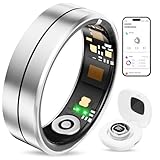
Overview:
This unisex smart ring delivers discreet, continuous health tracking in a sleek silver band. It monitors steps, heart rate, blood oxygen, sleep quality, and multiple sports modes while boasting IP68 waterproofing and lifetime-free app access—positioned as a subtle alternative to wrist-worn devices.
What Makes It Stand Out:
Its IP68 rating (rare among smart rings) enables worry-free swimming and shower use, while the no-subscription model ensures full feature access indefinitely. The ring’s minimalist profile excels for users seeking invisible tracking during sleep or formal occasions where watches feel cumbersome.
Value for Money:
Competitively priced against entry-level smartwatches, it offers unique convenience for 24/7 wear without screen distractions. The lifetime app access eliminates hidden costs, making it economical for long-term health monitoring—especially for sleep-focused users.
Strengths and Weaknesses:
Strengths: True waterproofing for aquatic activities; no subscription fees; ultra-discreet design; comfortable for sleep. Weaknesses: Limited battery life (3–5 days); no onboard display; GPS tracking dependent on phone.
Bottom Line:
The best waterproof smart ring for swimmers and sleep enthusiasts wanting subscription-free, unobtrusive health data—though frequent charging is required.
10. Smart Bracelet, Wearable Activity & Fitness Tracker Band, 24H Sleep Tracker, All-Day Continuous Heart Rate Blood Pressure Stress HRV Monitor, 173 Sport Modes Smart Wristband with Free APP Black

Overview:
This featherlight wristband (25g) positions itself as a “wrist clinic,” offering continuous health monitoring—heart rate, SpO₂, blood pressure, stress, HRV, and menstrual predictions—alongside 170+ sports modes. Its 45-day battery and dual-strap system cater to travelers and全天候 users.
What Makes It Stand Out:
The revolutionary lightweight build (50% lighter than rivals) and dual straps (nylon/silicone) ensure all-day comfort without slippage. Unmatched 45-day battery life and 1ATM waterproofing make it ideal for extended trips, while AI-driven health insights (e.g., stress scans) add depth beyond basic trackers.
Value for Money:
At a mid-range price, it outperforms competitors in battery endurance and comfort-focused design. The no-subscription model and included accessories (magnetic charger, two straps) maximize utility, justifying cost for frequent travelers or users prioritizing wearability.
Strengths and Weaknesses:
Strengths: Industry-leading battery life; cloud-like comfort; robust waterproofing; insightful health AI. Weaknesses: Snug fit critical for accuracy; non-medical grade readings; no onboard GPS.
Bottom Line:
A near-perfect blend of endurance, comfort, and health analytics—highly recommended for travelers or users seeking a nearly invisible, long-lasting wellness companion.
Understanding the Unique Sleep Challenges of Shift Work
Shift work fundamentally conflicts with human biology, which evolved for daytime activity and nighttime rest. This misalignment creates a cascade of physiological hurdles that standard sleep trackers often fail to address meaningfully.
The Circadian Rhythm Conundrum
Your body’s internal clock, governed by light exposure and other cues, expects sleep during darkness. Working nights forces activity when your biology demands rest, and sleep when alertness is expected. This chronic misalignment suppresses melatonin production at critical times, making it incredibly difficult to fall asleep and stay asleep during daylight hours. Standard sleep algorithms trained on “normal” sleepers often misinterpret this shifted pattern, labeling perfectly adequate daytime sleep as poor quality simply because it occurs at an unusual time.
Inconsistent Schedules and Sleep Fragmentation
Rotating shifts or irregular hours prevent the establishment of a stable sleep-wake pattern. One week you might sleep from 9 AM to 6 PM, the next from 3 PM to midnight. This constant shifting prevents your body from adapting, leading to severely fragmented sleep. Sleep trackers must be able to accurately map sleep stages across wildly varying start and end times without becoming confused or providing irrelevant feedback based on a fixed schedule. Fragmentation—waking multiple times—is common, and the tracker needs to distinguish this from natural light sleep phases.
Environmental Sleep Saboteurs
Daytime sleep for night shift workers battles constant environmental interference: sunlight streaming through windows, daytime noise (traffic, neighbors, deliveries), and household activity. These factors drastically reduce sleep quality, even if total sleep time seems sufficient. A valuable tracker should help correlate these external disturbances with your sleep architecture, providing evidence to justify investing in blackout curtains, white noise machines, or stricter household rules during your sleep window.
Key Features to Prioritize in a Sleep Tracker for Shift Patterns
Not all sleep tracking wearables are created equal, especially when your sleep schedule defies convention. Focusing on the right capabilities is crucial for getting actionable data, not just confusing numbers.
Advanced Sleep Stage Analysis Accuracy
Basic trackers often struggle with accuracy, particularly in distinguishing light, deep, and REM sleep. For shift workers, where every minute of quality sleep counts, precise staging is non-negotiable. Look for devices utilizing multiple sensors (like advanced optical heart rate monitoring combined with movement and potentially skin temperature) and algorithms specifically validated for non-standard sleep patterns. Inaccurate deep sleep readings, for instance, could mislead you about your true restorative sleep deficit.
Flexible Sleep Scheduling and Pattern Recognition
Rigid trackers tied to a “bedtime” and “wake time” are useless for rotating shifts. The ideal device allows you to easily log sleep whenever it happens, without forcing you into a predetermined schedule. Even better are models that use machine learning to automatically recognize your shifting sleep patterns over time, adapting its analysis rather than constantly requiring manual input. This adaptability is key to seeing meaningful trends across weeks of variable shifts.
Comprehensive Light Exposure Monitoring
Light is the most potent regulator of your circadian rhythm. A tracker that measures ambient light exposure (especially blue light) during your sleep period is invaluable. For night shifters trying to sleep during the day, this data reveals if your blackout measures are truly effective. Conversely, tracking light exposure during your wake period (even if it’s nighttime) helps assess if you’re getting enough bright light to reinforce your shifted schedule, a critical factor often overlooked.
Integrated Napping Insights
Strategic napping is a lifeline for many shift workers, but poorly timed or overly long naps can worsen sleep inertia or disrupt the next sleep period. A capable tracker shouldn’t ignore naps. It should accurately detect unplanned naps and allow logging of intentional ones, analyzing their duration, timing relative to your main sleep, and impact on subsequent sleep quality or next-day alertness. Understanding nap effectiveness is part of the optimization puzzle.
Beyond Basic Tracking: Essential Data Interpretation Tools
Raw sleep data is meaningless without context and actionable insights. The most useful wearables for shift workers provide sophisticated analysis tailored to non-24-hour lifestyles.
Personalized Sleep Score Contextualization
Many devices generate a daily “sleep score.” For shift workers, a score based on societal norms (e.g., 7-9 hours at night) is inherently flawed and demoralizing. Seek platforms that contextualize scores based on your logged sleep schedule and duration goals. Does it recognize that 6 hours of consolidated sleep during the day might be a “good” score for you on a tough rotation? The scoring system must adapt to your reality, not the other way around.
Long-Term Trend Analysis Across Shift Cycles
One-off sleep nights are less informative than trends. Can the app clearly visualize your sleep quality, duration, and consistency over multiple shift cycles (e.g., comparing all your “night shift recovery” sleeps)? Look for tools that let you filter data by shift type (day, evening, night, off) to isolate how different work periods impact your rest. This longitudinal view is essential for identifying what truly works for your body amidst the chaos.
Correlation with Other Health Metrics
Sleep doesn’t exist in a vacuum. The best platforms correlate sleep data with other tracked metrics relevant to shift work challenges: resting heart rate (a key indicator of recovery stress), heart rate variability (HRV, reflecting autonomic nervous system balance and resilience), and potentially even self-reported energy or mood logs. Seeing how poor sleep correlates with elevated resting heart rate the next day provides concrete evidence of the impact, motivating behavioral changes.
Actionable, Shift-Specific Recommendations
Generic advice like “go to bed earlier” is useless. Does the platform offer tailored suggestions based on your tracked data and shift pattern? Examples might include: “Your sleep efficiency dropped 15% on days with high morning light exposure; consider upgrading blackout curtains,” or “Naps longer than 45 minutes on night shifts correlate with worse subsequent sleep; try limiting to 20-30 minutes.” Actionable, data-driven guidance specific to shift work context transforms data into real-world solutions.
Prioritizing Comfort and Practicality for All-Day Wear
Since shift work demands wearables be worn during both unconventional sleep and potentially long, active work hours, comfort and practicality are paramount for consistent, reliable data.
Unobtrusive Design for Daytime Sleep
A bulky, uncomfortable device will be tossed aside during crucial daytime sleep. Prioritize lightweight, low-profile designs with soft, breathable bands. Consider the clasp – magnetic or silicone loop closures are often less irritating than traditional buckles when lying on your side. The tracker should feel virtually forgotten once you’re trying to sleep in a bright, noisy environment where any discomfort is magnified.
Exceptional Battery Life for Shift Realities
Getting stuck with a dead tracker mid-shift because it can’t last 36+ hours between charges defeats the purpose. Shift workers need devices that reliably track sleep and full work periods without daily charging anxiety. Aim for battery life significantly exceeding your longest possible consecutive wear time (e.g., 7+ days). Fast charging capabilities are also a major plus for quick top-ups during short breaks.
Durability and Water Resistance for Demanding Jobs
Many shift workers have physically demanding or hands-on jobs (healthcare, manufacturing, emergency services). The wearable must withstand sweat, incidental water exposure (washing hands, rain), and potential bumps. Look for robust build quality and a minimum of 5 ATM water resistance (suitable for swimming/showering) to handle real-world work environments without constant worry.
Discreet Wearability for Professional Settings
Depending on your workplace, visible tech on your wrist might not be appropriate or allowed. A tracker that can be worn comfortably on the upper arm (using a compatible band) or has a very subtle, non-sporty design might be necessary for certain professional environments, ensuring you can track continuously without compromising your role.
Maximizing the Value: How Shift Workers Should Use Their Tracker
Owning the right device is only half the battle. Using it strategically is key to turning data into improved sleep health and daytime function.
Consistent Data Logging is Non-Negotiable
The tracker’s algorithms need consistent input to learn your unique patterns. Make logging sleep (even irregular naps) and, crucially, your shift schedule into a non-negotiable habit. Skipping logs creates data gaps that skew trends and render long-term analysis useless. Treat it like clocking in – essential for the system to function accurately for you.
Focus on Trends, Not Daily Numbers
Don’t obsess over a single night’s “poor” score. Shift work inherently leads to variable sleep quality. Instead, review weekly or bi-weekly trends: Is your average sleep efficiency improving over consecutive night shifts? Is deep sleep duration stabilizing after implementing blackout measures? Looking at the bigger picture reveals what strategies are actually working amidst the inevitable fluctuations.
Pair Tracker Data with a Simple Sleep Journal
Wearables miss context. Did that poor sleep night coincide with high caffeine intake after your shift? A stressful work incident? A noisy neighbor mowing the lawn? Jotting down key factors (light exposure efforts, caffeine cut-off time, stress levels, pre-sleep routine) alongside your tracker data provides the “why” behind the numbers, enabling much more precise troubleshooting.
Use Insights to Advocate for Better Sleep Hygiene
Concrete data is powerful. If your tracker consistently shows poor sleep quality due to light exposure, it strengthens your case for investing in high-quality blackout solutions. If data shows naps longer than 30 minutes cause grogginess, you have evidence to adjust your strategy. Let the data guide your sleep hygiene investments and habit changes, making them targeted and effective.
Frequently Asked Questions
Frequently Asked Questions
How can a sleep tracker help if my schedule changes every week? Advanced trackers learn your shifting patterns over time, analyzing sleep quality based on your actual logged sleep windows, not a fixed schedule. They identify trends across different shift types (day, night, off) to show what conditions work best for you personally, regardless of the specific day.
Are wrist-based trackers accurate enough for daytime sleep? Accuracy depends heavily on the device’s sensors and algorithms. Look for models using multi-sensor fusion (heart rate, movement, temperature) and algorithms validated for non-standard sleep. Ensure it allows flexible sleep logging without forcing a nighttime schedule for reliable daytime sleep data.
Can wearables really help me figure out the best nap strategy? Yes. By tracking nap duration, timing relative to your main sleep and shifts, and correlating this with your subsequent sleep quality and daytime alertness scores (or self-logged energy), you can identify your personal optimal nap length and timing to avoid sleep inertia.
What’s more important: total sleep time or sleep stages for shift workers? Both matter, but quality (reflected in adequate deep and REM sleep) is often harder to achieve with fragmented or daytime sleep. Prioritize trackers that accurately measure sleep stages. Sometimes slightly less total time with higher quality restorative sleep is more beneficial than longer, poor-quality sleep.
How do I know if the light exposure data is accurate and useful? Look for trackers with dedicated ambient light sensors. The data becomes useful when correlated with your sleep scores. If high light exposure consistently precedes poor sleep efficiency during your daytime sleep window, it confirms a need for better blackout solutions.
Should I wear the tracker all day and night, or just during sleep? For the most comprehensive insights, especially regarding circadian rhythm (light exposure during wakefulness) and understanding how work stress impacts sleep, wearing it continuously 24/7 provides the richest dataset for analysis.
My sleep scores are always low compared to “normal” sleepers. Is the tracker useless? Not if it contextualizes scores for your schedule. A good shift-work-focused tracker adjusts expectations. Focus on your trends: Is your score improving for your specific sleep pattern over time? A “65” that’s trending up from “55” on your shifted schedule is positive progress.
How long does it take to see meaningful trends from the data? Be patient. It typically takes 2-4 weeks of consistent, accurate logging across different shift types to establish reliable baseline trends and see the impact of any changes you implement. Avoid making decisions based on just a few days of data.
Can sleep trackers help with adjusting to a new shift rotation? Yes. Trackers can show how your sleep quality and circadian markers (like resting heart rate) change during the transition. Data might reveal if gradual adjustment strategies or specific light therapy timing are helping your body adapt more smoothly to the new schedule.
Is heart rate variability (HRV) data useful for shift workers? Absolutely. HRV is a sensitive indicator of recovery and autonomic nervous system stress. For shift workers facing chronic circadian disruption, tracking HRV trends can provide early warning signs of excessive fatigue or poor recovery, often before obvious sleep score declines, prompting proactive rest strategies.
See Also
- Best Sleep Tracking Bracelets for Night Shift Workers: 10 Expert Picks for 2026
- Best Sleep Tracking Wearables for Women: 10 Expert Picks for Hormonal Sleep Cycle Insights in 2026
- Best Sleep Tracking Wearables for Men: 10 Expert Picks for 2026
- 10 Expert-Recommended Sleep Tracking Wearables with Heart Rate Monitor for Cardiac Sleep Patterns in 2026
- How to Choose the 10 Best Sleep and Health Monitoring Wearables for Shift Workers in 2026