Table of Contents
Imagine a world where checking your heart’s electrical activity is as effortless as glancing at your wristwatch. This isn’t science fiction—it’s the rapidly evolving reality of cardiac monitoring. With heart disease remaining a leading global health concern, the demand for accessible, accurate, and user-friendly ECG technology has never been higher. Today’s innovators are pushing boundaries, transforming complex medical diagnostics into tools that seamlessly integrate into daily life, empowering individuals to take proactive control of their cardiovascular well-being like never before.
Gone are the days when an ECG meant a trip to the clinic and wires taped to your chest. The latest wave of recording devices leverages breakthroughs in miniaturization, artificial intelligence, and sensor technology to deliver clinical-grade insights outside traditional healthcare settings. Whether you’re managing a known condition, assessing personal risk factors, or simply prioritizing preventive care, understanding the capabilities and considerations of modern ECG devices is crucial. This guide cuts through the marketing hype, focusing on the essential features and technological advancements shaping the future of personal heart health monitoring, so you can make informed decisions about what truly matters for your unique needs.
Top 10 ECG Recording Devices
Detailed Product Reviews
1. EMAY 6L Portable ECG Monitor | Record ECG and Heart Rate in 6 Channels | Compatible with Smartphone and PC | No Subscription Required

Overview:
This FDA-cleared OTC device captures 6-channel ECG readings and heart rate for home health monitoring. It connects via Bluetooth to smartphones or USB to PCs, storing data locally without mandatory subscriptions. Designed for personal use, it excludes pacemaker users and isn’t a hospital-grade diagnostic tool.
What Makes It Stand Out:
Its 6-channel capability provides more comprehensive heart data than single-lead alternatives, while true zero-cost operation (no app subscriptions) is a major differentiator. The dual connectivity (Bluetooth + USB) and PC software compatibility offer flexibility for data management and review.
Value for Money:
Competitively priced for a multi-lead monitor, it eliminates recurring fees that plague some competitors. The inclusion of robust PC software and cross-platform support enhances utility, making it ideal for users prioritizing data ownership and cost transparency over brand prestige.
Strengths and Weaknesses:
Strengths: No hidden costs; detailed 6-lead analysis; reliable battery life; straightforward home use. Weaknesses: Lacks medical-grade marketing credibility; software interface may feel less polished than premium brands; limited clinical validation evidence in marketing.
Bottom Line:
A practical, budget-friendly choice for tech-savvy users seeking detailed home ECG tracking without subscriptions. Ideal if you prioritize raw data access over doctor-integrated services, but verify compatibility with your devices first.
2. EMAY Portable ECG Monitor | Record ECG and Heart Rate | Compatible with Smartphone and PC

Overview:
This OTC single-lead (Lead I) ECG monitor records basic heart rhythm and rate for home use. It pairs with smartphones via Bluetooth or PCs via USB, featuring similar software functionality to its 6L counterpart. Positioned as an entry-level option with no subscription fees.
What Makes It Stand Out:
Its core appeal is simplicity and affordability as a no-subscription single-lead device. The dual connectivity (Bluetooth/USB) and included PC software differentiate it from app-only competitors, appealing to users wanting offline data storage and analysis.
Value for Money:
Excellent value for basic heart rhythm checks. It undercuts multi-lead monitors significantly while avoiding subscription traps. Best suited for users needing occasional AFib screening without advanced diagnostics, though the single-lead limitation reduces data depth.
Strengths and Weaknesses:
Strengths: Zero ongoing costs; easy setup; reliable battery; works offline via PC. Weaknesses: Only captures Lead I data (less comprehensive); lacks brand recognition; minimal clinical validation messaging; software may feel dated.
Bottom Line:
A solid budget pick for straightforward heart rate and basic arrhythmia checks. Choose this if you need fundamental, subscription-free monitoring but skip it if you require multi-lead insights or seamless doctor integration.
3. KardiaMobile 6L EKG Monitor, Medical-Grade, FDA-Cleared Heart Monitor, 6 Views of The Heart, Results in 30 Seconds, Unlimited Recordings, Works with Smartphones, HSA&FSA Eligible, Pocket-Size
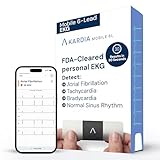
Overview:
This pocket-sized, FDA-cleared device delivers medical-grade 6-lead EKGs in 30 seconds. It pairs via Bluetooth with smartphones (no PC needed), detects AFib, bradycardia, and tachycardia, and offers optional KardiaCare for advanced analysis. HSA/FSA eligible and subscription-free for core features.
What Makes It Stand Out:
Its #1 cardiologist-recommended status, FDA clearance for 6-lead accuracy, and seamless one-touch smartphone integration set it apart. The vast clinical validation (350M+ EKGs) and portability provide unmatched credibility for home use, though KardiaCare adds cost for extras.
Value for Money:
Premium-priced but justified by medical-grade reliability and brand trust. Core functionality (unlimited recordings, basic analysis) requires no subscription, unlike some competitors. Ideal for those prioritizing clinical accuracy and doctor acceptance over minimal upfront cost.
Strengths and Weaknesses:
Strengths: Exceptional accuracy; trusted by professionals; intuitive app; truly pocketable; no mandatory subscription. Weaknesses: Bluetooth-only (no PC backup); optional KardiaCare needed for advanced detections; higher initial cost.
Bottom Line:
The top recommendation for reliable, clinically relevant home ECG monitoring. Worth the investment if you need actionable data for medical consultations, especially for arrhythmia screening.
4. KardiaMobile 1-Lead EKG Monitor, Medical-Grade FDA-Cleared Personal Heart Monitor, Detects Normal, AFib & Arrhythmias, Unlimited Recordings, 30 Second Results, Works with most Smartphones, Pocket-size
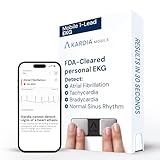
Overview:
This ultra-compact FDA-cleared device captures single-lead EKGs in 30 seconds using finger placement. It works standalone with smartphones via Bluetooth, detecting AFib, bradycardia, and tachycardia. Core features are subscription-free, with KardiaCare offering extras.
What Makes It Stand Out:
Its featherlight portability (<1 oz) and simplicity shine—no PC setup, just tap-and-check. Backed by Kardia’s medical credibility (350M+ EKGs), it’s ideal for quick rhythm checks. The optional KardiaCare subscription adds value for chronic condition management.
Value for Money:
High value for basic, on-the-go monitoring. Lower cost than the 6L model while retaining core Kardia reliability. Best for users needing frequent AFib spot-checks without multi-lead complexity, though advanced features require a subscription.
Strengths and Weaknesses:
Strengths: Unbeatable portability; effortless one-step use; trusted accuracy for single-lead; no Wi-Fi needed. Weaknesses: Single-lead limits diagnostic depth; subscription needed for full feature suite; less useful for nuanced arrhythmia analysis.
Bottom Line:
The best single-lead monitor for travel-friendly, immediate heart checks. Choose this over the 6L if simplicity and size matter most, but opt for multi-lead if detailed diagnostics are critical.
5. EKG Monitor Device, Personal Heart Rate Monitor with LCD Screen and Storage, Portable ECG Monitor Compatible with PC and Smartphone, Instant Results in 30 Seconds, FSA/HSA Eligible

Overview:
This budget-friendly OTC monitor captures ECG data via LCD display in 30 seconds, supporting multiple placements (hand-hand, hand-chest). It stores data locally and syncs via Bluetooth (phone) or USB (PC), claiming medical-grade analysis without subscriptions.
What Makes It Stand Out:
The built-in LCD screen provides immediate standalone results—unlike app-dependent rivals—while multi-position flexibility aims for accuracy. Dual connectivity and FSA eligibility cater to users wanting offline access and cost flexibility.
Value for Money:
Strong value for entry-level monitoring. The self-contained display and no-subscription model suit those avoiding smartphones, but unverified “medical-grade” claims warrant caution compared to FDA-cleared alternatives at similar prices.
Strengths and Weaknesses:
Strengths: Integrated LCD for instant readings; versatile placement options; affordable; no recurring fees. Weaknesses: Questionable clinical validation; generic branding; software may lack polish; accuracy unproven in independent studies.
Bottom Line:
A functional starter option for basic heart checks with offline capability, but prioritize FDA-cleared devices like Kardia if medical accuracy is essential. Best for casual users on a tight budget.
6. Monerr Portable ECG Monitor | Record and Store One-Lead ECG Signals | Monitor and Display Heart Rate for Home Health Care Use -White

Overview:
This FDA-listed one-lead ECG monitor targets adults seeking home heart health tracking. It records basic electrical activity (P-wave, PR-interval, QRS complex, QTc) in 30 seconds via thumb contact on metal electrodes, storing data via Bluetooth to iOS/Android apps with unlimited cloud storage. Not a diagnostic replacement for clinical ECGs, and unsuitable for pacemaker users.
What Makes It Stand Out:
Its subscription-free unlimited data storage and compatibility with all smartphones stand out, enabling seamless sharing with healthcare providers. The built-in rechargeable battery and focus on core metrics (heart rate, rhythm intervals) offer simplicity for proactive monitoring, especially for fitness enthusiasts or older adults doing routine checks.
Value for Money:
Priced moderately, it delivers solid value for basic home monitoring without recurring fees—a key advantage over subscription-dependent competitors. While less advanced than multi-lead devices, it suffices for trend tracking, making it a cost-effective entry point versus clinical-grade alternatives.
Strengths and Weaknesses:
Strengths: No subscription costs; unlimited data storage; easy Bluetooth syncing; portable design; clear heart metric display.
Weaknesses: Limited to one-lead data (reducing diagnostic depth); requires app proficiency; skin prep needed for accuracy; not for pacemaker users; less clinical detail than pricier models.
Bottom Line:
Ideal for budget-conscious users wanting straightforward, subscription-free heart rhythm tracking at home. While not for medical diagnosis, it’s a practical tool for spotting irregularities early—opt for multi-lead devices if deeper cardiac analysis is needed.
7. KardiaMobile 6L Max EKG Monitor, FDA-Cleared Heart Monitor, Medical-Grade Results in 30 Seconds, Unlimited Recordings, Works with Smartphones and Tablets, Includes One-Year KardiaCare Subscription

Overview:
This FDA-cleared device captures six-lead EKGs in 30 seconds, detecting six common arrhythmias (including AFib and PVCs). It includes a one-year KardiaCare subscription, enabling cardiologist-reviewed reports and automatic email sharing. Requires app activation but dismisses payment prompts for the included membership.
What Makes It Stand Out:
The six-lead capability provides significantly richer data than one-lead competitors, mimicking clinical EKG depth. The bundled KardiaCare subscription (with quarterly cardiologist reviews) and automated doctor email features deliver exceptional clinical integration for home use, setting a high standard for consumer ECGs.
Value for Money:
Premium-priced but justified by the included KardiaCare year (typically $100+ value) and medical-grade six-lead accuracy. Outperforms cheaper one-lead models in diagnostic potential, making it cost-effective for users needing detailed arrhythmia tracking or doctor collaboration.
Strengths and Weaknesses:
Strengths: Six-lead precision; FDA-cleared arrhythmia detection; included KardiaCare subscription; cardiologist reviews; seamless doctor sharing.
Weaknesses: Higher upfront cost; subscription required post-trial (adds $10/month); app dependency; limited portability vs. pocket-only models.
Bottom Line:
The top choice for users prioritizing clinical-grade accuracy and doctor integration. The included KardiaCare year offsets the price, making it invaluable for diagnosed arrhythmia patients—though casual users may prefer simpler, cheaper alternatives.
8. KardiaMobile 1-Lead EKG Monitor, Medical-Grade FDA-Cleared Personal Heart Monitor, Detects Normal, AFib & Arrhythmias, Unlimited Recordings, 30 Second Results, Works with most Smartphones, Pocket-size
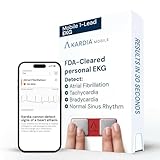
Overview:
This pocket-sized, FDA-cleared device captures single-lead EKGs in 30 seconds, detecting AFib, tachycardia, bradycardia, and normal rhythm. It operates without Bluetooth or Wi-Fi—simply place thumbs on sensors—and works standalone or with the Kardia app for unlimited storage and email sharing.
What Makes It Stand Out:
Its ultra-portability (under 1 oz), simplicity (no subscriptions needed for basic use), and cardiologist recommendation build trust. The standalone functionality—requiring only finger contact—makes it uniquely accessible for travel or quick checks without smartphone dependency.
Value for Money:
Offers excellent value as the most affordable FDA-cleared option. While KardiaCare adds cost for advanced features (e.g., 20+ arrhythmia detection), core functionality (AFib screening, unlimited recordings) works subscription-free—beating pricier models for essential monitoring.
Strengths and Weaknesses:
Strengths: True pocket portability; no subscription for basic use; FDA-cleared; simple operation; FSA/HSA eligible.
Weaknesses: Limited to one-lead (fewer insights than multi-lead); KardiaCare needed for full arrhythmia detection (extra cost); lacks built-in display; less data depth than 6L Max.
Bottom Line:
Perfect for on-the-go AFib screening without recurring fees. Its simplicity and portability make it ideal for travelers or budget users, though those needing comprehensive diagnostics should consider the 6L Max.
9. Beurer Cardio Companion EKG Monitor - 3-Lead Portable ECG Machine, Detects Irregular Heart Rhythms, Fast Results in 30 Seconds, Bluetooth with App, Rechargeable Battery, FSA/HSA Eligible, ME75

Overview:
This German-engineered, FDA-cleared 3-lead ECG monitor delivers results in 30 seconds via a color display, detecting irregular rhythms. It supports four measurement positions (hand-to-hand, wrist, leg, chest) and pairs with a Bluetooth app for unlimited storage, though local storage (100 readings) works standalone.
What Makes It Stand Out:
The flexible measurement positions and bright on-device display differentiate it from app-reliant competitors. German engineering emphasizes precision, while the optional app (no subscription needed) balances convenience with privacy—ideal for users preferring minimal data sharing.
Value for Money:
Mid-priced, it bridges basic one-lead and premium six-lead devices. The 3-lead capability offers more insight than single-lead models at a lower cost than Kardia 6L Max, especially appealing for users wanting display autonomy without subscription fees.
Strengths and Weaknesses:
Strengths: 3-lead accuracy; color display for standalone use; flexible positioning; no subscription for app; rechargeable USB-B.
Weaknesses: USB-B (not USB-C); app required for unlimited storage; less arrhythmia detection than 6L Max; not for pacemaker users.
Bottom Line:
A balanced pick for users wanting display autonomy and 3-lead detail without subscriptions. Best for those prioritizing ease of use at home over ultra-portability or clinical-grade six-lead data.
10. 64GB Magnetic Voice Recorder - Lymorvex Voice Activated Recorder AI-Intelligent Noise Reduction, 4800 Hours Recording Device & USB-C Audio Recorder for Lectures, Meetings, Interviews
Overview:
This pocket-sized recorder offers 64GB storage (4,800 hours at 192Kbps), AI noise reduction, and USB-C charging. It features voice activation, OTG smartphone transfer, 48-hour battery life, and one-touch operation—targeting students, professionals, and journalists.
What Makes It Stand Out:
The AI noise cancellation (using DSP 4.0) and OTG smartphone compatibility eliminate computer dependency for file management. The massive storage and 48-hour runtime cater to marathon recording needs, while auto-segmented saving prevents data loss during low-battery shutdowns.
Value for Money:
Exceptional value for its storage capacity and AI features at a mid-range price. Outperforms similarly priced recorders with its OTG transfer and noise reduction, making it a cost-efficient upgrade over basic models for serious recording tasks.
Strengths and Weaknesses:
Strengths: Massive 4,800-hour storage; AI noise cancellation; OTG smartphone transfer; 48-hour battery; one-touch simplicity.
Weaknesses: Audio quality may lack studio-grade fidelity; magnetic mount not highlighted in specs; no external mic support.
Bottom Line:
A top-tier choice for students and professionals needing reliable, long-session recording with smart noise filtering. Its OTG convenience and huge storage justify the price—ideal for lectures or interviews where clarity and ease trump audiophile demands.
Core Performance and Accuracy Features
Clinical-Grade Signal Quality Standards
The foundation of any reliable ECG device is its ability to capture clean, artifact-free signals comparable to traditional 12-lead hospital machines. Look for devices validated against established medical standards (like FDA clearance or CE certification) that specifically mention ambulatory or single-lead ECG accuracy. Devices achieving high signal fidelity often utilize advanced noise-cancellation algorithms and strategically placed electrodes to minimize movement interference, ensuring the tracing reflects your actual heart rhythm, not just muscle tremors or environmental static.
Multi-Lead Capability Versus Single-Lead Simplicity
While single-lead recordings (typically Lead I) offer convenient spot checks for detecting common arrhythmias like atrial fibrillation, multi-lead systems (capturing 2, 3, or even 6 leads) provide a more comprehensive spatial view of the heart’s electrical activity. This broader perspective is invaluable for identifying subtle abnormalities, ischemia patterns, or complex arrhythmias that a single lead might miss. Consider whether your health goals require basic rhythm screening or deeper diagnostic insights when weighing lead count against device complexity and cost.
Real-Time Arrhythmia Detection Algorithms
Sophisticated on-device or cloud-based algorithms are revolutionizing how we interpret ECG data. Beyond simply recording the waveform, advanced systems can instantly analyze the trace for specific irregularities—flagging potential AFib, bradycardia, tachycardia, or even pauses. However, it’s critical to understand the limitations: these are screening tools, not diagnostic replacements for a physician. Verify the specificity and sensitivity of the detection algorithms through independent validation studies, as false positives can cause unnecessary anxiety, while false negatives provide dangerous false reassurance.
Connectivity and Data Management Innovations
Seamless Smartphone and App Integration
Modern ECG devices are rarely standalone. Robust companion apps on your smartphone or tablet are essential for viewing recordings, tracking trends over time, and receiving notifications. Prioritize devices with intuitive, well-designed apps that offer clear visualizations, easy historical data access, and straightforward sharing options for healthcare providers. Consider platform compatibility (iOS/Android) and whether the app requires constant Bluetooth connection or allows for offline storage with later sync.
Cloud Storage and Longitudinal Health Tracking
The true power of personal ECG monitoring unfolds over weeks, months, or years. Devices that automatically upload recordings to secure, HIPAA-compliant cloud storage enable you to build a detailed cardiac history. This longitudinal data is invaluable for spotting patterns, assessing the impact of lifestyle changes or medications, and providing your doctor with a comprehensive picture during consultations. Ensure the cloud service offers robust privacy controls and easy data export features in standard formats.
Direct Physician and EHR Integration Pathways
For individuals managing chronic conditions, the ability to seamlessly share ECG data directly with a healthcare provider is transformative. Some advanced systems offer integration pathways with Electronic Health Records (EHRs) or secure patient portals used by clinics and hospitals. This eliminates manual uploads or printed reports, ensuring your cardiologist sees the raw data and analysis instantly within your official medical file, streamlining care coordination and follow-up.
User Experience and Practical Design Elements
Wearable Form Factors Beyond the Wrist
While smartwatches dominate the conversation, innovative ECG technology is appearing in diverse, often less obtrusive form factors. Consider patches designed for multi-day continuous monitoring, compact handheld units requiring finger placement, or even integrated sensors within standard blood pressure cuffs. Each form factor has strengths: patches offer extended wear for elusive arrhythmias, handhelds provide immediate readings anywhere, and cuff integrations simplify routine checks for hypertensive patients. Match the design to your lifestyle and monitoring frequency needs.
Battery Life and Charging Convenience
How often you need to recharge significantly impacts real-world usability. Continuous-monitoring patches might last days on a single charge, while frequent-use handheld devices or smartwatch integrations need daily or every-other-day topping up. Evaluate charging mechanisms—magnetic docks, standard USB-C, or proprietary connectors—and consider whether the device supports rapid charging for quick top-ups when time is short. Long battery endurance is especially critical for capturing infrequent, symptomatic events.
Water Resistance and Durability for Active Lifestyles
If you plan to wear your device during exercise, sweating, or even showering (check specific ratings!), robust water and dust resistance (IP67/IP68 ratings) is non-negotiable. Durability against drops and everyday knocks also matters, particularly for handheld units or devices used by older adults. Don’t assume all “fitness trackers” have sufficient protection; verify the exact ingress protection rating for realistic daily use scenarios.
Accessibility and Inclusivity Considerations
Intuitive Interfaces for Diverse User Groups
ECG technology shouldn’t be locked behind complex interfaces. Look for devices with clear visual feedback (like color-coded results or simple icons), audible cues for proper placement, and adjustable text sizes within companion apps. Voice guidance during the recording process can be a game-changer for users with visual impairments. Consider the needs of elderly users or those less comfortable with technology—simplicity in the core recording function is paramount.
Cost Structure and Insurance Reimbursement Potential
Pricing models vary widely, from one-time hardware purchases to subscription-based services for advanced analytics or cloud storage. Crucially, investigate potential insurance coverage, especially if prescribed by a physician for a diagnosed condition. Some clinically validated devices may be reimbursable under specific medical codes (like CPT 93224-93227 for remote monitoring), significantly reducing out-of-pocket costs. Always check with your insurer before purchasing for medical use.
Language Support and Global Availability
For non-English speakers or users in different regions, verify that the device hardware (any onboard prompts) and the companion app support necessary languages. Also, confirm the device’s regulatory approval and availability in your specific country, as features, connectivity, and even ECG interpretation algorithms can vary based on regional medical guidelines and certifications.
Future-Forward Technological Advancements
AI-Powered Predictive Analytics Beyond Detection
The next frontier moves beyond identifying current arrhythmias to predicting potential future events. Emerging AI models analyze subtle waveform variations, combined with other health metrics (like activity levels or sleep data), to assess individual risk scores for conditions like heart failure exacerbation or impending AFib episodes. While still largely in research or early clinical adoption phases, this predictive capability represents a significant shift towards truly preventative cardiology.
Integration with Broader Biometric Ecosystems
Isolated ECG data tells only part of the story. The most valuable insights come from correlating heart rhythm with other vital signs. Leading-edge devices are integrating seamlessly with comprehensive health platforms, pulling in data from continuous glucose monitors, blood pressure trackers, sleep sensors, and activity trackers. This holistic view allows for understanding how stress, diet, exercise, or medications collectively impact cardiac function, enabling personalized health optimization.
Enhanced Signal Processing for Challenging Populations
Capturing clean ECG signals from individuals with obesity, tremors, arrhythmias, or implanted devices (like pacemakers) presents unique challenges. Next-generation signal processing techniques, including adaptive filtering and multi-sensor fusion (combining ECG with accelerometry or photoplethysmography), are dramatically improving reliability across diverse patient populations, making accurate monitoring accessible to more people who need it most.
Implementation and Practical Usage Guidance
Establishing a Purposeful Monitoring Routine
Random spot checks have limited value. Define why you’re using the device: is it symptom-triggered (e.g., checking during palpitations), scheduled (e.g., morning and evening), or continuous for diagnosis? Work with your healthcare provider to establish a meaningful protocol tailored to your specific health questions. Consistency in timing and conditions (e.g., sitting quietly vs. post-exercise) is key for tracking trends accurately.
Proper Placement and Technique for Reliable Results
User error is a common source of poor ECG traces. Meticulously follow the manufacturer’s instructions for skin preparation (clean, dry), electrode placement (for patches or handhelds), and body position. On wearables, ensure the device is snug but not tight, positioned correctly on the wrist, and that fingers make proper contact if required. Take a few deep breaths and remain still during the brief recording—movement is the enemy of clean data.
Interpreting Results Within the Right Context
An ECG reading is a snapshot, not a verdict. A single abnormal trace doesn’t equal a diagnosis, and a normal trace doesn’t guarantee everything is fine. Always correlate your device readings with how you feel (symptoms) and share all data—normal and abnormal—with your physician. They consider the ECG result alongside your full medical history, physical exam, and potentially other tests to form an accurate clinical picture. Never self-diagnose or adjust medications based solely on a personal ECG device.
Frequently Asked Questions
Frequently Asked Questions
How accurate are personal ECG devices compared to hospital machines?
Personal single-lead ECG devices are highly accurate for detecting specific rhythms like atrial fibrillation when used correctly, often validated against clinical standards. However, they capture less spatial data than a full 12-lead hospital ECG, which remains the gold standard for comprehensive diagnosis. Think of personal devices as excellent screening tools, not full replacements for clinical assessment when deeper investigation is needed.
Can these devices detect a heart attack (myocardial infarction)?
Most consumer-grade single-lead ECG devices are not designed or validated to reliably detect the subtle ST-segment changes indicative of an active heart attack. They primarily screen for arrhythmias. If you experience chest pain, pressure, or other heart attack symptoms, call emergency services immediately—do not rely solely on a personal ECG device for diagnosis.
Do I need a doctor’s prescription to buy or use one?
Many personal ECG devices, especially those integrated into smartwatches or sold as general wellness products, are available over-the-counter without a prescription. However, devices marketed specifically for medical diagnosis or treatment (often with higher clinical validation) may require a prescription, particularly for insurance coverage. Check the product’s regulatory classification and your local regulations.
How often should I take an ECG reading?
This depends entirely on your individual health situation and purpose. For general wellness screening, occasional checks might suffice. If monitoring for infrequent symptoms (like palpitations), take a reading during the symptom. For ongoing management of a diagnosed condition, your doctor may recommend a specific schedule (e.g., daily or weekly). Always follow medical advice tailored to you.
Are my ECG recordings and health data secure and private?
Reputable devices with medical clearance (FDA, CE) adhere to strict data security standards like HIPAA (in the US) or GDPR (in Europe) for health information. Look for clear privacy policies detailing data encryption (in transit and at rest), who can access your data, and whether it’s anonymized for research. Avoid apps or devices with vague or permissive data-sharing policies.
Can children or elderly individuals use these devices effectively?
Yes, but suitability depends on the specific device design and the user’s ability to follow instructions. Larger handheld units might be easier for children to use than small watch interfaces. For elderly users, prioritize devices with large app text, simple one-button operation, and clear audio/visual feedback. Always ensure proper fit (e.g., watch size for small wrists) and supervise initial use if needed.
Will my health insurance cover the cost?
Coverage is possible, especially if the device is prescribed by a physician for a diagnosed cardiac condition (like monitoring AFib or bradycardia). It typically depends on your specific insurance plan, the device’s regulatory status (must be cleared as a medical device), and having a valid medical justification. Contact your insurer before purchasing to understand requirements and potential reimbursement processes.
How long does a typical ECG recording take with these devices?
Most single-lead spot-check devices (like those in smartwatches or handhelds) require only 30 seconds to 1 minute of stillness to capture a usable trace. Continuous monitoring patches can record for 24 hours, 48 hours, or even up to 14 days, providing a much longer window to capture intermittent events.
Can ECG devices interfere with pacemakers or other implants?
Generally, modern single-lead ECG devices pose minimal risk of interference with pacemakers or ICDs. However, it’s crucial to consult your cardiologist before using any new ECG device if you have an implanted cardiac device. They can advise on compatibility and proper usage techniques specific to your implant to ensure safety and accurate readings.
What should I do if my device detects an abnormal rhythm?
Remain calm. Note any symptoms you’re experiencing. Most devices allow you to save and review the trace. Share the recorded ECG report and a description of your symptoms with your healthcare provider promptly. Do not ignore an alert, but also avoid panic—an alert indicates a possible issue that requires professional medical evaluation to confirm.
See Also
- 10 Game-Changing ECG Recording Devices for Telehealth Patients in 2026
- Best ECG Recording Devices for Patients: 10 Expert Picks for 2026
- 10 Game-Changing ECG Recording Devices for Remote Patient Monitoring in 2026
- The 10 Most Revolutionary ECG Enabled Wearables of 2026
- Stop Worrying About Silent AFib with the 10 Best ECG Enabled Wearables This Year