Table of Contents
As our population ages, managing health conditions like hypertension becomes increasingly critical for maintaining independence and quality of life. For older adults, uncontrolled high blood pressure isn’t just a number on a chart—it’s a silent threat that can lead to strokes, heart failure, or kidney damage without obvious warning signs. Yet, many seniors face unique challenges in monitoring their condition, from declining eyesight to arthritis that makes handling small devices difficult. This is where the right home blood pressure monitor transforms from a simple gadget into a lifeline, offering peace of mind through consistent, reliable readings that empower proactive healthcare decisions. Imagine catching a dangerous spike during a quiet afternoon at home, rather than waiting for an emergency room visit—that’s the power of thoughtful monitoring tailored to aging needs.
Choosing the perfect blood pressure monitor for an elderly user goes far beyond basic functionality; it’s about designing for real-world usability in the golden years. Seniors often juggle multiple health concerns, medications, and physical limitations that standard devices ignore, leading to frustration, inaccurate readings, or abandoned monitoring routines. A device that’s intuitive for a tech-savvy adult might overwhelm someone with tremors or cognitive changes, while a poorly designed cuff can cause discomfort or errors in someone with fragile skin. This guide cuts through the noise to focus on what truly matters: features that prioritize comfort, clarity, and confidence. We’ll explore how small design choices—like voice prompts or memory storage—can make a monumental difference in daily health management, ensuring that monitoring becomes a seamless, stress-free habit rather than a chore.
Top 10 Digital Blood Pressure Monitors for Elderly
Detailed Product Reviews
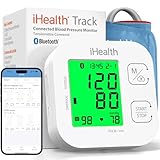
1. iHealth Track Smart Upper Arm Blood Pressure Monitor with Wide Range Cuff That fits Standard to Large Adult Arms, Bluetooth Compatible for iOS & Android Devices
Overview:
This clinically validated upper arm monitor offers precise blood pressure and pulse tracking for adults with standard to large arms (8.7"-16.5"). Featuring Bluetooth connectivity and a color-coded display, it targets users seeking seamless integration with health apps for long-term monitoring.
What Makes It Stand Out:
Its ESH 2010-certified accuracy eliminates calibration needs, while the large backlit display uses green/yellow/red indicators for instant health assessment. Heart rhythm disturbance detection provides critical early warnings. The companion app stores unlimited readings across devices, surpassing the monitor’s 99-reading internal memory.
Value for Money:
Priced mid-range, it justifies cost through clinical reliability and robust app ecosystem—superior to basic models lacking Bluetooth. The wide cuff and included batteries enhance practicality, though app dependency may deter tech-averse users compared to standalone units.
Strengths and Weaknesses:
Strengths: Exceptional accuracy; intuitive color-coded results; comprehensive app tracking; large-arm compatibility; reliable heart arrhythmia alerts.
Weaknesses: App requires recent OS versions; no voice output; Bluetooth pairing can occasionally glitch; limited to one user profile without app workarounds.
Bottom Line:
Ideal for tech-savvy users prioritizing clinical-grade data and trend analysis. Its accuracy and app integration make it a top choice for proactive hypertension management, despite minor app dependencies. Highly recommended for serious home monitoring.
2. Oklar Blood Pressure Monitors for Home Use Rechargeable Wrist Digital BP Machine Cuff with LED Backlit Display, Voice Broadcast, 240 Memory Storage for 2 Users with Carrying Case

Overview:
A portable wrist-based monitor designed for convenience, featuring voice guidance, dual-user memory, and USB-C charging. Targets users valuing portability and accessibility, especially those with visual impairments, though wrist models generally trade some accuracy for ease of use.
What Makes It Stand Out:
Voice broadcast in adjustable volume is a standout for low-vision users. The rechargeable battery (Type-C) eliminates disposable batteries, and 240 total memory slots split between two users simplify family tracking. Its compact size and included carrying case enhance travel readiness.
Value for Money:
Competitively priced for a rechargeable wrist model with dual-user support. The voice feature and robust memory offer tangible value over cheaper wrist monitors, though upper-arm alternatives often provide better accuracy at similar costs for stationary use.
Strengths and Weaknesses:
Strengths: Excellent voice guidance; portable and travel-friendly; large backlit display; solid memory capacity; eco-friendly rechargeable design.
Weaknesses: Wrist positioning critical for accuracy; no irregular heartbeat detection; charging adapter not included; less clinically reliable than upper-arm models.
Bottom Line:
Best suited for frequent travelers or visually impaired users needing portability and voice feedback. Accuracy limitations make it less ideal for strict medical monitoring, but its convenience justifies purchase for casual or supplementary use.
3. Oklar Blood Pressure Monitor Upper Arm Monitors for Home Use BP Machine Sphygmomanometer with 2x120 Reading Memory Adjustable Arm Cuff 8.7"-15.7" Large Display with LED Background Light Storage Bag

Overview:
An upper-arm monitor emphasizing simplicity and dual-user tracking, with a one-button interface and adjustable cuff for average-sized arms (8.7"-15.7"). Focuses on reliability for home use without smartphone dependency, appealing to seniors or minimalist users.
What Makes It Stand Out:
True dual-power flexibility (batteries or Type-C for operation, not charging) ensures constant readiness. The 240-memory capacity (120 per user) and angled large LED display prioritize accessibility. Its cuff detection alerts prevent improper placement errors common in home use.
Value for Money:
Offers strong value as a no-frills upper-arm monitor. The dual-user memory and power options outshine budget competitors, while avoiding the premium cost of Bluetooth models. The included storage bag adds practicality, making it ideal for cost-conscious households.
Strengths and Weaknesses:
Strengths: Foolproof one-button operation; excellent dual-user memory; reliable upper-arm accuracy; cuff fit alerts; versatile power sources.
Weaknesses: Cuff size maxes at 15.7" (excludes larger arms); no app connectivity or voice; Type-C only powers device, doesn’t recharge batteries; smaller display than competitors.
Bottom Line:
A dependable, user-friendly choice for families needing accurate, app-free monitoring. Its simplicity and dual-user focus make it perfect for shared home use, especially for users with standard arm sizes. Recommended for straightforward, reliable tracking.
4. Blood Pressure Monitor Digital Wrist BP Machine Automatic Adjustable Cuff (5.3 to 7.7 in) with 2 Users 180 Memory Voice Broadcast Large LCD Display USB Charging Cable Carrying Case

Overview:
A compact wrist monitor with voice output, dual-user memory, and USB charging, designed for elderly users or travel. Features an adjustable cuff for smaller wrists (5.3"-7.7") and emphasizes ease of reading through audio and visual aids.
What Makes It Stand Out:
The pleasant female voice broadcasting readings (pressure/pulse) is tailored for seniors with vision challenges. The 180-memory slots (90 per user) and included carrying case enhance usability, while USB charging via power bank improves travel convenience over battery models.
Value for Money:
Priced affordably for a wrist monitor with voice and dual-user support. It delivers solid value against similar models, though the small cuff range limits user suitability. Cheaper than upper-arm alternatives but sacrifices clinical precision for portability.
Strengths and Weaknesses:
Strengths: Clear voice guidance ideal for elderly; highly portable with USB-C charging; large LCD display; simple one-button operation; includes storage case.
Weaknesses: Cuff too small for many adults; wrist positioning affects accuracy significantly; no irregular heartbeat detection; limited to 90 readings per user.
Bottom Line:
Well-suited for seniors needing voice-assisted monitoring on a budget, provided their wrist size fits. Not recommended as a primary medical device due to wrist-model limitations, but a practical supplemental tool for casual users.
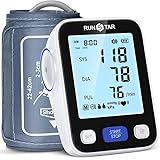
5. RunStar Upper Arm Blood Pressure Monitor with Wide Range Cuff (8.6’’ -16.5’’) for Home Use FSA&HSA Eligible, Automatic Digital BP Machine with Storage Bag, 2x99 Reading Memory
Overview:
A premium upper-arm monitor validated for FSA/HSA use, featuring wide cuff compatibility (8.6"-16.5"), voice output, and dual-user memory. Combines clinical rigor with senior-friendly design, targeting families seeking medically reliable home tracking.
What Makes It Stand Out:
Its 30°-angled 4.2" LCD with soft backlighting and voice broadcast (toggleable) excels for elderly users. Smart inflation and cuff detection ensure proper fit, while exclusive algorithms claim enhanced accuracy across diverse users. FSA/HSA eligibility adds financial flexibility.
Value for Money:
Sits at a premium price point justified by FSA eligibility, superior ergonomics, and robust clinical backing. Outperforms similarly priced models with its arm-size inclusivity and user-centric design, though lacks Bluetooth found in some competitors.
Strengths and Weaknesses:
Strengths: Exceptional senior accessibility; wide cuff range; irregular heartbeat detection; FSA/HSA compatible; secure one-hand cuff application.
Weaknesses: No Bluetooth/app connectivity; only 99 readings per user (less than some); voice tone may feel artificial to some; no rechargeable battery option.
Bottom Line:
Top pick for families needing medically sound, user-friendly monitoring—especially for seniors or larger-arm users. Its accuracy focus and thoughtful design outweigh the lack of app integration, making it a worthwhile investment for serious home health management.
6. Medline Digital Wrist Blood Pressure Monitor, Wearable, Digital LCD Display, Stores Up To 60 Readings, Batteries Included

Overview:
The Medline Digital Wrist Blood Pressure Monitor offers a compact, portable solution for at-home health tracking. Designed for wrist use with an adjustable Velcro strap, it automates inflation/deflation and delivers systolic/diastolic readings plus pulse rate on a clear LCD display. Ideal for users prioritizing convenience and mobility.
What Makes It Stand Out:
Its standout features include clinical-grade accuracy verification with error indicators, seamless portability due to the wrist-worn design, and the inclusion of batteries plus a 2-year warranty. The ability to store 60 readings enables basic trend tracking without requiring a companion app, simplifying long-term health monitoring.
Value for Money:
Priced accessibly, it delivers solid value for solo users needing occasional checks. While upper-arm models often boast superior accuracy, this wrist monitor justifies its cost for travelers or those with dexterity challenges. The included batteries and warranty reduce hidden costs, though memory capacity lags behind higher-end competitors.
Strengths and Weaknesses:
Strengths: Effortless one-touch operation; lightweight and travel-friendly; reliable clinical accuracy; clear error alerts.
Weaknesses: Wrist placement may yield less consistent results than upper-arm monitors; limited 60-reading memory; cuff size range (5.3”–8.4”) excludes larger wrists.
Bottom Line:
A practical, no-fuss option for individuals seeking portability and simplicity in blood pressure monitoring, though accuracy-conscious users may prefer upper-arm alternatives for critical health management.
7. Sinocare Blood Pressure Monitor, Upper Arm BP Machine for Home, Adjustable Cuff 8.6"-16.5", One-Button Operation, Dual User Mode, Posture Detection & Irregular Heartbeat Alert, Black

Overview:
The Sinocare Upper Arm Blood Pressure Monitor combines clinical precision with user-friendly design for reliable home health tracking. Featuring a large 3.6-inch display and adjustable cuff, it targets families needing accurate, frequent monitoring with minimal hassle.
What Makes It Stand Out:
Dual-user mode (99 readings per profile), posture detection, and irregular heartbeat alerts set it apart. Clinically validated accuracy (±3 mmHg), flexible power options (batteries or Type-C), and color-coded BP classification enhance usability. The 8.6”–16.5” cuff accommodates most adults comfortably.
Value for Money:
Mid-range pricing is justified by robust features typically found in premium models. Dual-user support eliminates the need for multiple devices, while posture guidance and heartbeat alerts add clinical value. The omission of a Type-C cable is a minor drawback, but overall, it offers exceptional utility for households.
Strengths and Weaknesses:
Strengths: High accuracy with clinical validation; intuitive one-button operation; comprehensive health insights (posture/heartbeat); generous memory and dual-user support.
Weaknesses: Type-C cable not included; large display may consume power faster; no voice guidance for visually impaired users.
Bottom Line:
Highly recommended for families seeking a feature-rich, accurate upper-arm monitor that balances advanced health tracking with everyday simplicity.
8. yuwell Blood Pressure Monitor, Large Upper Arm Blood Pressure Cuff, Digital Blood Pressure Machine for Home Use, Large Display, Stores 99 Readings, Voice Broadcasting with Power Adapter and Batteries

Overview:
The yuwell Upper Arm Blood Pressure Monitor delivers ESH-validated accuracy with thoughtful extras for home health management. Its soft cuff, voice broadcasting, and comprehensive accessory kit (including power adapter) cater to users prioritizing comfort and accessibility.
What Makes It Stand Out:
Voice-guided measurements in clear American English, ESH-certified accuracy, and intelligent pressurization for comfort distinguish it. The 99-reading memory calculates 3-measurement averages, while movement detection, hypertension indicators, and an 8.6”–17.7” cuff range enhance reliability and inclusivity.
Value for Money:
Excellent value given the included power adapter, storage bag, and clinical-grade algorithm. Voice features benefit visually impaired users, and the wide cuff range suits diverse body types. Though pricier than basic models, the bundle of accessories and accuracy justify the investment for frequent users.
Strengths and Weaknesses:
Strengths: ESH-certified reliability; comfortable wide-range cuff; helpful voice prompts; useful accessories; movement/posture alerts.
Weaknesses: Voice accent may not suit all preferences; average memory capacity (99 readings); no dual-user mode limits family sharing.
Bottom Line:
A top choice for individuals needing voice assistance and clinically sound readings, especially those with larger arms or visual impairments, though families may need multiple units.
9. Oklar Blood Pressure Monitors for Home Use Rechargeable Wrist Digital BP Machine Cuff with LED Backlit Display, Voice Broadcast, 240 Memory Storage for 2 Users with Carrying Case, Orange

Overview:
The Oklar Rechargeable Wrist Blood Pressure Monitor merges portability with robust tracking via a vibrant orange design. Its wrist-centric approach appeals to travelers, featuring voice broadcast, a backlit display, and extensive memory for two users.
What Makes It Stand Out:
Dual-user support with 240 total readings (120 per user), USB-rechargeable convenience, and a bright LED-backlit screen excel in low-light conditions. The voice broadcast (volume adjustable) aids visually impaired users, while the compact wrist cuff ensures effortless travel use.
Value for Money:
Good value for mobile users, with the rechargeable battery eliminating ongoing costs. The 240-memory capacity surpasses many rivals, and the carrying case enhances portability. However, wrist monitors inherently trade some accuracy for convenience, potentially limiting clinical reliability versus upper-arm models.
Strengths and Weaknesses:
Strengths: High memory capacity; excellent portability; clear voice and display; rechargeable; vibrant color for easy location.
Weaknesses: Wrist placement risks inconsistent readings; no posture detection; narrow cuff range (5.3”–7.6”) excludes larger wrists; orange color may not suit all preferences.
Bottom Line:
Ideal for travelers or those preferring wrist convenience, but accuracy-focused users should consider upper-arm alternatives for critical health decisions.
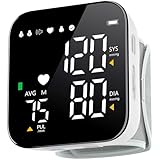
10. Blood Pressure Monitor Rechargeable Wrist Blood Pressure Cuff Adjustable Digital BP Machine 2x90 Readings Voice Broadcast Backlit Display for Home Use with Carrying Case
Overview:
This rechargeable wrist blood pressure monitor prioritizes accessibility and simplicity, featuring voice announcements, a backlit display, and dual-user memory. Its compact design suits home or travel use, targeting seniors and those needing visual/audio assistance.
What Makes It Stand Out:
USB charging, one-button operation, and adjustable voice broadcast cater to elderly users. The 5.3”–7.6” adjustable cuff balances portability with comfort, while the backlit display ensures readability. Dual-user mode (90 readings each) supports household sharing without complex setup.
Value for Money:
Budget-friendly with no battery replacements needed, though memory (90 per user) is half of Oklar’s. The included carrying case adds travel utility. Value is solid for casual users, but the narrow cuff range and wrist-based accuracy limitations reduce appeal for medically complex cases.
Strengths and Weaknesses:
Strengths: Rechargeable convenience; user-friendly voice/display; portable design; dual-user support; affordable.
Weaknesses: Limited cuff size range; lower memory capacity than competitors; wrist accuracy concerns; no irregular heartbeat detection.
Bottom Line:
A cost-effective, accessible option for straightforward home monitoring, best suited for users prioritizing ease of use over clinical-grade precision.
Understanding Senior-Specific Blood Pressure Monitoring Needs
Why Age Changes the Monitoring Equation
Blood pressure behavior shifts significantly as we grow older, with arteries stiffening and readings often spiking suddenly after meals or during stress. For seniors, isolated high readings aren’t just anomalies—they can signal dangerous complications like orthostatic hypotension (a sudden drop when standing) that younger users rarely experience. This makes consistent, context-aware monitoring essential, as single clinic visits miss these fluctuations. Devices must account for these age-related variations to avoid false alarms or missed red flags.
The Critical Role of Home Tracking in Preventive Care
Regular home monitoring catches subtle trends that occasional doctor visits overlook, such as gradual increases indicating medication ineffectiveness. For elderly individuals living alone, this self-tracking creates a safety net, allowing caregivers to spot deviations early. More importantly, it reduces “white coat syndrome” anxiety—a common issue where blood pressure rises artificially in clinical settings—leading to more accurate treatment plans and fewer unnecessary medication adjustments.
How Cognitive and Physical Changes Impact Device Use
Conditions like early dementia or arthritis directly affect a user’s ability to operate standard monitors. Complex button sequences might confuse someone with mild cognitive impairment, while stiff joints can prevent proper cuff inflation. Devices must simplify interactions to match these realities, turning potential barriers into effortless routines that support, rather than strain, the user’s capabilities.
Key Design Features for Elderly-Friendly Operation
Large, High-Contrast Display Essentials
A screen that’s easy to read at arm’s length is non-negotiable—think bold numbers against matte black backgrounds to eliminate glare, with symbols large enough to see without reading glasses. Backlighting that activates automatically in low light prevents squinting, while color-coded indicators (like green for normal ranges) offer instant visual feedback without deciphering numbers.
One-Touch Simplicity for Stress-Free Operation
Monitors should function reliably with a single press, avoiding nested menus or calibration steps. Ideal designs eliminate “what did I do wrong?” moments: automatic start-up, no manual time-setting, and clear end-of-measurement signals. This reduces anxiety during readings, especially for users managing tremors or memory lapses, ensuring they focus on staying still rather than troubleshooting.
Voice Guidance for Hands-Free Clarity
Audio instructions that walk users through positioning (“Rest your arm on the table”) and confirm successful readings are invaluable for low-vision seniors. The best systems use calm, paced narration—not robotic tones—and allow volume adjustment to cut through background noise. Crucially, voice feedback should avoid medical jargon, translating “130/85 mmHg” into “Your reading is in the target zone.”
Ergonomic Cuff Design for Comfort and Safety
Cuffs must accommodate shrinking arm circumference in frail users without pinching delicate skin, featuring soft, non-abrasive materials and easy-grip fasteners. Quick-release valves prevent prolonged constriction if a user dozes off, while adjustable straps fit everything from petite frames to larger builds. This isn’t just comfort—it’s preventing bruising or discouraging skipped measurements.
Intuitive Memory Systems for Trend Analysis
Built-in storage tracking 60+ readings with timestamps helps identify patterns like morning hypertension surges. Automatic date-stamping eliminates guesswork, and dual-user modes let spouses share one device without data mix-ups. For caregivers, easily accessible memory (via simple scroll buttons) reveals whether medication timings need adjusting based on weekly averages.
Accuracy Considerations Beyond the Basics
Clinical Validation for Age-Related Conditions
Not all monitors handle arrhythmias common in seniors (like atrial fibrillation). Prioritize devices validated by standards like AAMI/ESH/ISO 81060-2 specifically for irregular heartbeat detection. Unvalidated units may skip readings or report falsely low numbers during rhythm issues, creating dangerous false reassurance.
Cuff Sizing Precision to Avoid Measurement Errors
Using an incorrectly sized cuff—a frequent oversight—can inflate readings by 10-50 mmHg. Measure arm circumference while seated (as muscle tone affects size) and choose monitors with clearly labeled sizing guides (XS, S, M, L) rather than vague “standard” labels. Some advanced models include sizing templates in the packaging to prevent guesswork.
Positioning Sensors That Prevent User Mistakes
Built-in posture alerts detect slouched positions or unsupported arms—common errors that skew results. Top-tier monitors use motion sensors to pause measurements if movement occurs, while gentle vibrations guide arm alignment. This compensates for reduced body awareness in aging users, ensuring readings reflect true physiology, not poor form.
Connectivity and Data Management Solutions
Seamless Syncing with Health Ecosystems
Automatic Bluetooth® transmission to smartphones or tablets eliminates manual logging, especially helpful for users with limited tech confidence. Look for systems that integrate with widely used health apps (like Apple Health or Google Fit) so family members or doctors can view trends without complex setup.
Caregiver-Focused Data Sharing Protocols
Secure, HIPAA-compliant sharing options let users grant temporary access to family members—no medical expertise required. Features like weekly summary emails or color-coded risk alerts (“3 high readings this week”) transform raw data into actionable insights, enabling timely interventions without overwhelming non-clinical caregivers.
Longitudinal Tracking for Medication Management
Trend graphs showing 30-day averages help doctors spot slow shifts indicating dosage needs, rather than reacting to single outliers. Monitors with “morning/evening” tagging reveal if blood pressure responds poorly to current medication timing, allowing personalized schedule tweaks for better control.
Practical Daily Use and Longevity Factors
Battery Longevity and Power Flexibility
Opt for monitors with 500+ readings per charge and AC adapter compatibility—critical for users who forget to recharge. Low-battery warnings should trigger early (at 20%) with voice alerts, preventing mid-measurement shutdowns. Replaceable batteries beat built-in ones for seniors wary of charging cables.
Travel and Storage Durability
Lightweight designs (<1 lb) with protective cases withstand suitcase bumps, while flat-profile cuffs tuck into purses. Avoid units with protruding parts that snag; instead, choose wrap-style cuffs that store compactly. Drop resistance matters too—many seniors accidentally knock devices off nightstands.
Maintenance That Fits Senior Lifestyles
Hassle-free cleaning is key: machine-washable cuff covers and wipeable displays accommodate users with limited mobility. Clear indicator lights for when calibration checks are due (typically every 2 years) prevent accuracy drift, and manufacturers should offer mail-in recalibration services to avoid clinic trips.
Adapting to Common Age-Related Health Challenges
Arrhythmia Accommodations for Heart Health
Pulse irregularity detection shouldn’t halt measurements—it should flag potential issues while still delivering usable data. Monitors with multi-read averaging (3 measurements in one session) smooth out erratic beats for reliable averages, crucial for users on blood thinners where spikes demand immediate attention.
Arthritis and Dexterity Support Features
Extra-large buttons with 3mm+ travel distance require less finger precision, while magnetic cuff closures replace fiddly Velcro. Some designs position inflation buttons within easy thumb reach when the device rests on a lap, eliminating awkward arm lifts that strain joints during setup.
Low Vision and Cognitive Accessibility
High-contrast screens with optional braille-like tactile indicators on buttons aid users with partial sight. For cognitive support, devices that repeat instructions until acknowledged prevent missed steps, while “reading complete” chimes reduce uncertainty about process completion—minimizing repeat measurements that cause arm fatigue.
Frequently Asked Questions
How often should seniors take blood pressure readings at home?
Most healthcare providers recommend twice-daily measurements (morning and evening) for one week before appointments, but frequency should be personalized based on individual health conditions and medication schedules. Consistency in timing and posture matters more than sheer volume of readings.
Can a single blood pressure monitor work for multiple elderly users?
Yes, but choose models with dual-user memory storage that clearly separates data sets. Each user must have their own properly sized cuff to ensure accuracy, as sharing one cuff between different arm sizes introduces significant measurement errors.
What’s the biggest mistake seniors make when self-monitoring?
Incorrect arm positioning—resting the arm below heart level (e.g., on a lap) artificially elevates readings by 10-20 mmHg. Always support the arm on a table at heart height, with feet flat on the floor and back straight, for clinically valid results.
How do I know if my monitor’s readings are accurate?
Cross-check against a clinic measurement annually, or use the “double-check method”: take three readings one minute apart and average them. If home readings consistently differ by 5+ mmHg from professional devices, recalibration may be needed.
Are wrist monitors suitable for elderly users?
Generally not recommended due to positioning sensitivity—wrist height variations cause large errors. Upper-arm cuffs provide more reliable results for seniors, as they’re less affected by minor posture shifts and better accommodate age-related vascular changes.
What features help if someone has memory concerns?
Look for monitors with automatic daily reminder alerts, visual “ready” indicators that stay lit until used, and simple color-coded result displays (green/yellow/red). Voice confirmation of successful readings also reduces uncertainty about whether the process completed.
How does cold weather affect home blood pressure monitoring?
Cold temperatures cause temporary spikes as blood vessels constrict. Always take readings in a warm, quiet room after 5 minutes of rest—never immediately upon coming indoors from winter weather—to avoid falsely high results.
When should cuff size be rechecked for an elderly user?
Re-measure arm circumference every 6 months, especially if weight changes occur. Significant muscle loss (common in aging) may require downsizing to prevent underestimation of blood pressure, which could lead to undertreatment.
Can these monitors detect dangerously low blood pressure?
Yes, clinically validated devices will display readings below normal ranges (typically systolic <90 mmHg), often with visual warnings. However, they don’t diagnose causes—consistent low readings should prompt immediate medical consultation.
How long should a quality blood pressure monitor last for elderly use?
With proper care, most last 3-5 years before accuracy degrades. Signs it’s time to replace include inconsistent readings, error messages during inflation, or physical wear on the cuff tubing. Annual calibration checks extend longevity and reliability.
See Also
- 10 Must-Have Wrist Blood Pressure Monitors for On-the-Go Readings in 2026
- 10 Must-Have Wrist Blood Pressure Monitors for Travelers in 2026
- How to Solve Inconsistent Readings with the 10 Best Digital Blood Pressure Monitors in 2026
- 10 Top-Rated Digital Blood Pressure Monitors According to Cardiologists in 2026
- We Tested 50 Digital Blood Pressure Monitors - Here are the 10 Best for Home Use