Table of Contents
Imagine pushing through the final miles of a long run, legs heavy but spirit determined, only to feel an unexpected wave of dizziness. Your heart pounds erratically against your ribs – is this normal fatigue, or a sign you’re pushing dangerously close to your limit? For dedicated runners, this scenario isn’t just hypothetical; it’s a real concern where timely information can mean the difference between a challenging workout and a medical emergency. Real-time heart rate alerts on running watches have evolved from a niche feature to an essential safety net, transforming how we monitor our effort and protect our health during intense physical activity. It’s no longer just about tracking distance or pace; it’s about listening to the vital signals your body sends, amplified by technology right on your wrist.
Gone are the days when heart rate monitoring meant awkward chest straps or stopping mid-run to take your pulse. Today’s advanced optical sensors, embedded seamlessly into sleek watch designs, provide continuous, non-invasive insights into your cardiovascular response. But the true power lies not just in seeing your heart rate, but in the watch acting on that data intelligently. Real-time alerts that buzz your wrist the moment your heart rate spikes abnormally high, plummets unexpectedly low, or simply strays outside your personalized safe zone offer an unprecedented layer of proactive safety. This isn’t about paranoia; it’s about empowerment. It allows runners of all levels, from beginners cautiously building endurance to seasoned athletes fine-tuning performance, to train smarter, safer, and with greater confidence, knowing their gear is actively looking out for them.
Top 10 Running Watches
Detailed Product Reviews
1. Garmin Forerunner 55, GPS Running Watch with Daily Suggested Workouts, Up to 2 Weeks of Battery Life, Black - 010-02562-00

Overview:
The Garmin Forerunner 55 is a dedicated GPS running watch designed for beginners and casual runners seeking essential performance metrics without complexity. It tracks pace, distance, and heart rate (non-medical) via GPS and optical sensors, supporting diverse activities from pool swimming to HIIT.
What Makes It Stand Out:
Its standout feature is Garmin’s daily suggested workouts, which adapt based on your recovery and progress. The PacePro strategy tool (requires app pairing) offers race-day pacing guidance, while the exceptional 2-week smartwatch battery life outshines competitors. The 25+ built-in sports profiles add versatility beyond running.
Value for Money:
Priced mid-range, it delivers exceptional value for runners prioritizing analytics over smart features. It’s significantly cheaper than premium models like the Forerunner 255 but avoids the compromises of budget trackers lacking GPS accuracy or structured training tools.
Strengths and Weaknesses:
Strengths: Reliable GPS tracking, industry-leading battery life, intuitive training metrics, lightweight comfort.
Weaknesses: Basic monochrome display, no onboard music storage, PacePro requires phone pairing, limited smart notifications.
Bottom Line:
Ideal for runners focused on improvement through data-driven training, the Forerunner 55 offers unmatched battery life and Garmin’s trusted coaching at a reasonable price. Avoid if you need advanced smartwatch capabilities.
2. LIVIKEY Fitness Tracker Watch with Heart Rate Monitor, Activity Tracker with Pedometer, Sleep Monitor, Calories & Step Counter, IP68 Waterproof Smart Watches for Women Men Fitness Watch for Sports

Overview:
The LIVIKEY Fitness Tracker is an affordable entry-level device targeting general health monitoring for everyday users. It emphasizes core metrics like steps, sleep stages, and heart rate tracking, with minimal focus on athletic performance.
What Makes It Stand Out:
Its IP68 waterproofing and 5–7-day battery life (after 2-hour charging) cater to active lifestyles, while smart notifications for calls and apps (Facebook, WhatsApp) enhance convenience. The inclusion of 9 sport modes and sedentary alerts provides basic fitness motivation at a low price point.
Value for Money:
Outstanding value under $30 for fundamental tracking. It undercuts Garmin and Fitbit models but lacks GPS precision, detailed analytics, or durability for serious athletes. Perfect for casual users prioritizing sleep/step tracking over performance data.
Strengths and Weaknesses:
Strengths: Budget-friendly, long battery life, effective sleep/stage analysis, broad phone compatibility.
Weaknesses: Inaccurate heart rate monitoring during intense exercise, no GPS, basic display, unreliable notification syncing.
Bottom Line:
A solid choice for beginners seeking basic health insights without investment, but insufficient for runners or swimmers needing accurate distance metrics. Avoid for performance training.
3. Garmin Forerunner 55, GPS Running Watch with Daily Suggested Workouts, Up to 2 Weeks of Battery Life, White

Overview:
Identical to the black variant (Product 1) but in a white finish, this Garmin Forerunner 55 targets users preferring a lighter aesthetic without functional changes. It retains all core running and multisport tracking features, including GPS-based pace/distance monitoring.
What Makes It Stand Out:
The white bezel offers a fresh, stylish alternative while delivering the same robust training suite: adaptive daily workouts, PacePro guidance, and race-time predictions. Its 20-hour GPS battery life and 25+ activity profiles remain class-leading for its segment.
Value for Money:
Priced identically to the black model, it provides identical value—ideal for runners wanting Garmin’s proven analytics at a mid-tier cost. The color choice doesn’t affect performance but may appeal to those matching accessories or preferring brighter tones.
Strengths and Weaknesses:
Strengths: Same reliable tracking and battery as Product 1, discreet white design, comprehensive training tools.
Weaknesses: Identical limitations: no music storage, basic screen, PacePro dependency on phone.
Bottom Line:
Choose this white version purely for style preference; it’s functionally identical to the black Forerunner 55 and equally recommended for data-focused runners seeking simplicity.
4. TRAUSI Smart Watch for Men, 120 Sports Modes Smartwatch with 1.83" HD Touchsreen, IP67 Waterproof, Sleep Monitor, Bluetooth Call & Music Control Fitness Watch for Android/iPhone (Black)

Overview:
The TRAUSI TG08 is a feature-packed lifestyle smartwatch emphasizing connectivity and customization over athletic precision. Its 1.83" HD display and 120 sport modes target users wanting notifications, calls, and broad activity tracking in one device.
What Makes It Stand Out:
The vibrant touchscreen and 120 sport profiles cater to casual exercisers, while Bluetooth calling (via paired phone) and music control differentiate it from basic trackers. The IP67 rating and 5–7-day battery support daily wear, and customizable watch faces enhance personalization.
Value for Money:
Excellent for $40–$50 as a hybrid smartwatch/fitness tool. It surpasses budget trackers in display quality and connectivity but lacks the GPS accuracy and recovery analytics of Garmin. Best for those prioritizing calls and notifications over performance metrics.
Strengths and Weaknesses:
Strengths: Bright display, Bluetooth calling, diverse sport modes, strong battery life.
Weaknesses: Questionable heart rate accuracy, IP67 (not swim-proof), generic training insights.
Bottom Line:
A compelling all-rounder for smartphone-dependent users wanting notifications and casual fitness tracking, but not recommended for serious runners needing precise GPS data.
5. Garmin Forerunner 165, Running Smartwatch, Colorful AMOLED Display, Training Metrics and Recovery Insights, Black

Overview:
The Forerunner 165 elevates Garmin’s entry-tier lineup with a vibrant AMOLED display and advanced recovery analytics. It targets runners seeking richer visuals and deeper physiological insights than the Forerunner 55, while retaining core training features.
What Makes It Stand Out:
The stunning AMOLED screen improves readability, and the morning report—summarizing sleep, HRV, and readiness—provides actionable recovery data. Garmin Coach integration tailors race training plans, and button+touch controls ensure reliability in all conditions.
Value for Money:
Priced higher than the Forerunner 55, it justifies the cost with superior display quality, HRV insights, and a more polished interface. It’s cheaper than flagship models (e.g., Forerunner 265) but offers 90% of the analytics for most runners.
Strengths and Weaknesses:
Strengths: Gorgeous AMOLED display, comprehensive recovery metrics, adaptive training plans, lightweight build.
Weaknesses: Shorter GPS battery (19h vs. 55’s 20h), no music storage, higher price than 55.
Bottom Line:
The best Garmin entry-point for runners valuing visual clarity and recovery science. Upgrade from the 55 if you prioritize display quality and detailed readiness data over max battery life.
6. Amazfit Active 2 Sport Smart Watch Fitness Tracker for Android and iPhone, 44mm, 10 Day Battery, Water Resistant, GPS Maps, Sleep Monitor, 160+ Workout Modes, 400 Face Styles, Silicone Strap, Free App

Overview: The Amazfit Active 2 is a versatile smartwatch targeting fitness enthusiasts seeking style and functionality. It blends stainless steel durability with a vibrant 1.32" AMOLED display, offering robust health tracking, extended battery life, and comprehensive sports support for both Android and iPhone users.
What Makes It Stand Out: Its standout features include free downloadable maps with turn-by-turn directions (including ski resort navigation), exceptional 10-day battery life, and BioTracker PPG 4.0 for precise heart rate and sleep monitoring. The 160+ workout modes and 400 customizable watch faces enhance personalization beyond competitors.
Value for Money: Priced mid-range, it delivers premium features like AMOLED clarity, multi-satellite GPS, and map navigation typically found in costlier models. While not the absolute cheapest, its all-in-one package—avoiding subscription fees for maps or health insights—offers strong value versus fragmented alternatives.
Strengths and Weaknesses: Strengths: Brilliant sunlight-readable display, accurate GPS tracking, extensive battery life, genuinely useful free maps, and diverse sport modes. Weaknesses: Stainless steel build may feel bulky for smaller wrists; sleep analysis, while detailed, lacks medical-grade depth; some advanced metrics require app diving.
Bottom Line: An excellent all-rounder for active users wanting reliable fitness tracking, smart features, and exceptional battery without breaking the bank. Highly recommended for outdoor enthusiasts needing map guidance.
7. Timex Men’s Ironman Triathlon Classic 30 38mm Watch – Gray Case with Black Resin Strap
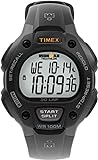
Overview: The Timex Ironman Triathlon Classic 30 is a no-nonsense digital sports watch focused on core timing functionality and durability. Designed for athletes prioritizing reliability over smart features, it excels as a dedicated training companion with essential chronograph and alarm tools.
What Makes It Stand Out: Its simplicity is key: a rugged 38mm resin case, INDIGLO night-light for instant readability, and robust 100-hour chronograph with 30-lap memory. Unlike smartwatches, it requires zero charging and offers intuitive button controls ideal for intense workouts or field use.
Value for Money: Extremely affordable, it provides exceptional durability and purpose-built functionality for under $50. While lacking connectivity or health sensors, it outperforms budget smartwatches in water resistance (100m) and battery longevity (2+ years), making it ideal for specific athletic needs.
Strengths and Weaknesses: Strengths: Bulletproof construction, effortless INDIGLO visibility, precise chronograph with lap memory, and negligible maintenance. Weaknesses: No smart features, basic acrylic lens prone to scratches, limited strap adjustability for larger wrists, and dated aesthetics.
Bottom Line: A superb value for runners, swimmers, or military users needing a dependable, zero-fuss timing tool. Not a smartwatch alternative, but unbeatable for pure sports timing at this price.
8. 2026 Smart Watch for Men Women (Answer/Make Call), 1.96" HD Fitness Tracker Running Watch,IP68 Waterproof,Pedometer, Sleep/Step/Activity/Heart Rate Monitor,110+ Sport Mode Smartwatch for Android Phone

Overview: The 2026 Smart Watch is a budget-friendly hybrid emphasizing call functionality and broad compatibility. It targets users wanting basic smart features like call answering and notifications on a tight budget, paired with fundamental health tracking for Android and iOS.
What Makes It Stand Out: Direct Bluetooth calling and social media notifications (via vibration) are rare at this price point. The 1.96" HD touchscreen, 200+ customizable watch faces, and IP68 waterproofing add surprising polish for an entry-level device.
Value for Money: Exceptionally low-cost, it delivers must-have smart features like call handling and app notifications that pricier “dumb” sports watches lack. However, health metric accuracy (e.g., SpO2, stress) is questionable, making it best for casual users, not serious fitness tracking.
Strengths and Weaknesses: Strengths: Affordable calling capability, large responsive screen, extensive sport modes, long standby time (30 days), and wide phone compatibility. Weaknesses: Health data reliability is low; build quality feels plasticky; app experience is basic; GPS accuracy lags behind premium models.
Bottom Line: A functional entry point for call-centric smartwatch needs under $50, but prioritize accuracy elsewhere. Suitable for teens or as a secondary device, not for dedicated fitness training.
9. mibro GS Active2 Running GPS Smartwatch with 46mm AMOLED, Lightweight and 15-Day Battery, Supports Training Guidance and Dual-Band GNSS, 150+ Sport Modes (Dark Gray)

Overview: The Mibro GS Active2 is a runner-focused smartwatch prioritizing lightweight design, advanced training analytics, and exceptional battery life. It caters to serious athletes with professional-grade running metrics and adaptive coaching at a competitive price.
What Makes It Stand Out: Its ultra-light 39g frame (with nylon band) and 15-day battery are class-leading. Dual-band GNSS ensures pinpoint GPS accuracy, while Mibro Coach provides personalized training plans (5k to half-marathon) and real-time running dynamics like VO₂ Max and stride analysis.
Value for Money: Priced below premium rivals, it offers runner-specific tools rivaling Garmin or COROS—dual-frequency GPS, adaptive training plans, and detailed biomechanics—at a fraction of the cost. The 15-day battery further enhances practicality for multi-day events.
Strengths and Weaknesses: Strengths: Unmatched comfort for long runs, highly accurate dual-band positioning, actionable training guidance, and impressive battery efficiency. Weaknesses: Limited smart features (no built-in music storage); app ecosystem less polished than leaders; display brightness lags in direct sun.
Bottom Line: An outstanding value for runners seeking pro-level analytics and all-day comfort without premium pricing. Essential for training-focused athletes, though casual users may prefer smarter alternatives.
10. COROS PACE 3 GPS Sport Watch - Lightweight, Comfortable Running Watch, 17-Day Battery Life, Accurate GPS, Heart Rate Monitor, Navigation, Sleep Tracking, Training Plan, Run, Bike - Black Silicone

Overview: The COROS PACE 3 is a high-performance GPS sports watch engineered for endurance athletes. Combining featherlight comfort (30g), marathon-grade battery life, and precision navigation, it targets serious runners and multisport competitors.
What Makes It Stand Out: Its dual-frequency GPS chipset delivers exceptional accuracy in urban canyons, while the 38-hour continuous GPS tracking (24-day daily use) is industry-leading. The Breadcrumb navigation and route planning via COROS App provide seamless outdoor guidance without draining battery.
Value for Money: Positioned as a premium tool, it justifies its cost with pro-grade durability, unmatched battery efficiency, and sophisticated training metrics (elevation, air pressure). Outperforms similarly priced watches in battery and navigation, though the app ecosystem is less social than Strava-integrated rivals.
Strengths and Weaknesses: Strengths: Revolutionary battery life; pinpoint dual-frequency GPS; distraction-free lightweight design; intuitive navigation; comprehensive recovery/sleep analytics. Weaknesses: Limited third-party app integrations; touchscreen responsiveness can lag; fewer lifestyle features than Apple Watch.
Bottom Line: The definitive choice for runners prioritizing battery endurance, GPS precision, and focused training tools. A top-tier investment for dedicated athletes, though overkill for casual fitness users.
Understanding the Critical Role of Real-Time Heart Rate Monitoring
Why Heart Rate is Your Most Vital Training Metric
Heart rate provides the most immediate physiological feedback on your body’s response to exercise intensity. It directly reflects cardiovascular strain, helping you distinguish between productive effort and potentially harmful overexertion. Monitoring it continuously allows for precise pacing, ensuring you stay within optimal zones for fat burning, endurance building, or speed work, rather than accidentally drifting into zones that hinder recovery or increase injury risk. It’s the cornerstone metric for understanding your body’s real-time demands.
The Limitations of Passive Heart Rate Tracking
Simply viewing your current heart rate on a watch face offers limited value during a run. Glancing down requires breaking stride, and subtle but significant deviations might go unnoticed until symptoms manifest. Passive tracking tells you where you are, but not necessarily if you’re in danger or off-target. Without proactive intervention, crucial moments where heart rate indicates overheating, dehydration, or underlying issues can be missed, especially when focus is on the road ahead or race strategy.
How Real-Time Alerts Transform Safety and Performance
Real-time alerts act as an intelligent co-pilot. By setting personalized upper and lower heart rate thresholds based on your fitness level and goals, the watch actively monitors your data stream. The instant your heart rate breaches these safe boundaries – whether soaring too high during a hill sprint or dropping abnormally low indicating potential exhaustion – a vibration alert grabs your attention. This immediate notification allows you to consciously slow down, hydrate, assess your condition, or even stop, preventing potential health incidents and optimizing training effectiveness by keeping you consistently in the desired effort zone.
The Technology Powering Accurate and Responsive Alerts
Advancements in Optical Sensor Technology
Modern running watches utilize sophisticated photoplethysmography (PPG) sensors. Multiple LEDs (often green, red, and infrared) shine light into the skin, and photodiodes measure the subtle changes in light absorption caused by blood flow pulsing through capillaries. Recent advancements involve higher LED power, more sensitive photodiodes, improved algorithms to filter motion artifacts (like arm swing), and multi-wavelength sensing to enhance accuracy across diverse skin tones and conditions, forming the reliable foundation for trustworthy alerts.
The Crucial Role of Sophisticated Algorithms
Raw sensor data is just the start. Powerful on-device processors run complex algorithms that interpret the optical signals amidst the noise of running movement. These algorithms distinguish true heartbeats from motion artifacts, smooth erratic readings, and identify genuine trends or sudden spikes. The intelligence to differentiate between a normal heart rate surge during a sprint finish and a dangerous, sustained elevation is what makes alerts meaningful and reduces false alarms, building user trust in the system.
Personalization: Moving Beyond Generic Thresholds
Effective alerts aren’t one-size-fits-all. The best systems leverage your personal data – age, resting heart rate, maximum heart rate (often derived from field tests or user input), and fitness level – to establish meaningful thresholds. Some advanced platforms even learn from your historical workout data, dynamically adjusting what constitutes a “normal” or “abnormal” heart rate response for you during different types of runs, making the alerts significantly more relevant and actionable than static, generic limits.
Key Features to Prioritize When Choosing Your Watch
Customizable Heart Rate Alert Thresholds
The absolute minimum requirement is the ability to set both upper and lower heart rate limits that trigger an alert. Look for intuitive interfaces that allow precise numerical input (e.g., alert if HR > 185 BPM or < 50 BPM at rest). Flexibility is key – your thresholds for an easy recovery run will differ vastly from those needed during a high-intensity interval session. Avoid watches that only offer vague “high effort” notifications without specific BPM control.
Alert Method and Customization
How the alert manifests matters significantly during a run. A strong, distinct vibration pattern is essential to cut through the focus and ambient noise of running. Ensure the vibration intensity is adjustable and powerful enough to be felt reliably, even with sweaty wrists. Bonus points for watches allowing different vibration patterns for high vs. low heart rate alerts, providing instant context without needing to look at the screen.
Integration with Other Biometric Data
The most insightful alerts consider heart rate in context. Watches that correlate heart rate data with other metrics like pace, power (if using a running power meter), elevation gain, skin temperature, and even stress scores provide a richer picture. An alert triggered not just by high BPM, but also by unusually high skin temp and slowing pace, offers stronger evidence of potential overheating than heart rate alone, leading to more informed decisions.
Evaluating Sensor Reliability and Performance Context
Accuracy Across Different Conditions and Skin Types
Sensor accuracy is paramount for trustworthy alerts. Research how well a watch performs under varied conditions: intense sunlight (which can interfere with optical sensors), heavy rain, cold temperatures, and during high-cadence running. Pay attention to independent reviews focusing on accuracy across different skin tones and wrist sizes, as sensor performance can vary. Consistent accuracy ensures alerts reflect your true physiological state, not sensor error.
Battery Life Impact of Continuous Monitoring
Continuous optical heart rate monitoring is a significant battery drain. Evaluate how the watch’s battery life is affected when HR monitoring and alerts are enabled 24/7 versus only during activities. If you rely on all-day health tracking and real-time alerts during runs, prioritize models known for robust battery performance under these sustained loads, especially if long training sessions or multi-day events are part of your routine.
Motion Artifact Handling During Dynamic Movement
Running creates unique challenges for optical sensors due to arm swing and impact. The watch’s ability to maintain accurate readings during the run, not just at rest, is critical. Look for features specifically designed for runners, such as advanced motion compensation algorithms or the option to wear the watch slightly higher on the forearm (if supported) for potentially cleaner signals during high-impact activities, ensuring alerts trigger based on real heart rate changes, not movement noise.
Beyond the Alert: Maximizing the Data for Long-Term Gains
Post-Run Analysis of Heart Rate Trends
Real-time alerts are crucial for immediate safety, but the data collected is equally valuable for long-term improvement. A robust companion app should allow you to review heart rate zones throughout your run, see exactly when and why alerts triggered, and analyze trends over weeks and months. Did your heart rate drift higher at the same pace over several weeks? That could indicate fatigue, illness, or declining fitness, prompting a necessary adjustment in training load.
Understanding Heart Rate Variability (HRV) Insights
While distinct from real-time alerts, many advanced running watches also track Heart Rate Variability (HRV) – the subtle variation in time between heartbeats. HRV is a powerful indicator of recovery status and autonomic nervous system balance. Monitoring HRV trends alongside your training load helps identify when you might be overreaching, allowing you to proactively schedule rest before it leads to illness, injury, or the need for a high-heart-rate alert during your next run. It complements real-time monitoring for holistic health management.
Using Alerts to Refine Training Intensity
Real-time alerts are powerful tools for staying precisely within target zones. Set an upper limit slightly below your anaerobic threshold during tempo runs to avoid accidentally slipping into a harder zone and compromising the workout’s purpose. Conversely, during easy recovery runs, set a lower limit to ensure you’re truly keeping the effort conversational and promoting aerobic development without unnecessary strain. This precision transforms how you periodize and execute different types of training sessions.
Practical Considerations for Everyday Usability
Comfort and Fit for Uninterrupted Monitoring
A watch that’s uncomfortable or slips around on your wrist will compromise sensor contact and accuracy. Ensure a snug but not tight fit; the sensor needs consistent contact with the skin. Consider the watch size and weight – a bulky device might interfere with your natural arm swing or cause chafing on longer runs. Comfort is non-negotiable for reliable all-day and all-run monitoring.
Durability and Weather Resistance for All Conditions
Running happens rain or shine, hot or cold. Prioritize a watch with a robust build quality and a high water resistance rating (ATM 5 or 50 meters is standard for swimming/sweat resistance). A scratch-resistant screen (like Gorilla Glass) is essential for trail runners. Durability ensures the sensor housing remains intact and the watch continues functioning reliably through the rigors of training, protecting your investment and your safety.
Intuitive User Interface for On-the-Go Adjustments
When you’re mid-run and an alert triggers, you need to quickly acknowledge it or potentially adjust settings without fumbling. A responsive touchscreen (that works with sweaty fingers) or well-placed physical buttons, combined with a clear, easy-to-navigate menu structure, is vital. The ability to glance at the screen and instantly understand your current heart rate zone relative to your limits minimizes distraction and keeps you focused on the road.
Navigating the Evolving Landscape of Health Monitoring
The Integration of Blood Oxygen (SpO2) Sensing
While not a direct replacement for heart rate alerts, increasingly common SpO2 sensors measure blood oxygen saturation. Significant drops during activity, especially at altitude or during illness, can be another critical health indicator. Watches combining SpO2 trends with heart rate anomalies provide an even more comprehensive physiological picture, potentially flagging issues like early signs of respiratory problems that might also manifest in abnormal heart rate responses.
The Emerging Role of ECG Functionality
Some premium running watches now incorporate single-lead ECG (electrocardiogram) capabilities. While primarily designed for spot-checking heart rhythm (like detecting atrial fibrillation) during rest, this technology represents a significant leap towards more clinical-grade monitoring. It doesn’t replace real-time during-run heart rate alerts, but it adds a valuable layer of periodic heart health screening that complements continuous monitoring for overall cardiovascular awareness.
Future-Proofing: Software Updates and Ecosystem
Heart rate monitoring algorithms and alert logic continue to improve. Choosing a watch from a manufacturer with a strong track record of regular, meaningful software updates ensures your device gains new features, accuracy improvements, and potentially enhanced alert sophistication over its lifespan. Consider how well the watch integrates into a broader health ecosystem (if that matters to you) for a more unified view of your wellness data beyond just running.
Frequently Asked Questions
Frequently Asked Questions
How accurate are optical heart rate sensors on running watches compared to chest straps?
While chest straps remain the gold standard for lab-grade accuracy, modern optical sensors on quality running watches have significantly closed the gap, especially for steady-state running. They can be very reliable for tracking trends and staying within zones, though they may show slight lags or minor inaccuracies during rapid heart rate changes (like sprint intervals) or under challenging conditions (extreme cold, very dark skin tones). For real-time safety alerts, the trend and significant deviations detected by good optical sensors are generally sufficient and highly valuable.
Can I rely solely on a watch’s real-time heart rate alert for medical emergencies?
No. Real-time heart rate alerts are a valuable safety tool designed to prompt you to assess your condition and take appropriate action (like slowing down or stopping). They are not medical devices and cannot diagnose conditions. If you experience symptoms like chest pain, severe shortness of breath, dizziness, or palpitations alongside an alert, stop exercising immediately and seek medical attention. The alert is a warning sign, not a diagnosis.
How do I determine the right upper and lower heart rate limits for my alerts?
Start with general formulas (e.g., Max HR ≈ 220 - age) but refine based on your known fitness. For upper limits during intense efforts, set it 5-10 BPM below your known maximum or lactate threshold. For safety during normal runs, set it 10-15 BPM below your typical max for that effort level. For lower limits, set it slightly above your typical resting or very easy run heart rate (e.g., 50-60 BPM). Adjust based on how alerts trigger during actual runs – they should catch genuine anomalies, not normal fluctuations.
Will wearing the watch too tight affect the heart rate reading or alerts?
Yes, absolutely. A watch worn too tightly can restrict blood flow to the wrist, leading to artificially low and unstable heart rate readings. This can cause false low-HR alerts or prevent accurate high-HR detection. Conversely, a loose fit causes motion artifacts. Aim for a snug fit where you can comfortably fit one finger underneath the band – tight enough for sensor contact, loose enough for blood flow.
Do real-time heart rate alerts drain the battery significantly faster?
Continuous optical heart rate monitoring is one of the biggest battery consumers on a smartwatch. Enabling constant background HR monitoring and real-time alerts will reduce battery life compared to only using HR during specific activities. The impact varies greatly by model; some manage it efficiently, while others see a noticeable decrease. Check battery specifications specifically for “24/7 HR monitoring” usage if all-day alerts are important to you.
Can I set different heart rate alert zones for different types of workouts?
Yes, this is a crucial feature found on most advanced running watches. You should be able to create custom profiles (e.g., “Easy Run,” “Interval Training,” “Long Run”) where you define specific upper and lower heart rate limits for each. The watch will then use the appropriate thresholds based on the activity profile you select before starting your run, ensuring relevant alerts for the intended effort.
How do I know if a heart rate alert is a false positive caused by sensor error?
Check your perceived exertion and other symptoms. If your heart feels fine, you’re breathing normally for the effort, and the alert seems inconsistent with your pace (e.g., a “high HR” alert during a very slow jog), it might be a sensor glitch. Look for consistency – does the high reading persist for more than 30 seconds? Try gently reseating the watch on your wrist. If alerts are frequent and inconsistent, clean the sensor window and ensure a proper fit. Persistent issues may indicate a need for a firmware update or contacting support.
Are real-time heart rate alerts useful for beginners, or mainly for elite runners?
They are exceptionally valuable for beginners. New runners often lack the experience to accurately gauge their effort level and are more prone to overexertion, leading to burnout or injury. Real-time alerts provide immediate, objective feedback, helping beginners stay safely within aerobic zones, learn what different effort levels feel like physiologically, and build a sustainable training habit without pushing too hard too soon.
Does skin tone or tattooed wrists affect the accuracy of optical sensors and alerts?
Historically, darker skin tones and tattoos (especially dark, dense ink) posed challenges for some optical sensors due to light absorption. However, significant advancements using multiple wavelengths (green, red, infrared) and improved algorithms have greatly enhanced accuracy across diverse skin tones. While not perfect, modern high-quality running watches are much more reliable. If you have concerns, look for independent testing specifically reviewing performance on darker skin or over tattoos for your shortlisted models.
How often should I clean the optical sensor on my running watch?
Clean the sensor (the flat area on the back with the lights and glass) regularly, especially after sweaty runs or exposure to sunscreen/mud. Wipe it gently with a soft, slightly damp cloth and dry thoroughly. Build-up of sweat, dirt, or grime is a common cause of temporary accuracy issues and erratic readings that could trigger unnecessary alerts. A quick clean after every few runs is generally sufficient for optimal performance.
See Also
- 10 Must-Have Running Watches for Accurate Heart Rate Tracking in 2026
- 10 Must-Have Running Watches with Reliable Heart Rate Monitoring in 2026
- 2026’s Top 10 GPS Watches for Runners Who Need Real-Time Heart Rate Data
- 10 Must-Have Outdoor Adventure Watches with Accurate Heart Rate Monitoring in 2026
- 10 GPS Running Watches That Solve Heart Rate Monitoring Issues in 2026