Table of Contents
Watching your child vanish into a crowded park or lose themselves in a sea of backpacks at school pickup triggers a primal fear that no parent ever forgets. That heart-stopping moment, where your mind races through worst-case scenarios before they calmly reappear, is a universal rite of passage for caregivers. In today’s hyper-connected yet unpredictable world, this anxiety isn’t just fleeting—it’s a persistent hum beneath daily life, amplified by news cycles and the sheer complexity of modern parenting. But what if technology could transform that knot of worry into a quiet confidence, knowing you’re never truly disconnected from your child’s whereabouts?
GPS-enabled wearables for kids have evolved far beyond simple location trackers, becoming sophisticated tools that bridge the gap between freedom and safety. They offer parents a lifeline—not to micromanage every step, but to grant children the independence they crave while ensuring a safety net is always in place. This isn’t about surveillance; it’s about empowerment for both kids and caregivers. By understanding how these devices work and what truly matters in a reliable solution, you can replace “what ifs” with actionable peace of mind, letting your child explore the world while you breathe a little easier. Let’s explore how to navigate this landscape wisely.
Top 10 GPS Smartwatches for Kids
Detailed Product Reviews
1. JrTrack 5 Kids Smart Watch by Cosmo | Best Kid-Safe Phone Watch | Precision Real-Time GPS Tracking | Call, Text, Activity, School Settings | Spotify Music | Parental Controls | SOS & Safety Alerts

Overview:
The JrTrack 5 is an award-winning kids’ smartwatch designed for ages 6+ that prioritizes safety and secure communication. It functions as a standalone phone with real-time GPS tracking, parental controls, and kid-safe calling/texting features across the US, Canada, and Mexico.
What Makes It Stand Out:
Its HaloGPS technology delivers industry-leading location accuracy, while True Texting enables secure sharing of texts, photos, and short videos exclusively with parent-approved contacts. The integration of Spotify Music and robust parental controls—including message monitoring and no internet/social media access—sets it apart for safety-conscious families.
Value for Money:
Starting at $9.99/month for cellular service (exclusive to Cosmo Mobile), it offers unlimited talk, text, and data. Though the carrier lock limits flexibility, the precision GPS, spam-free communication, and comprehensive safety suite justify the cost versus cheaper alternatives with spotty tracking or weaker security.
Strengths and Weaknesses:
Strengths: Pinpoint real-time GPS; military-grade security blocking spam/internet; reliable cross-border coverage; parental message monitoring; Spotify integration.
Weaknesses: Carrier-exclusive (no third-party SIM); no mention of battery life; requires subscription for core functionality; higher upfront cost than basic trackers.
Bottom Line:
Ideal for parents prioritizing uncompromised safety and real-time location accuracy. Despite the mandatory service plan, its security features and HaloGPS make it a top-tier investment for keeping kids connected and protected.
2. Smart Watch for Kids, 1.85" Fitness Tracker with Heart Rate, Sleep Monitor, IP68 Waterproof Smartwatches with Video Music, Pedometer, Game, NO APP/Phone, Gift for Boys Girls. (Classic, Pink)

Overview:
This all-in-one fitness-focused smartwatch targets kids with health monitoring, entertainment, and educational tools. It operates independently (no phone/app required) and boasts 100+ functions, including heart rate tracking, sleep analysis, games, and creative features like photo dials and storybooks.
What Makes It Stand Out:
The 24/7 health monitoring leverages a pediatric database to analyze sleep stages and alert parents to abnormalities like exercise overload. Its “Reward Coins” system—where kids earn virtual currency for fitness goals or learning tasks—creatively encourages healthy habits and self-discipline.
Value for Money:
Priced competitively as a standalone device (no subscription), it delivers exceptional utility with IP68 waterproofing, 1.5m drop resistance, and diverse features like music playback and 100+ sports modes. It outperforms subscription-based rivals in upfront cost but lacks real-time GPS tracking.
Strengths and Weaknesses:
Strengths: Comprehensive health tracking; no app/subscription needed; durable IP68/stainless steel build; engaging reward system; extensive features (camera, games, SOS).
Weaknesses: No real-time GPS location sharing; sleep/stress accuracy may vary; limited parental remote controls; basic SOS lacks automatic alerts.
Bottom Line:
A superb standalone health and activity tracker for budget-conscious families. While not a safety-first GPS solution, its educational rewards and robust health tools make it an excellent gift for fostering independence and wellness.
3. TICTIKY Smart Watch for Kids with Location Tracker (iOS Only), Fitness Tracker with Step Counter, Pedometer, Heart Rate, Sleep Tracker, IP68 Waterproof, Puzzle Games, Kids Watch for Boys 5-12

Overview:
The TICTIKY Verfit watch combines fitness tracking with educational elements for kids aged 5–12. It emphasizes health monitoring, customizable interfaces, and puzzle games but is exclusively compatible with iOS devices, limiting its audience.
What Makes It Stand Out:
Its 1.83" HD touchscreen supports personalized photo dials, letting kids display cherished images. The inclusion of 80+ sports modes (including swimming, thanks to IP68 waterproofing) and parental-controlled puzzle games—designed to boost cognitive skills during downtime—adds unique value.
Value for Money:
As a no-subscription device, it offers solid fitness tracking (heart rate, sleep stages, step counting) at an affordable price. However, the iOS-only restriction reduces versatility versus cross-platform competitors, and the lack of real-time GPS diminishes its safety utility.
Strengths and Weaknesses:
Strengths: iOS integration for seamless setup; IP68 waterproofing; intuitive photo watch faces; puzzle games for skill development; no ongoing fees.
Weaknesses: iOS-exclusive (no Android support); no real-time location tracking; sleep analysis requires >3 hours of wear; limited parental oversight tools.
Bottom Line:
Best suited for iOS households seeking a fitness-focused, subscription-free watch. Its health tools and customization shine, but the absence of GPS and platform limitations make it less ideal for safety-centric needs.
4. Veunti 4G Kids Smart Watch Boys with GPS Tracker & Video Calling Texting GPS Watch for Kids Age 5-12, 12/24 Hr SOS Call Voice Chat Alarm Clock Camera Pedometer Class Mode Boys Gifts(Black)

Overview:
The Veunti 4G watch is a feature-packed safety device offering real-time GPS tracking, video calling, and robust parental controls via the JuniCare app. Designed for ages 5–12, it prioritizes security with SOS alerts and customizable “SafeZone” geofencing.
What Makes It Stand Out:
Its 1.85" screen enables clear 240x280 video calls and boasts a 700mAh battery for extended use. The triple-threat communication (video calls, voice chat, texting) and 3-second SOS activation—which cycles through three guardians—provide rapid emergency response unmatched by simpler trackers.
Value for Money:
Competitively priced for its 4G capabilities, it includes video calling and precise GPS without monthly GPS fees (though cellular plans apply). The inclusion of class mode, safety fence, and 5 puzzle games adds value over basic GPS watches, though carrier costs aren’t specified.
Strengths and Weaknesses:
Strengths: High-quality video calls; reliable SOS with multi-guardian alerts; customizable SafeZone geofencing; class mode for focus; durable 700mAh battery.
Weaknesses: App-dependent for full control; unclear cellular plan costs; “2025 upgraded” claim lacks verification; limited to 25 contact numbers.
Bottom Line:
A top choice for parents wanting video communication and emergency responsiveness. Its strong safety features justify the investment, but confirm carrier costs before purchasing to avoid bill surprises.
5. Fitbit Google Ace LTE - Kids Smartwatch with Call, Message, GPS, and Activity-Based Games, Ace Pass Data Plan Required - Mild - Strange Arcade

Overview:
Fitbit’s Ace LTE merges fitness tracking with gamified engagement for kids, using cellular 4G LTE for standalone connectivity. It targets active children with location sharing, calls, and “activity-based games” that reward movement, requiring the Ace Pass data plan.
What Makes It Stand Out:
It uniquely ties gameplay to physical activity—kids unlock Fitbit Arcade games by meeting step goals. The 16+ hour battery (with rapid 30-minute charging) and School Time mode—which silences games but allows calls—balance fun and focus without compromising safety.
Value for Money:
The Ace Pass plan (cost unlisted) covers LTE data, calls, and unlimited games, but the lack of transparency on pricing is a drawback. Compared to rivals, its activity-driven gaming fosters healthier habits, though the total cost may exceed subscription-free alternatives.
Strengths and Weaknesses:
Strengths: Gamifies fitness via activity-based challenges; strong 4G LTE/GPS reliability; School Time focus mode; fast charging; no peer-to-peer messaging (reduces distractions).
Weaknesses: Mandatory Ace Pass data plan; limited to 20 contacts (ages 13+); no video calling; Android/iOS compatibility restrictions.
Bottom Line:
Perfect for encouraging active lifestyles through gaming, but the opaque pricing and no video calls narrow its appeal. Recommended only for families prioritizing movement incentives over communication features.
6. Emojikidz Smart Watch – Best Kid-Safe Phone Watch, Precision Real-Time GPS Tracking, Calls, Texts, Activity Tracking, School Mode, Parental Controls, SOS Button & Safety Alerts, Geo-Fence Zones (Blue)

Overview:
The Emojikidz Smart Watch targets safety-conscious parents with GPS tracking, calls, and parental controls. Designed for kids, it promises real-time location monitoring and communication via a dedicated app, emphasizing security features like SOS alerts and geo-fencing.
What Makes It Stand Out:
Its seamless School Mode and precise GPS geo-fencing stand out, allowing parents to create safe zones and block distractions during class. The SOS button instantly shares live location data, and the parental app consolidates controls for contacts, usage limits, and activity tracking into one interface.
Value for Money:
Priced moderately upfront, its mandatory $9/month subscription (for cellular, GPS, and support) significantly inflates long-term costs. Competitors offer similar features without recurring fees, making this less economical despite solid core functionality.
Strengths and Weaknesses:
Strengths: Intuitive parental app; reliable SOS alerts; effective School Mode; geo-fence customization.
Weaknesses: Costly mandatory subscription; carrier lock-in limits flexibility; no mention of battery life; activity tracking feels underdeveloped.
Bottom Line:
A capable safety tool with excellent parental controls, but the non-negotiable subscription undermines its value. Only recommend if recurring costs are acceptable and carrier compatibility aligns with your needs.
7. 4G Kids Smart Watch with GPS Tracker Video Voice Calling Text Chat SOS Call, Waterproof Smartwatch Age 5-12, Wallpaper Store School Model Camera Pedometer Games Alarm Clock Stopwatch for Kid(Blue)

Overview:
This feature-packed smartwatch combines safety and entertainment for kids aged 5–12. It offers GPS tracking, video calling, and engaging extras like games and a camera, all managed through a parent-controlled app for holistic child supervision.
What Makes It Stand Out:
Its dual GPS/LBS positioning claims ±5m accuracy—a standout for precise tracking—plus robust durability (waterproof, shatter-resistant) and a 650mAh battery supporting 3–5 days of use. The SOS button cycles through three emergency contacts automatically, enhancing crisis response.
Value for Money:
Competitively priced with no subscription mentioned, it delivers exceptional bang for buck. Features like the HD camera, games, and long battery life rival costlier models, though video resolution (240×240px) is modest for the price tier.
Strengths and Weaknesses:
Strengths: Excellent battery life; comprehensive safety tools (SOS, geo-fencing); waterproof design; no subscription fees; fun engagement features.
Weaknesses: Video call quality may disappoint; “2025-upgraded” claim lacks verification; school mode functionality is vague; limited app details.
Bottom Line:
A versatile, subscription-free option ideal for active kids. Prioritize if battery life and durability matter most, but temper expectations for video clarity.
8. TickTalk5 Smart Watch for Kids with GPS Tracker, Video Calling, Texting, and Parental App, 4G Smartwatch with Free Music, Phone Calls, and Reminders for Kids Ages 3-12

Overview:
The TickTalk5 positions itself as a premium, standalone 4G smartwatch for younger children (ages 3–12), emphasizing safety through advanced GPS, video calls, and granular parental controls via its dedicated app.
What Makes It Stand Out:
Google Maps integration with AI-powered SmartPin technology refines indoor GPS accuracy—a rare edge for location tracking. SignalBooster ensures wide 4G coverage, while real SMS support (without requiring recipient app usage) and end-to-end encrypted messaging enhance usability and security.
Value for Money:
Higher upfront cost is justified by subscription-free operation (unlike many rivals) and unique tech like SmartPin. The 100+ hour standby battery and free music access add value, though data plans may incur separate carrier fees.
Strengths and Weaknesses:
Strengths: Unmatched GPS precision indoors; robust parental controls; no mandatory app for SMS; excellent battery life; secure messaging.
Weaknesses: Premium price point; carrier-dependent data costs; limited detail on camera quality; younger kids may find app complex.
Bottom Line:
Worth the investment for parents prioritizing pinpoint location accuracy and seamless SMS. Choose this over subscription models if long-term savings and reliability are critical.
9. Fitbit Google Ace LTE - Kids Smartwatch with Call, Message, GPS, and Activity-Based Games, Ace Pass Data Plan Required - Spicy - Moovin

Overview:
Fitbit’s Ace LTE merges fitness tracking with connectivity for kids, featuring built-in 4G LTE, GPS, and activity-driven games. It targets health-conscious families seeking to motivate movement through gamified challenges.
What Makes It Stand Out:
Its exclusive activity-based games (unlocking via steps) encourage exercise uniquely, while the Ace Pass data plan bundles calling, messaging, and unlimited game access. Fast charging (11 hours in 30 mins) solves typical kid-watch battery woes.
Value for Money:
The $14.99/month Ace Pass data plan elevates total ownership costs significantly. Though 16+ hour battery life and Google integration add utility, the recurring fee makes it pricier long-term versus non-subscription alternatives with similar core features.
Strengths and Weaknesses:
Strengths: Innovative movement-based gaming; rapid charging; strong Fitbit fitness ecosystem; clear school-time focus mode.
Weaknesses: Mandatory data plan inflates cost; no direct phone number for calls; limited contact list (ages 13+); games may lose appeal quickly.
Bottom Line:
Best for fitness-focused families willing to pay for gamified activity tracking. Avoid if data plan costs or lack of standalone calling are dealbreakers.
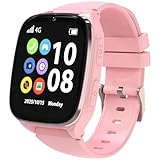
10. Xipax Kids Smartwatch for Boys Girls with 4G LTE Calling, Kids Watch with Video Chat, Camera, Games, SOS Call Watch for Children Age 4-12 (Pink(NO GPS))
Overview:
Market as an all-in-one entertainment and safety device, this watch offers 4G calling, video chat, and games for ages 4–12. Despite its title stating “(NO GPS),” the description ambiguously references “high-speed GPS positioning.”
What Makes It Stand Out:
It includes a physical SIM card and dual straps out of the box—a rarity—eliminating hidden setup costs. The SOS feature (5–6 second press) and automatic classroom lockdown via app provide straightforward safety tools for budget-focused buyers.
Value for Money:
Low upfront cost is appealing, but the GPS contradiction raises red flags. If GPS works as described, it competes well; if not (per the title), value plummets. No subscription mentioned, but carrier fees may apply for cellular use.
Strengths and Weaknesses:
Strengths: SIM card included; classroom focus mode; diverse entertainment features; no apparent subscription; ready-to-use bundle.
Weaknesses: Title explicitly says “NO GPS” while features mention GPS—major inconsistency; video call resolution unspecified; likely inferior tracking to rivals.
Bottom Line:
Avoid due to the critical GPS discrepancy. Only consider if confirmed non-GPS operation suits your needs, but superior alternatives exist for similar pricing.
Understanding Parental Anxiety in the Digital Age
The Evolution of Modern Parenting Worries
Parental anxiety today stems from a perfect storm of information overload, societal pressures, and genuine safety complexities. Unlike previous generations, we’re bombarded with 24/7 news cycles highlighting rare but terrifying scenarios, creating a distorted perception of everyday risks. This “availability heuristic” makes unlikely events feel probable, turning playground outings or school commutes into high-stress moments. Recognizing this cognitive bias is the first step toward rational decision-making about child safety tools.
Why Location Awareness Reduces Stress
Knowing your child’s general location isn’t about control—it’s about context. When you receive a notification that they’ve safely arrived at a friend’s house after school, that vague dread of “where are they?” dissolves. This constant low-level uncertainty is mentally exhausting; location awareness provides concrete data that interrupts catastrophic thinking patterns. Studies show parents using reliable tracking tools report significantly lower cortisol levels during separation periods, proving it’s a physiological relief, not just psychological.
Core Features That Truly Matter for Safety
Accuracy Beyond Basic GPS: Geofencing and Hybrid Tracking
Don’t settle for devices that only use satellite GPS, which often fails indoors or in dense urban areas. Look for hybrid systems combining GPS, Wi-Fi positioning, and cellular triangulation. Geofencing—a virtual boundary you set around safe zones like school or home—triggers instant alerts when crossed, transforming passive tracking into active safety monitoring. Precision matters: a device showing your child is “near the park” versus “at the playground entrance” makes all the difference in an emergency.
Real-Time Updates Versus Scheduled Check-Ins
Some devices only update location every 15-30 minutes to save battery, creating dangerous blind spots. For genuine peace of mind, prioritize models offering real-time or near-real-time (under 30-second) updates, especially during movement. However, balance this with battery life—excessive pinging drains power. The ideal system intelligently adjusts update frequency based on motion detection, conserving battery while ensuring critical moments are captured.
Two-Way Communication Essentials
A one-way tracker is like having a walkie-talkie that only receives. Built-in voice calling or pre-set messaging lets your child reach you during anxiety spikes (“I got lost near the library”) without needing a phone. Crucially, ensure the communication method is intuitive for young users—complex menus defeat the purpose. Parental controls should allow you to manage who they can contact, preventing misuse while keeping lifelines open.
Evaluating Durability and Practicality
Rugged Design for Real-World Use
Kids aren’t gentle with technology. Water resistance (minimum IP67 rating) is non-negotiable for swim class or rainy days, but true durability means surviving drops onto concrete, sand exposure, and constant tugging. Check for reinforced straps that won’t snap mid-playground sprint and scratch-resistant screens. Avoid “waterproof” claims without IP ratings—many cheap devices fail after minor submersion.
Battery Life That Matches Your Child’s Routine
Nothing fuels anxiety more than a dead tracker mid-day. Aim for devices lasting 48+ hours on a single charge for weekend trips, but prioritize smart battery management. Features like low-power modes during sleep hours or automatic shutdown when connected to home Wi-Fi extend usability. Consider charging logistics: magnetic docks are faster and more kid-friendly than fiddly ports, and quick-charge capabilities (e.g., 80% in 30 minutes) prevent last-minute panic.
Comfort and Discreet Wearability
If it’s bulky or looks like a “spy device,” your child will refuse to wear it. Sleek, lightweight designs that resemble mainstream kids’ watches (not overt security gadgets) encourage consistent use. Adjustable straps for growing wrists and hypoallergenic materials prevent skin irritation. Remember: the safest device is the one they’ll actually keep on.
Privacy and Security Non-Negotiables
Data Encryption Standards You Must Verify
Location data is highly sensitive. Ensure the device and companion app use end-to-end encryption (look for AES-256 or similar) so only authorized users access real-time tracking. Avoid brands with vague privacy policies—reputable manufacturers explicitly state they don’t sell location data to third parties. Check for two-factor authentication on the parent app; a simple password isn’t enough to protect your child’s whereabouts.
Controlled Access and Permission Layers
Your toddler shouldn’t accidentally share their location with strangers. Robust systems require parental approval for any new contacts added to the child’s communication list. Granular controls let you disable features like location sharing during sleepovers while keeping emergency alerts active. Audit logs showing who accessed location data and when add critical transparency.
Integrating Technology with Parenting Values
Teaching Digital Responsibility Through Use
This isn’t just a safety tool—it’s a teaching moment. Involve your child in setting geofences (“This circle is our safe zone for walking home”), explaining why location sharing matters. Discuss privacy: “Only Grandma and I can see where you are.” Frame it as mutual trust: “You earn more freedom when I know you’re safe.” This transforms passive monitoring into active lessons about digital citizenship.
Balancing Safety with Age-Appropriate Independence
A device suitable for a 6-year-old walking to kindergarten differs vastly from one for a 12-year-old taking public transit. Match features to developmental stages: younger kids need simpler interfaces and stricter geofences, while tweens benefit from SOS buttons and limited contact lists. Re-evaluate settings every 6-12 months—your goal is to gradually phase out constant monitoring as responsibility grows.
Hidden Considerations Most Parents Overlook
Network Reliability Beyond Cellular Coverage
Cellular connectivity is essential, but coverage gaps in rural areas or underground can blindside you. Check if the device falls back to Wi-Fi positioning when cellular is weak, and whether the app shows signal strength indicators. International travelers should verify global network compatibility—some models only work domestically, creating dangerous gaps during trips.
Emergency Response Integration
In true crises, every second counts. Premium devices integrate with emergency services, sending location data directly to responders when the SOS button is held. Others offer “panic mode” that silences the watch while alerting pre-set contacts with live location. Verify if local authorities recognize these systems—some require specific partnerships to be effective.
Long-Term Cost Analysis Beyond the Initial Price
Beware of “cheap” trackers with mandatory subscription fees. Calculate annual costs: $20/month adds $240 yearly, dwarfing a $150 upfront device. Consider upgrade paths—will it work when your child outgrows the size? Are software updates free? Factor in potential insurance discounts; some providers reduce premiums for homes with verified child safety tech.
Implementation Strategies for Seamless Adoption
The Right Way to Introduce the Device
Avoid framing it as punishment (“You got lost, so now you wear this!”). Instead, present it positively: “This helps us both feel brave when you explore.” Let them personalize watch faces or choose strap colors. Role-play scenarios: “If you feel lost, press this button and I’ll find you.” Early buy-in prevents resistance and hiding.
Setting Expectations with Your Child’s Ecosystem
Coordinate with schools, coaches, and other parents. Some schools ban wearables, so confirm policies upfront. Provide teachers with emergency access codes. For playdates, share location access temporarily with host parents via the app—this builds community trust and ensures continuity of care beyond your direct supervision.
Troubleshooting Common Anxiety Triggers
False alarms from geofence glitches or weak signals can heighten stress. Learn to distinguish real alerts from system errors: does the map show consistent movement or a single erratic dot? Set up test zones at home first. Most apps allow sensitivity adjustments—tweak these to reduce “phantom exit” notifications that erode trust in the system.
Frequently Asked Questions
How do I prevent my child from removing the watch?
Opt for tamper-proof straps with security clasps that require tools to remove, and choose models with removal alerts that notify you if the watch is taken off unexpectedly. Pair this with positive reinforcement—“You kept it on all day? Awesome!"—rather than punishment.
Can these devices track indoor locations accurately?
Yes, but only with Wi-Fi and Bluetooth positioning. Look for devices using Bluetooth beacon networks (like Apple’s Find My network) and Wi-Fi scanning, which work better indoors than GPS alone. Accuracy varies by building layout and signal strength.
What happens if the battery dies during an outing?
Prioritize devices with low-battery alerts sent to your phone 24+ hours in advance. Teach your child to recognize low-power mode indicators (like a dimming screen). Carry a portable charger compatible with the watch for extended trips.
Are there privacy risks if my child’s data is hacked?
Reputable brands use military-grade encryption and regular security patches. Mitigate risks by using strong, unique passwords for the companion app, enabling two-factor authentication, and avoiding public Wi-Fi when accessing location data.
How do I handle my child’s resistance to wearing it?
Involve them in selecting the design and color. Emphasize benefits they care about: “It has a fun step counter!” or “You can message me without interrupting class.” Start with short trial periods to build comfort before full-time use.
Can schools block these devices?
Some schools restrict cellular-connected wearables due to distraction policies. Check your school’s tech guidelines first. Many districts permit safety-focused trackers without internet browsing or gaming capabilities—ensure yours complies.
What’s the ideal age to start using a GPS watch?
Most experts recommend ages 6-7 for supervised public outings (like walking to a nearby friend’s house). Younger children often forget or lose devices; wait until they understand basic safety rules and can reliably wear it.
Do these watches work internationally?
Only if they support global cellular bands and have international roaming agreements. Check coverage maps for your destination countries. Some require swapping SIM cards or paying roaming fees—clarify this before traveling.
How accurate is the location data really?
In open areas with clear skies, accuracy is typically 5-10 feet. Urban canyons or dense forests may reduce this to 50-100 feet. Hybrid systems (GPS + Wi-Fi + cellular) narrow the gap significantly over GPS-only models.
Will constant tracking make my child anxious too?
Transparent communication prevents this. Explain it’s like a seatbelt—something you hope never need but feel safer having. Focus on empowerment: “This button gets help fast if you’re scared,” not “I’m watching you.” Monitor their emotional response and adjust usage if needed.
See Also
- How to Solve Safety Concerns with the 10 Best GPS Smartwatches for Kids in 2026
- Top 10 Best Kids Smartwatches for GPS Tracking and Safety in 2026
- Top 10 Best Kids Smartwatches for GPS Tracking in 2026
- 10 Smartwatches for Kids That Solve Emergency Safety Concerns in 2026
- 2026’s Top 10 GPS Smartwatches for Kids Who Walk to School Alone