Table of Contents
Watching your child walk to school alone for the first time is a milestone filled with equal parts pride and heart-pounding anxiety. That tiny figure shrinking down the sidewalk represents growing independence, but as a parent, your mind races with unspoken worries: Did they cross safely? Are they taking the right route? What if they get lost or feel unsafe? In today’s world, that knot of concern doesn’t have to mean blind faith – modern technology offers tangible peace of mind, transforming overwhelming fear into informed confidence. The right wearable companion can bridge the gap between letting go and staying connected, turning a nerve-wracking journey into a manageable step toward their autonomy.
Gone are the days of relying solely on playground whispers or hoping the neighbor spots them. Purpose-built GPS tracking devices designed specifically for school-aged children have evolved far beyond basic location pings. Today’s solutions integrate seamlessly into a child’s daily routine, offering parents real-time insights without smothering their budding sense of adventure. However, navigating the sea of options can be overwhelming – battery life claims that vanish by lunchtime, confusing app interfaces, or features that sound impressive but miss the mark for actual school commutes. This guide cuts through the noise, focusing on the essential considerations that truly matter when choosing a reliable guardian for your child’s solo walks. Let’s explore what makes a GPS smartwatch genuinely effective, safe, and practical for this critical daily journey.
Top 10 GPS Smartwatches for Kids
Detailed Product Reviews
1. JrTrack 5 Kids Smart Watch by Cosmo | Best Kid-Safe Phone Watch | Precision Real-Time GPS Tracking | Call, Text, Activity, School Settings | Spotify Music | Parental Controls | SOS & Safety Alerts

Overview:
The JrTrack 5 is a premium cellular smartwatch designed exclusively for children aged 6+. It combines robust safety features with communication tools, positioning itself as a secure alternative to smartphones. Powered by an eSIM and Cosmo Mobile’s network, it operates independently of a paired phone.
What Makes It Stand Out:
HaloGPS technology delivers industry-leading real-time location accuracy, while True Texting enables secure sharing of texts, images, and short videos exclusively with parent-approved contacts. Unlimited talk, text, and data start at $9.99/month, and Spotify integration adds entertainment. Crucially, it blocks internet/social media access and spam calls entirely.
Value for Money:
Priced higher than budget alternatives, its value lies in military-grade security, carrier reliability across North America, and transparent subscription costs. Unlike cheaper watches requiring hidden fees, Cosmo’s service is predictable, though carrier lock-in (no third-party plans) limits flexibility.
Strengths and Weaknesses:
Strengths: Pinpoint GPS tracking, comprehensive parental controls, spam-free communication, and award-winning safety alerts. Weaknesses: Mandatory $9.99+/month service, incompatible with non-Cosmo carriers, and no app-free functionality.
Bottom Line:
Ideal for parents prioritizing uncompromised safety and seamless connectivity; the subscription cost is justified by unparalleled security and real-time tracking, making it a top-tier investment for peace of mind.
2. Smart Watch for Kids, 1.85" Fitness Tracker with Heart Rate, Sleep Monitor, IP68 Waterproof Smartwatches with Video Music, Pedometer, Game, NO APP/Phone, Gift for Boys Girls. (Classic, Pink)

Overview:
This all-in-one fitness tracker targets kids with 100+ health and entertainment features, including heart rate monitoring, sleep analysis, and games. Marketed as “no app/phone” required, it positions itself as an independent wellness companion for active children.
What Makes It Stand Out:
Its 24/7 health monitoring leverages a pediatric database to detect sleep disorders or exercise overload via vibration alerts. The “Reward Coins” system incentivizes fitness goals with redeemable virtual rewards, while IP68 waterproofing and 1.5m drop resistance ensure durability during play.
Value for Money:
At a mid-range price, it offers exceptional feature density—from blood oxygen tracking to puzzle games—without mandatory subscriptions. However, the “no app” claim is misleading; parental controls require a companion app for class mode and message monitoring, reducing its standalone appeal.
Strengths and Weaknesses:
Strengths: Comprehensive health metrics, creative reward system, rugged build, and no carrier fees. Weaknesses: App dependency contradicts marketing, sleep/stress data accuracy is unverified, and lacks real-time GPS tracking.
Bottom Line:
A versatile, subscription-free fitness tool for health-conscious parents, but avoid if GPS safety is critical; best for casual use where entertainment and basic health tracking outweigh advanced security needs.
3. TICTIKY Smart Watch for Kids with Location Tracker (iOS Only), Fitness Tracker with Step Counter, Pedometer, Heart Rate, Sleep Tracker, IP68 Waterproof, Puzzle Games, Kids Watch for Boys 5-12

Overview:
The TICTIKY focuses on fitness and habit-building for iOS users, tracking steps, heart rate, and sleep stages. Its iOS-exclusive app limits accessibility but emphasizes simplicity for younger children aged 5–12.
What Makes It Stand Out:
The 1.83" HD screen supports photo-based watch faces, letting kids personalize dials with family pictures. Five built-in puzzle games develop cognitive skills, while study-focused “class mode” blocks distractions via app scheduling—ideal for school environments.
Value for Money:
Priced affordably, it delivers solid fitness tracking without hidden fees. However, iOS restriction alienates Android households, and location tracking lacks real-time GPS (relying on less precise LBS). The value shines for Apple-centric families seeking screen-time management.
Strengths and Weaknesses:
Strengths: Intuitive iOS integration, creative watch-face customization, educational games, and no subscription costs. Weaknesses: iOS-only compatibility, inaccurate sleep tracking (requires 3+ hours), and no cellular/GPS for safety.
Bottom Line:
A budget-friendly fitness motivator for iOS households, but its lack of real-time location tracking makes it unsuitable as a safety device; best paired with another solution for comprehensive oversight.
4. Veunti 4G Kids Smart Watch Boys with GPS Tracker & Video Calling Texting GPS Watch for Kids Age 5-12, 12/24 Hr SOS Call Voice Chat Alarm Clock Camera Pedometer Class Mode Boys Gifts(Black)

Overview:
This feature-packed watch emphasizes communication and location tracking, offering GPS, video calls, and SOS alerts. Marketed as a 2025 “upgraded” model, it targets parents seeking an all-in-one safety tool for kids aged 5–12.
What Makes It Stand Out:
Real-time GPS tracking with customizable SafeZone alerts and historical route mapping provides granular location control. Video calling and voice chat enable direct parent-child interaction, while the dedicated SOS button auto-calls three guardians—critical for emergencies.
Value for Money:
Competitively priced, it includes video capabilities absent in rivals like JrTrack 5. Yet, the JuniCare app feels outdated, and “2025 upgraded” claims lack technical specifics. Carrier flexibility is limited, though no monthly fee is mentioned (service details are vague).
Strengths and Weaknesses:
Strengths: Video calling, multi-guardian SOS, safety fence, and IP68 waterproofing. Weaknesses: Unverified GPS accuracy improvements, app interface reportedly clunky, and no eSIM clarity (may require SIM card).
Bottom Line:
A strong contender for video-centric communication and basic safety, but unproven location claims and app issues warrant caution; suitable for budget-focused parents prioritizing video over precision tracking.
5. Fitbit Google Ace LTE - Kids Smartwatch with Call, Message, GPS, and Activity-Based Games, Ace Pass Data Plan Required - Mild - Strange Arcade

Overview:
The Fitbit Ace LTE merges fitness tracking with gaming, using activity-based rewards via Google’s ecosystem. Designed for “wild things” aged 6–12, it requires the Ace Pass data plan for core functionality, including 4G LTE connectivity.
What Makes It Stand Out:
Activity-based games in the Fitbit Arcade turn steps into playtime, while School Time mode blocks games without disabling emergency calls. Unique among peers, it offers 16+ hours of battery life and fast charging (11 hours in 30 minutes)—ideal for all-day adventures.
Value for Money:
The Ace Pass data plan (calling, messaging, games) adds recurring costs, but unlimited access to the game library justifies the fee for screen-averse parents. However, contact limits (20 people, ages 13+) and no peer-to-peer messaging reduce social utility.
Strengths and Weaknesses:
Strengths: Gamified fitness, exceptional battery life, school-friendly focus mode, and seamless Google integration. Weaknesses: Mandatory data plan, restricted contacts, and no standalone functionality without service.
Bottom Line:
A standout for motivating active play with gaming incentives, but the data plan requirement makes it costly long-term; best for tech-savvy families valuing fitness engagement over pure safety features.
6. Emojikidz Smart Watch – Best Kid-Safe Phone Watch, Precision Real-Time GPS Tracking, Calls, Texts, Activity Tracking, School Mode, Parental Controls, SOS Button & Safety Alerts, Geo-Fence Zones (Blue)

Overview: The Emojikidz Smart Watch positions itself as a comprehensive safety tool for children, offering GPS tracking, communication features, and parental controls. Designed for constant connectivity, it emphasizes real-time location monitoring and emergency response capabilities.
What Makes It Stand Out: Its standout feature is the integrated parental control app enabling geo-fencing, classroom mode scheduling, and instant SOS alerts with live location sharing. The watch also supports calls, texts, and activity tracking, aiming to balance safety with child-friendly functionality.
Value for Money: Priced competitively upfront, the mandatory $9/month subscription (for cellular, GPS, and support) significantly inflates long-term costs. While the features justify the fee, alternatives with lower or no recurring fees may offer better value for budget-conscious families.
Strengths and Weaknesses: Strengths: Robust parental controls, intuitive app interface, reliable SOS functionality, and geo-fencing. Weaknesses: Non-negotiable subscription fee, carrier exclusivity limiting flexibility, and potential app dependency for full functionality. Battery life isn’t highlighted, suggesting possible daily charging needs.
Bottom Line: A capable safety-focused watch hampered by recurring costs; ideal for parents prioritizing advanced controls and willing to pay monthly, but less appealing for those seeking a one-time purchase solution.
7. 4G Kids Smart Watch with GPS Tracker Video Voice Calling Text Chat SOS Call, Waterproof Smartwatch Age 5-12, Wallpaper Store School Model Camera Pedometer Games Alarm Clock Stopwatch for Kid(Blue)

Overview: This feature-dense smartwatch targets kids aged 5–12 with dual GPS/LBS tracking, video calling, and entertainment options like games and a camera. It promises safety through location accuracy and emergency SOS while appealing to children with interactive elements.
What Makes It Stand Out: The 2025-upgraded dual positioning system claims ±5m accuracy, a standout for precise tracking. It also integrates video calling (240×240px), a 1.4-inch HD camera, and 3–5 days of battery life. Waterproofing and hypoallergenic materials enhance durability for active kids.
Value for Money: Priced mid-range, it delivers exceptional breadth—tracking, communication, and entertainment—without mandatory subscriptions. The inclusion of a SIM card and charger adds immediate value, outperforming subscription-based rivals in long-term affordability.
Strengths and Weaknesses: Strengths: No monthly fees, robust battery life, comprehensive safety features (SOS cycles through 3 contacts), and engaging extras like games. Weaknesses: Video resolution is low, GPS accuracy claims may be overstated in dense urban areas, and the camera quality is likely modest.
Bottom Line: An excellent all-in-one choice for parents seeking affordability, durability, and feature variety without subscriptions; best for families valuing practicality over premium specs.
8. TickTalk5 Smart Watch for Kids with GPS Tracker, Video Calling, Texting, and Parental App, 4G Smartwatch with Free Music, Phone Calls, and Reminders for Kids Ages 3-12

Overview: The TickTalk5 is a premium 4G LTE watch for ages 3–12, emphasizing secure communication, AI-enhanced location tracking, and robust parental oversight. It bridges safety and engagement with video calls, SMS support, and activity reminders.
What Makes It Stand Out: Its AI-powered “SmartPin” location correction (using Google Maps) sets it apart, promising pinpoint indoor/outdoor accuracy. Real SMS support (without app dependency), SignalBooster for global coverage, and end-to-end encrypted messaging elevate its safety and usability.
Value for Money: Higher initial cost is justified by no monthly fees for core features (unlike competitors), superior GPS tech, and 100+ hours standby. However, the lack of subscription transparency for potential premium app features warrants caution.
Strengths and Weaknesses: Strengths: Exceptional location precision, versatile communication (SMS/group chats), strong parental controls, and long battery life. Weaknesses: No explicit mention of waterproofing, camera resolution unconfirmed, and app requires modern smartphones (iOS 16+/Android 11+).
Bottom Line: A top-tier investment for parents prioritizing location accuracy and secure communication; recommended for tech-savvy households despite the premium price.
9. Fitbit Google Ace LTE - Kids Smartwatch with Call, Message, GPS, and Activity-Based Games, Ace Pass Data Plan Required - Spicy - Moovin

Overview: The Fitbit Ace LTE merges fitness tracking with connectivity for kids, using activity-based games to encourage movement. It includes 4G LTE, GPS, and social features but requires a data plan subscription for full functionality.
What Makes It Stand Out: Unique “activity-based games” transform steps into play, differentiating it from passive trackers. School Time mode blocks games during class, and fast charging (11 hours in 30 minutes) addresses typical battery concerns. Notably, kids can’t message peers, enhancing safety.
Value for Money: The mandatory Ace Pass data plan adds recurring costs, reducing value. However, bundled games and 16+ hour battery life partially offset this. Best suited for families already invested in Fitbit/Google ecosystems.
Strengths and Weaknesses: Strengths: Gamified fitness motivation, rapid charging, strict school mode, and no peer-to-peer messaging. Weaknesses: Subscription dependency, limited to 20 contacts (ages 13+), and Android/iOS version restrictions exclude older devices.
Bottom Line: Ideal for active kids needing fitness incentives, but the data plan requirement makes it less economical than subscription-free alternatives; prioritize if gamification is key.
10. Xipax Kids Smartwatch for Boys Girls with 4G LTE Calling, Kids Watch with Video Chat, Camera, Games, SOS Call Watch for Children Age 4-12 (Pink(NO GPS))
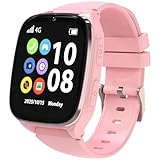
Overview: Marketed as an all-in-one companion for ages 4–12, this watch emphasizes 4G calling, video chat, and entertainment. Despite the title’s “NO GPS” disclaimer, marketing touts “high-speed GPS positioning”—a critical contradiction.
What Makes It Stand Out: It bundles video chat, games, and SOS calling with included accessories (SIM card, dual straps). School mode auto-locks during class, and the packaging positions it as a ready-to-gift solution.
Value for Money: The upfront inclusion of a SIM card offers convenience, but the GPS confusion undermines trust. Priced accessibly, it falters against competitors due to misleading claims and lack of subscription transparency.
Strengths and Weaknesses: Strengths: No monthly fee mentioned, versatile features (camera, games), and hassle-free setup with included accessories. Weaknesses: Title explicitly states “NO GPS” while features claim GPS—likely inaccurate tracking; camera quality unspecified; no battery life details.
Bottom Line: Avoid due to deceptive GPS labeling; opt for transparent alternatives like Product 7. Only consider if GPS is irrelevant and basic calling is the sole need.
Understanding the Core Safety Features Parents Need
Why GPS Accuracy Matters More Than Raw Specs
Don’t be fooled by marketing jargon about “advanced satellite systems.” Real-world accuracy hinges on how well the device fuses GPS, GLONASS, Galileo, and cellular tower data, especially in urban canyons or under dense tree cover typical of neighborhood routes. Look for consistent sub-50-meter precision in varied environments, not just ideal lab conditions. A device that pinpoints your child near the correct side of the street, not just the general block, is crucial for verifying safe route adherence.
The Critical Role of Real-Time Location Updates
Infrequent location checks create dangerous gaps in awareness. For a walking commute, near-continuous tracking (updates every 15-60 seconds) is non-negotiable. This allows you to monitor their actual progress along the route, not just snapshots. Ensure the device and its companion app guarantee these frequent updates without crippling the battery – sporadic tracking defeats the entire purpose during a dynamic journey.
Geofencing: Your Digital Safety Net
This isn’t just a buzzword; it’s your proactive alert system. Robust geofencing lets you define safe zones (home, school, trusted friend’s house) and critical route paths. Receive instant notifications when your child enters school grounds on time, deviates from the planned path, or lingers unexpectedly. Configure flexible buffer zones around the school entrance to avoid false alarms during normal arrival congestion.
Evaluating Battery Life for the School Day Reality
Beyond the Marketing Hype: Real-World Endurance
A “7-day battery” claim often assumes minimal GPS use. For active location tracking during a commute, focus on performance under continuous moderate use. Aim for devices reliably lasting a full school day (8-10 hours) with frequent location pings, plus a buffer for unexpected delays. Overnight charging should be sufficient – no parent wants to manage midday recharges for a kid’s device.
The Impact of Connectivity on Power Drain
Cellular connectivity (4G/5G) provides the most reliable real-time tracking but consumes significant power. Wi-Fi and Bluetooth-only trackers drain less battery but become useless outside home networks – disastrous for a walking route. Find the optimal balance: a device using low-power cellular (like LTE-M or NB-IoT) specifically designed for efficient location transmission is ideal for predictable all-day coverage.
Charging Practicality for Young Users
Consider the child’s ability to manage charging. A device requiring a proprietary dock left at home is prone to being forgotten. Simple USB-C charging they can plug in themselves (supervised, initially) fosters responsibility. Fast charging (e.g., 80% in 30 minutes) is a major plus for those inevitable “forgot to charge” mornings.
Design and Usability for the School Environment
Durability: Surviving Backpacks, Playgrounds, and Rain
This isn’t a fashion accessory; it’s mission-critical gear. Prioritize rugged construction: shatter-resistant screens, water resistance rated for rain and handwashing (IP67 minimum, IP68 preferred), and shock absorption. It must withstand being tossed in a backpack, scraped on playground equipment, and accidental drops onto concrete without failing. Avoid flimsy bands that snap easily.
Simplicity: Function Over Complexity for Young Wearers
A child’s device shouldn’t mimic a smartphone. The interface must be dead-simple: one or two physical buttons for core functions (like initiating a check-in call), large icons, and minimal menus. Overly complex touchscreens lead to frustration, accidental settings changes, or the device being ignored when needed most. Focus on essential, foolproof interactions.
Discreetness: Avoiding Unwanted Attention
While safety is paramount, a device that screams “expensive tech” can attract unwanted attention. Opt for designs that are functional but not flashy – avoid bright neon colors or overly bulky forms. A watch that blends in with typical kids’ accessories reduces the risk of it becoming a target for curiosity or mischief during the walk.
Parental Control and App Experience Essentials
Intuitive App Navigation: Clarity in Critical Moments
When anxiety spikes, you need information instantly. The parent app must present the child’s location, route history, and battery status on a single, uncluttered screen. Avoid apps buried under layers of menus or flooded with non-essential data. One-tap access to initiate a voice call or send a pre-set “Check-In” message is vital during moments of concern.
Customizable Alert Sensitivity: Reducing False Alarms
Overly sensitive motion or location alerts lead to notification fatigue (“Is this an emergency or just them stopping to tie a shoe?”). Look for apps allowing granular adjustment: set acceptable deviation distances from the route, define dwell times before triggering a “lingering” alert, or schedule active tracking only during commute windows. Smart filtering prevents alert desensitization.
Secure Communication Channels
Two-way voice calling is essential, but ensure it’s restricted to pre-approved contacts (parents, guardians, maybe a trusted neighbor) only. Avoid open chat functions or SMS capabilities that could expose the child to unwanted contact. The communication method should be direct, secure, and impossible for strangers to initiate.
Addressing Privacy and Security Concerns
Robust Data Encryption: Protecting Your Child’s Footprint
Location data is incredibly sensitive. Verify the device and cloud infrastructure use end-to-end encryption (E2EE) for all location data and communications. Data should never be stored unencrypted on the device or transmitted in plain text. Check the manufacturer’s privacy policy for explicit commitments to not selling or sharing location data with third parties.
Account Security Measures
Strong parental account security is the first line of defense. Mandatory two-factor authentication (2FA) for the parent app, strong password requirements, and the ability to remotely log out lost devices are non-negotiable features. Ensure the service actively monitors for and prevents unauthorized account access attempts.
Transparency in Data Handling
A trustworthy provider clearly explains what data is collected (location, usage stats), how long it’s retained (ideally minimal, e.g., 30 days for route history), and who can access it. Avoid services with vague, overly broad privacy policies. Look for certifications or adherence to standards like ISO 27001 for information security.
Practical Considerations for School Integration
Navigating School Technology Policies
Many schools have strict rules about electronic devices. Proactively check the school’s policy before purchasing. Some may prohibit all wearables, while others might allow safety trackers but ban communication features. A device that strictly functions as a location tracker (no games, no internet) has a much higher chance of being permitted than a full smartwatch.
The Subscription Reality: Budgeting for Ongoing Safety
Most reliable cellular-connected trackers require a monthly or annual service plan covering data and cloud services. Understand the exact cost, contract length (avoid long lock-ins), and cancellation policy before buying. Factor this recurring expense into your decision – the cheapest upfront device with a high monthly fee becomes expensive long-term. Beware of “lifetime” subscription claims that sound too good to be true.
Comfort and Wearability for All-Day Use
If it’s uncomfortable, your child won’t wear it consistently. Consider adjustable, hypoallergenic straps (silicone is often best), lightweight materials, and a size appropriate for a child’s wrist. Test the weight and feel if possible. A device that’s constantly tugged at or complained about defeats the purpose – reliability depends on it being worn every day.
Making the Right Long-Term Choice
Age Appropriateness: Matching Features to Maturity
A device perfect for a 10-year-old might overwhelm a 6-year-old or feel childish for a 12-year-old. Consider the child’s responsibility level: Can they remember to charge it? Understand when to use the emergency button? Younger kids need ultra-simple interfaces and strong geofencing; older kids might appreciate limited, safe communication features. Choose capabilities that match their developmental stage.
Future-Proofing: Planning Beyond the School Walk
Consider how the device might serve evolving needs. Will it still be useful for after-school activities, bike rides to the park, or eventually, independent travel as they get older? A device with solid core tracking that can adapt (e.g., via software updates) offers better long-term value than one narrowly focused only on the morning walk.
The Importance of Reliable Customer Support
When the app glitches during rush hour or the device stops connecting, responsive, knowledgeable support is critical. Research the manufacturer’s reputation – check independent forums for user experiences with support. A warranty covering defects and clear troubleshooting resources are essential safety nets for a device you’re relying on for your child’s wellbeing.
Frequently Asked Questions
Frequently Asked Questions
Is a GPS tracker really necessary if my child is just walking a short distance? Even short walks carry risks like traffic incidents, unexpected detours, or moments of uncertainty. Real-time tracking provides verified peace of mind that they are where they should be, especially during the critical transition from home to school.
What’s the youngest age a child should start using one for their school commute? There’s no universal age; it depends entirely on the child’s maturity, route safety, and school policy. Generally, devices become practical around 6-7 years old when kids start walking independently, but parental judgment about the child’s ability to responsibly wear and use the device is paramount.
How do I explain the tracker to my child without making them feel spied on? Frame it positively: “This is like a super-power for me to know you’re safe on your adventure, so I worry less and you can feel freer. It only works for your walk to school and back, like a special safety blanket.” Emphasize it’s for their security, not surveillance.
Can these devices work inside buildings like school hallways? GPS signals weaken significantly indoors. While the device might lose precise GPS inside the school, a good tracker uses Wi-Fi positioning and cellular data to provide a general “at school” location once connected to the school’s network or nearby towers, triggering geofence entry alerts.
What happens if the watch is lost or taken off? Reputable devices send immediate “device offline” or “removed from wrist” alerts to the parent app. Many have loud, persistent alarms if forcibly removed. Choose models with strong geofencing so you know if it leaves a safe zone unexpectedly, and ensure the school has a protocol for handing in found devices.
Are there any hidden costs beyond the initial purchase? Yes, cellular-connected trackers almost always require a recurring service plan (monthly/annual fee) for data transmission and cloud services. This is a critical cost to factor in – scrutinize the provider’s pricing, contract terms, and cancellation policy before buying.
How do I handle it if my child’s school bans electronic devices? First, check the specific policy wording. Many schools ban phones but allow dedicated safety trackers. Present the device to school administrators, emphasizing its limited, safety-only functionality (no games, internet, or social features). Propose a trial period focused solely on arrival/departure verification.
Can I trust the battery life claims in the product description? Marketing claims often represent best-case scenarios. Prioritize user reviews specifically mentioning real-world battery performance with location tracking enabled. Look for devices known for consistent all-day endurance under typical commute conditions, not just standby time.
What’s the difference between GPS trackers and smartwatches marketed for kids? True safety trackers prioritize reliable location, long battery life, simplicity, and ruggedness, often with limited communication. Many “kids’ smartwatches” prioritize games, apps, and social features, which drain battery faster, complicate use, and may violate school policies – compromising core safety functionality.
How do I know if the location data is truly secure from hackers? Look for explicit statements about end-to-end encryption (E2EE) for location data and communications. Check if the company has a clear, transparent privacy policy, undergoes independent security audits, and has a history of responsibly handling vulnerabilities. Avoid services with vague security promises.
See Also
- 2026’s Top 10 Educational Smartwatches for Kids Who Love Learning
- 10 Best Children’s Smartwatches for Parents Who Want Peace of Mind in 2026
- How to Solve Parental Anxiety with the 10 Best GPS Smartwatches for Kids in 2026
- Top 10 Best Kids Smartwatches for GPS Tracking and Safety in 2026
- The 10 Best Smartwatches for Kids Who Love Games and Activities in 2026