Table of Contents
Imagine you’re deep in the backcountry, miles from cell service, when your phone buzzes with a critical weather alert. But your wrist device? It’s already showing the storm’s approach, mapped your escape route, and still has battery left to guide you home – all while looking like a classic analog timepiece. This is the quiet revolution hybrid smartwatches are bringing to outdoor adventures. They bridge the gap between rugged simplicity and intelligent navigation, offering GPS tracking and essential notifications without sacrificing the timeless aesthetic or multi-day battery life that true explorers demand. For hikers, trail runners, and cyclists who prioritize reliability over constant connectivity, these devices are becoming indispensable companions where digital screens often fail.
The outdoor tech landscape constantly evolves, and 2026 promises significant leaps in hybrid watch capabilities. Forget the early compromises of limited features or clunky interfaces; today’s hybrids are purpose-built for the trail, integrating sophisticated GPS systems with genuine outdoor durability. They deliver precise location tracking, detailed route mapping, and activity-specific metrics, all wrapped in a package that won’t leave you scrambling for a power bank after a long day. Understanding what truly matters in these devices – beyond marketing hype – is key to finding the perfect partner for your next expedition. Let’s cut through the noise and focus on the features that genuinely enhance safety, navigation, and enjoyment in the wild.
Top 10 Hybrid Smartwatches with GPS
Detailed Product Reviews
1. Garmin Instinct Crossover Solar, Rugged Hybrid Smartwatch with Solar Charging Capabilities, Analog Hands and Digital Display, Graphite

Overview: The Garmin Instinct Crossover Solar merges rugged outdoor capability with hybrid smartwatch functionality. It features analog watch hands over a sunlight-readable digital display, targeting adventurers seeking durability and extended battery life without sacrificing core smart features or health tracking.
What Makes It Stand Out: Its standout feature is solar charging, extending battery life to 70 days in smartwatch mode or offering unlimited use in battery-saver mode under sufficient light. The MIL-STD-810 certification for thermal/shock resistance, 10 ATM water rating, and seamless integration of ABC (altimeter, barometer, compass) sensors with GPS provide serious outdoor readiness rarely seen in hybrids.
Value for Money: Priced mid-to-high for hybrids, it justifies cost through exceptional ruggedness, solar charging, and Garmin’s proven reliability. While pricier than basic hybrids, it undercuts full touchscreen smartwatches with similar durability, offering better longevity for frequent outdoor users.
Strengths and Weaknesses: Strengths: Unmatched solar-enhanced battery life; military-grade durability; intuitive analog-digital interface; comprehensive health/sports tracking. Weaknesses: Digital display resolution lags behind AMOLED competitors; limited third-party app ecosystem; no voice assistant.
Bottom Line: An ideal choice for outdoor enthusiasts prioritizing battery life and ruggedness. It delivers exceptional value for adventurers, though casual users might prefer more app-centric alternatives. Highly recommended for its niche.
2. Military GPS Smart Watch: 1.43” AMOLED Always On Display, Built-In GPS, Compass, Altimeter, Barometer, Fitness/Path Tracker, BT Call, 150+ Sports, IP69K, Voice Assist, Long Battery Life, Android/iOS

Overview: This rugged “Military GPS Smart Watch” (branded CyberX) is an AMOLED-powered outdoor specialist. It emphasizes precision multi-band GPS, extreme durability (IP69K), and extensive sports tracking via the GloryFitPro ecosystem, targeting serious athletes and explorers.
What Makes It Stand Out: Its multi-band GPS (supporting four satellite systems) ensures exceptional location accuracy in challenging terrain, while the IP69K rating withstands high-pressure water/steam—exceeding standard IP68. The 1.43" AMOLED AOD display offers superior clarity, and 150+ sports modes with detailed post-activity analysis via GloryFitPro provide deep performance insights.
Value for Money: Positioned as a budget alternative to Garmin/Suunto, it delivers premium features (multi-band GPS, AMOLED, IP69K) at a fraction of the cost. While the GloryFitPro app is less polished than rivals, the hardware value is outstanding for rugged GPS functionality.
Strengths and Weaknesses: Strengths: Best-in-class GPS precision; brilliant AMOLED AOD; unrivaled IP69K durability; extensive sports modes; voice assistant support. Weaknesses: App ecosystem less refined; battery life (2-5 days) lags behind solar competitors; potential long-term software support uncertainty.
Bottom Line: A compelling high-value proposition for outdoor athletes needing robust GPS and extreme durability. Ideal for budget-conscious adventurers, though Garmin users may prefer ecosystem consistency. Strong buy for its capabilities.
3. WITHINGS ScanWatch 2 - Hybrid Smart Watch, Heart Rate Monitoring, Fitness Tracker, Cycle Tracker, Sleep Monitoring, GPS Tracker, 30-Day Battery Life, Android & Apple Compatible, HSA/FSA
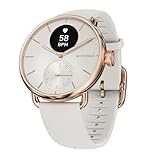
Overview: The Withings ScanWatch 2 is a premium hybrid smartwatch focused on medical-grade health monitoring. It blends analog elegance with advanced sensors, targeting health-conscious users seeking long battery life and clinically relevant insights without smartphone dependency.
What Makes It Stand Out: Its 30-day battery life and medical certifications stand out: FDA-cleared ECG for atrial fibrillation detection, SpO2 monitoring, and sleep apnea screening. The HealthSense OS processes data on-device for accuracy, while the sapphire-glass stainless steel build ensures premium durability unmatched in hybrids.
Value for Money: At a premium price, it justifies cost through clinically validated health features and exceptional battery life. HSA/FSA eligibility adds financial appeal. While pricier than fitness trackers, it competes favorably with medical devices, offering broader utility than single-function tools.
Strengths and Weaknesses: Strengths: Industry-leading medical-grade health tracking; 35-day battery life; elegant, durable design; seamless iOS/Android integration; valuable Withings+ insights. Weaknesses: No built-in GPS (relies on phone); limited smart features (no apps/calls); higher price than basic hybrids.
Bottom Line: The definitive choice for users prioritizing health diagnostics over smart features. Worth the investment for actionable medical insights and reliability, especially for cardiac/sleep health monitoring. Highly recommended for health-focused buyers.
4. Garmin vívomove Trend, Stylish Hybrid Smartwatch, Long-Lasting Battery Life, Dynamic Watch Hands and Touchscreen Display, Mist Gray

Overview: The Garmin vívomove Trend is a fashion-forward hybrid smartwatch designed for style-conscious users who want subtle smart features. Its 40mm stainless steel case and analog-digital display prioritize aesthetics while delivering essential health and notification tracking.
What Makes It Stand Out: It uniquely hides a full-dial touchscreen behind analog hands that dynamically move to reveal notifications or data, creating a seamless transition from classic watch to smart display. The sophisticated Mist Gray finish and 5-day battery (with 1-day backup in watch mode) balance elegance and practicality.
Value for Money: Positioned as a lifestyle hybrid, it competes well against fashion brands (Fossil, Skagen) by including Garmin’s robust health suite (Body Battery, Pulse Ox, stress tracking) at a similar price point. The added durability and health depth offer better long-term utility than style-only alternatives.
Strengths and Weaknesses: Strengths: Beautiful, discreet design; innovative moving hands; comprehensive Garmin health metrics; 5-day battery; strong smartphone notifications. Weaknesses: Limited to basic smart features (no apps/calls); Pulse Ox unavailable in some regions; battery life shorter than solar competitors.
Bottom Line: Perfect for professionals seeking a dress watch with hidden smarts. It excels in style and health tracking but lacks advanced connectivity. Highly recommended for elegance-focused users needing reliable daily insights.
5. Garmin Instinct Crossover Solar, Rugged Hybrid Smartwatch with Solar Charging Capabilities, Analog Hands and Digital Display, Tidal Blue

Overview: The Tidal Blue variant of Garmin’s Instinct Crossover Solar offers identical rugged performance to the Graphite model but in a vibrant blue finish. It maintains the core hybrid design—luminescent analog hands over a solar-charged digital display—tailored for active users wanting color and durability.
What Makes It Stand Out: Beyond solar charging (70-day smartwatch battery), its dual-layered bezel, RevoDrive analog precision, and MIL-STD-810 certification ensure reliability in extreme conditions. The Tidal Blue color provides distinctive style while retaining all Graphite model functionality, including Garmin Pay and 10 ATM water resistance.
Value for Money: Priced identically to the Graphite model, the Tidal Blue offers identical value: solar longevity and military-grade toughness justify the cost for outdoor users. The color variant adds personalization without premium pricing, making it equally compelling for adventurers seeking style.
Strengths and Weaknesses: Strengths: Solar extends usability indefinitely in sunlight; striking Tidal Blue design; exceptional shock/water resistance; comprehensive health/sports tools. Weaknesses: Digital display less vibrant than AMOLED; no voice assistant; limited smartwatch app support.
Bottom Line: An excellent choice for color-loving adventurers needing solar-powered ruggedness. The Tidal Blue’s aesthetics enhance an already top-tier hybrid. Identical performance to Graphite makes color preference the deciding factor—highly recommended for active lifestyles.
6. Garmin Instinct® Crossover AMOLED, Rugged Hybrid GPS Smartwatch with Analog Watch Hands and Bright AMOLED Display, Charcoal with Charcoal Silicone Band

Overview:
The Garmin Instinct Crossover AMOLED merges classic analog aesthetics with modern smartwatch functionality. Designed for adventurers, it features Super-LumiNova-coated hands that retract to reveal a vibrant 1.2-inch AMOLED touchscreen, balancing readability and tech sophistication in extreme conditions.
What Makes It Stand Out:
Its standout innovation is the hybrid display: analog hands automatically move aside to expose a detailed AMOLED screen for maps, notifications, or fitness metrics. Built to MIL-STD-810 standards with sapphire glass and 10 ATM water resistance, it includes RevoDrive technology for hand recalibration after impacts and a dimmable flashlight—features rarely combined in rugged wearables.
Value for Money:
Priced mid-to-high range, it justifies cost through durability and unique dual-display versatility. While pricier than basic hybrids, it undercuts premium AMOLED smartwatches while offering superior toughness and battery efficiency (up to 24 days in watch mode), making it ideal for outdoor enthusiasts seeking reliability without frequent charging.
Strengths and Weaknesses:
Strengths: Unmatched ruggedness; intuitive hybrid display; exceptional battery life; flashlight utility; precise GPS. Weaknesses: AMOLED screen dimming in direct sunlight; limited app ecosystem versus full smartwatches; no onboard music storage.
Bottom Line:
A top-tier hybrid for adventurers prioritizing resilience and functional innovation. Its seamless blend of analog tradition and digital clarity makes it a worthy investment for extreme environments, though casual users may prefer simpler alternatives.
7. Garmin Instinct Crossover, Rugged Hybrid Smartwatch, Analog Hands and Digital Display, Black

Overview:
Garmin’s Instinct Crossover delivers a rugged hybrid experience with luminescent analog hands and a crisp digital display. Targeting outdoor adventurers, it emphasizes durability and essential smart features without compromising the timeless appeal of traditional timepieces.
What Makes It Stand Out:
RevoDrive technology ensures analog hands stay aligned after shocks, while the MIL-STD-810-certified build withstands extreme temperatures and impacts. The dual-layer bezel enhances aesthetics, and Garmin Pay integration enables contactless payments—a rarity in rugged hybrids—paired with smartphone notifications for seamless connectivity.
Value for Money:
Competitively priced against premium hybrids, it offers exceptional value for its military-grade toughness and payment functionality. It’s more affordable than full smartwatches yet outperforms budget hybrids in durability and smart features, catering to users wanting reliability without smartwatch complexity.
Strengths and Weaknesses:
Strengths: Robust MIL-STD-810 construction; reliable RevoDrive calibration; Garmin Pay convenience; 24-day battery life; clear display readability. Weaknesses: Basic digital display (non-AMOLED); limited third-party app support; no flashlight feature (unlike AMOLED variant).
Bottom Line:
An excellent choice for pragmatic adventurers needing dependable timekeeping and essential smart features. Its balance of ruggedness, payment capability, and battery life makes it a smart buy, though tech-focused users might crave more advanced displays.
8. Garmin vivomove Sport, Hybrid Smartwatch, Health and Wellness Features, Touchscreen, Black

Overview:
The vivomove Sport blends elegant analog design with comprehensive health tracking in a 40mm hybrid smartwatch. Focused on wellness rather than ruggedness, it targets style-conscious users seeking discreet fitness and health insights without a digital screen dominating the aesthetic.
What Makes It Stand Out:
It excels in holistic health monitoring: Body Battery energy tracking, advanced sleep analysis, stress metrics, Pulse Ox, and women’s health tools. The analog hands subtly nudge for movement reminders, while the touchscreen reveals notifications and activity data—prioritizing wellness over GPS navigation.
Value for Money:
At a mid-range price, it delivers strong value for health-focused users. Though less durable than Instinct models, its specialized wellness suite rivals pricier smartwatches. The 5-day battery (plus 1 day in watch mode) and medical-grade insights justify the cost for those prioritizing health over adventure features.
Strengths and Weaknesses:
Strengths: Sophisticated health metrics; sleek, professional design; intuitive movement prompts; seamless smartphone notifications; 5-day battery. Weaknesses: Limited GPS (relies on phone); no rugged construction; basic activity profiles lack advanced metrics.
Bottom Line:
Ideal for urban professionals wanting discreet health tracking in a stylish package. Its wellness depth and elegance make it a standout hybrid, but outdoor adventurers should consider more durable Garmin options.
9. Withings ScanWatch Light - Hybrid Smartwatch, 24/7 Heart Monitoring, Activity Tracking, Cycle Tracking, Sleep Monitoring, Connected GPS, 30-Day Battery Life, Android & Apple Compatible, HSA/FSA

Overview:
The Withings ScanWatch Light is a medical-grade hybrid smartwatch emphasizing long-term health monitoring. With FSA/HSA eligibility, it targets users seeking clinical-level insights—like ECG and SpO2 tracking—within a minimalist, analog-style design and exceptional battery life.
What Makes It Stand Out:
Its FDA-cleared 24/7 heart rhythm monitoring and sleep apnea detection set it apart, alongside a remarkable 30-day battery. The discreet analog face hides a digital screen for notifications and health data, while seamless iOS/Android integration ensures effortless syncing for comprehensive wellness tracking.
Value for Money:
Priced higher than fitness hybrids, it’s justified for health-conscious users leveraging FSA/HSA funds. The medical-grade features rival prescription devices at a fraction of the cost, and the 30-day battery eliminates daily charging hassles, offering unmatched longevity in health-focused wearables.
Strengths and Weaknesses:
Strengths: Exceptional 30-day battery; medical-grade heart/sleep tracking; FSA/HSA eligibility; elegant hybrid design; silent alarm vibrations. Weaknesses: No GPS (phone-dependent); limited smart features (no apps/payments); basic activity tracking.
Bottom Line:
A premier health monitoring tool for those prioritizing clinical insights over smart features. Its regulatory approvals and battery life make it indispensable for proactive healthcare management, though fitness enthusiasts may need supplementary devices.
10. Military Smart Watch with GPS/Compass,Smartwatch with GPT Voice Assistant,1.56" AMOLED Screen Smart Watch for Men,Compatible with Android & iOS (Bluetooth Call Answer/Dial), Multiple Sports Modes
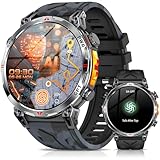
Overview:
This rugged smartwatch markets itself as a military-grade multifunctional device, featuring a 1.56" AMOLED display, multi-satellite GPS, and an AI voice assistant. It targets budget-conscious outdoor users seeking extensive features at an accessible price point.
What Makes It Stand Out:
The six-satellite GPS system (including BeiDou and Galileo) promises urban/jungle accuracy, while the “GPT Voice Assistant” offers on-device queries—though functionality appears limited to pre-set responses. The zinc-alloy build, Bluetooth calling, and AMOLED screen under direct sunlight visibility are notable for its price tier.
Value for Money:
Extremely affordable compared to Garmin/Withings, it delivers surprising hardware breadth. However, the “GPT” assistant is a marketing stretch (no true AI), and the health sensors lack medical validation. Best for casual users needing GPS/calling basics, but not for serious fitness or health tracking.
Strengths and Weaknesses:
Strengths: Bright AMOLED display; multi-satellite GPS accuracy; Bluetooth calling; dual strap options; low price. Weaknesses: Questionable “GPT” claims; unverified health metrics; no MIL-spec certification despite “military” label; short battery life (~7 days).
Bottom Line:
A functional budget option for basic GPS and notifications, but overstates AI capabilities and durability. Suitable for casual use, yet health/accuracy-focused buyers should invest in reputable brands like Garmin.
Understanding the Hybrid Smartwatch Evolution for 2026
Hybrid smartwatches have matured far beyond basic step counters with analog faces. The latest generation represents a thoughtful convergence of traditional watchmaking and essential digital intelligence, specifically refined for outdoor use. Unlike full smartwatches that demand daily charging, hybrids leverage efficient processors and minimalist displays to prioritize core functionality without constant tethering to an outlet. This evolution is crucial for adventurers who need dependable tools, not distractions.
The Core Philosophy: Purpose Over Power
The fundamental strength of a hybrid lies in its intentional limitation. By focusing solely on essential outdoor features – primarily robust GPS and critical notifications – these watches achieve exceptional battery longevity. They avoid the power drain of color touchscreens, app ecosystems, and continuous heart rate monitoring, channeling energy into what matters most during extended trips: accurate positioning and reliable timekeeping. This philosophy ensures your navigation tool remains functional when you need it most.
Defining “Outdoor-Ready” in 2026
Not all hybrids are built for the trail. A truly outdoor-capable model in 2026 must exceed basic water resistance and offer tangible ruggedness. This means construction using materials like fiber-reinforced polymers, sapphire or mineral crystal with anti-reflective coating, and secure button mechanisms that resist mud and moisture ingress. It’s about withstanding drops, extreme temperatures, and the constant abrasion encountered off the beaten path, not just surviving a splash.
Key Differences from Full Smartwatches and Fitness Trackers
Understanding the hybrid’s niche is vital. Full smartwatches offer rich app experiences but suffer from short battery life and screens that wash out in bright sun. Basic fitness trackers monitor steps and sleep but lack detailed GPS navigation and map capabilities. Hybrids occupy the sweet spot: they provide turn-by-turn navigation on a readable display, track complex outdoor activities with precision, and last for weeks, not hours, on a single charge. They are navigation tools first, communication tools second.
Essential GPS and Navigation Capabilities
Precise location tracking isn’t a luxury for outdoor enthusiasts; it’s a safety imperative. The GPS system in your hybrid watch is its most critical component, and 2026 models offer significant advancements over earlier generations. Evaluating the quality and features of the GPS module is non-negotiable when choosing a device for serious adventures.
Multi-GNSS Satellite System Support
Relying solely on GPS (the American system) is outdated. Modern hybrid watches leverage Multi-GNSS, connecting to multiple satellite constellations simultaneously – including GLONASS (Russia), Galileo (Europe), and BeiDou (China). This dramatically improves location acquisition speed, accuracy (especially in challenging environments like dense forests or deep canyons), and reliability. More satellites mean a stronger, more consistent signal lock when you need it most.
Accuracy Metrics and Real-World Performance
Manufacturer claims of “5-meter accuracy” are often idealized. Real-world factors like tree cover, canyon walls, and even atmospheric conditions affect precision. Look for watches that utilize newer technologies like multi-band GNSS (L1+L5 frequencies), which significantly reduces errors caused by signal reflection (“urban canyon” effect, relevant even in rocky terrain). Consider user reviews detailing performance in environments similar to where you’ll adventure.
Offline Maps and Turn-by-Turn Guidance
Basic GPS logging isn’t enough. The best outdoor hybrids for 2026 feature downloadable offline topographic maps directly to the watch. This allows you to see your position on a detailed trail map without phone connectivity. Crucially, integrated turn-by-turn navigation provides visual (and often haptic/vibration) cues at junctions, preventing costly wrong turns miles from help. Ensure the map interface is clear and usable on the small, often mono-screen display.
Route Planning and Import Functionality
Your adventure often starts long before you leave home. A capable hybrid allows you to plan routes using companion apps on your phone or computer, then seamlessly sync them to the watch. Look for compatibility with popular route planning platforms (like Komoot or Gaia GPS) and the ability to easily import GPX or KML files. This ensures you have your meticulously planned path ready to follow, even with zero signal.
Battery Life: The Non-Negotiable Outdoor Feature
For outdoor enthusiasts, battery anxiety is a dealbreaker. The ability to trust your device throughout a multi-day trip, expedition, or unexpected delay is paramount. Hybrid smartwatches inherently excel here, but significant variations exist in 2026 models, heavily influenced by feature usage and potential charging innovations.
Real-World Battery Expectations vs. Manufacturer Claims
Manufacturers often quote battery life under minimal usage scenarios (e.g., only timekeeping and basic step counting). For GPS-intensive activities, this number plummets. Understand the actual expected duration when using key features: continuous GPS tracking, frequent notifications, and backlight use. Aim for a watch that realistically offers 10-14 days in smartwatch mode and 20-40+ hours in continuous GPS mode for multi-day trips without recharge options.
Impact of GPS Usage Patterns on Longevity
How you use GPS drastically affects battery drain. Continuous tracking for a 10-hour hike consumes far more power than logging position every 5 minutes on a multi-day backpacking trip. Some advanced hybrids offer configurable GPS modes (e.g., “UltraTrac” for extended battery at slightly reduced accuracy). Understanding these settings and how they impact your specific activity type is crucial for planning.
The Growing Role of Solar Charging
Solar charging integration is becoming a significant differentiator in 2026. While not eliminating the need for occasional charging, solar panels on the watch face can substantially extend battery life, especially during long daylight adventures. This is particularly valuable for thru-hikers, cyclists, or sailors where access to power is extremely limited. Evaluate the efficiency claims and real-world user experiences with solar-assisted models.
Charging Convenience in Remote Settings
Consider the practicalities of recharging. USB-C is standard, but how quickly does the watch charge? Can it get a meaningful boost (e.g., 10 hours of GPS time) from a short 15-minute charge using a small power bank? This capability provides crucial peace of mind if you realize your battery is lower than expected before a long day out.
Durability and Environmental Resilience
Your watch is your constant companion in environments that test its limits. It will face dirt, water, impacts, and extreme temperatures. The build quality and environmental specifications of a 2026 hybrid smartwatch are not just nice-to-haves; they are fundamental requirements for reliability and longevity in the outdoors.
Water Resistance Standards Decoded
“Water resistant” claims can be misleading. For serious outdoor use, especially near water or in heavy rain, aim for a minimum of 10 ATM (100 meters) water resistance. This signifies the watch can withstand swimming and snorkeling pressures, far exceeding the needs of hiking or trail running. Crucially, ensure the rating is ISO 22810 certified for reliability. Remember, water resistance degrades over time and requires maintenance.
Shock and Impact Resistance Testing
Outdoor activities involve bumps, drops, and scrapes. Look for watches that adhere to military-grade standards like MIL-STD-810H, which tests resistance to shock, vibration, and extreme temperatures. While not a guarantee against every impact, it provides a much higher assurance of ruggedness compared to watches without such certification. Consider the case material – fiber-reinforced polymers often offer better impact absorption than metal.
Extreme Temperature Tolerance
Your watch must function reliably from freezing alpine summits to scorching desert trails. Check the specified operating temperature range. Quality outdoor hybrids in 2026 typically operate effectively between -20°C (-4°F) and 50°C (122°F) or wider. Performance outside this range (like battery drain in extreme cold) is a common limitation to be aware of.
Screen Clarity and Scratch Resistance
A useless watch is one you can’t read. Essential features include high-contrast, always-on displays (like memory-in-pixel or transflective LCDs) that remain visible in direct sunlight without draining the battery excessively. Paired with this, scratch-resistant glass – ideally sapphire crystal, though high-quality coated mineral glass is also common – is vital to maintain readability after years of use.
Activity Tracking and Outdoor-Specific Metrics
Beyond basic step counting, modern hybrid smartwatches deliver sophisticated metrics tailored to outdoor pursuits. The depth and accuracy of this tracking provide valuable insights for performance improvement, safety awareness, and simply enjoying your adventures more fully.
Advanced Outdoor Activity Profiles
Generic “hiking” or “running” modes are no longer sufficient. Look for watches offering dedicated profiles for specific activities like Trail Running, Mountain Biking, Ski Touring, Kayaking, or Open Water Swimming. Each profile activates the most relevant sensors and metrics (e.g., elevation gain/loss for hiking, cadence for cycling, stroke count for swimming), providing meaningful data specific to the demands of that sport.
Elevation Gain/Loss and Barometric Altimeter Accuracy
A built-in barometric altimeter is essential for accurate elevation tracking, far surpassing GPS-derived elevation data which can be highly erratic. This provides precise cumulative ascent/descent figures crucial for gauging trail difficulty and effort. Ensure the altimeter is calibrated (often via GPS or known elevation points) for optimal accuracy, especially important in mountainous terrain.
Weather Trend Monitoring and Storm Alerts
Some advanced hybrids integrate barometric pressure sensors to monitor short-term weather trends. A rapid pressure drop can signal an approaching storm, providing a vital heads-up when you’re far from forecasts. While not a replacement for professional weather apps, this feature offers an extra layer of situational awareness directly on your wrist.
Compass Functionality and Calibration
A reliable digital compass is indispensable for navigation, especially when paired with offline maps. Assess the compass accuracy and ease of calibration. Magnetometer-based compasses require regular calibration (usually a figure-8 motion), and performance can be affected by nearby metal objects. A watch that integrates compass data seamlessly with map navigation provides a significant advantage.
Connectivity and Smart Features (The Right Amount)
Hybrids strike a balance by offering selective smart features that enhance the outdoor experience without becoming a distraction or battery drain. The key is identifying which connected capabilities genuinely add value in the backcountry versus those that are superfluous.
Essential Notification Prioritization
The ability to receive critical phone notifications (calls, texts, calendar alerts) is useful, but constant social media pings are counterproductive. Look for watches and companion apps that allow granular control over which notifications reach your wrist. Prioritize safety alerts, messages from key contacts, and weather warnings while silencing non-essentials to maintain focus on your surroundings.
Music Storage and Control (For Select Activities)
For trail runners or cyclists who prefer leaving their phone behind, onboard music storage (via Bluetooth headphones) is a valuable feature. However, it significantly impacts battery life. Evaluate if this is essential for your activities or if carrying your phone for music is a reasonable compromise. Control of phone-stored music is a more common and less battery-intensive alternative.
Smartphone Find and Remote Camera Shutter
Simple but surprisingly useful features include the ability to make your paired phone emit a sound if misplaced (helpful at trailheads) and using the watch as a remote shutter for your phone’s camera. These add convenience without substantial battery cost, making them worthwhile inclusions for many users.
LTE Connectivity: Necessity or Nuisance?
Cellular connectivity (LTE) in watches allows for standalone calling/texting without a phone. While appealing for safety, it drastically reduces battery life and increases cost/complexity. For most outdoor enthusiasts, especially those carrying a phone (often in airplane mode to save its battery), LTE on the watch is an unnecessary drain. Satellite messaging (via phone) is often a more practical emergency solution.
Interface and Usability in the Field
The best features are useless if you can’t access or understand them while wearing gloves, in the rain, or after hours of exertion. The user interface (UI) and physical design of a hybrid watch are critical factors for real-world usability during demanding outdoor activities.
Physical Buttons vs. Touchscreen Reliability
While some hybrids incorporate touchscreens, physical buttons reign supreme for outdoor use. They are vastly more reliable when hands are wet, cold, or gloved. Look for watches with well-spaced, responsive, and positively-clicking buttons. A rotating bezel (physical or digital) can also be an excellent navigation tool, keeping fingers away from the screen.
Display Readability in All Conditions
This cannot be overstated. The display must be instantly readable in direct, harsh sunlight – a common scenario on trails. Avoid standard reflective LCDs that wash out. Opt for transflective displays or Memory-in-Pixel (MIP) technology that uses ambient light to enhance, not diminish, visibility. High contrast and adequate backlight (for night use) are also essential.
Glove-Friendly Operation Design
Consider the button size, shape, and travel distance. Are they easy to press with thick winter gloves or muddy fingers? Buttons that are too small, too flush, or require excessive force become frustrating obstacles when you need quick access to navigation or settings. User reviews often highlight this practical aspect.
Intuitive Menu Navigation Under Stress
When tired, cold, or dealing with an unexpected situation, a complex menu system is dangerous. The UI should be logical, with critical functions (like starting/stopping GPS, accessing the compass, or triggering an emergency feature) reachable in few button presses. Practice navigating menus before you need them in a critical moment.
Material Choices and Comfort for Long Wear
What you wear on your wrist for 12+ hours a day, day after day, demands serious consideration of materials and ergonomics. Comfort and durability are intertwined, especially when dealing with sweat, dirt, and constant movement over rough terrain.
Strap Material Durability and Skin Friendliness
Silicone straps are common, but quality varies. Look for soft, hypoallergenic, quick-drying silicone that won’t chafe during long hikes. Nylon (NATO or Perlon) straps are highly breathable, durable, and water-resistant, excellent for sweaty activities. Leather, while stylish, is generally less suitable for intense outdoor use due to water absorption and slower drying. Consider strap width and quick-release mechanisms for easy swapping.
Case Size and Weight Distribution
A bulky, heavy watch becomes an annoyance on long treks. While larger cases often house bigger batteries, seek a balance. A case diameter between 42mm-46mm is often the sweet spot for readability and wearability. Pay attention to weight distribution – a watch that sits low on the wrist and doesn’t catch on brush is preferable. Titanium cases offer excellent strength-to-weight ratios.
Under-Watch Ventilation and Moisture Management
During strenuous activity, sweat buildup under the watch can cause discomfort and skin irritation. Some designs incorporate subtle ventilation channels or use materials that promote airflow. While not always advertised, this is a subtle but important factor for multi-day comfort, especially in humid conditions.
Skin Sensitivity and Hypoallergenic Options
Nickel allergies are common. Ensure the case back and strap hardware are made from hypoallergenic materials like titanium, ceramic, or high-grade stainless steel specifically labeled nickel-free. If you have sensitive skin, prioritize watches known for using skin-friendly materials to avoid rashes on long trips.
Software Ecosystem and Companion App Value
The watch is only half the story. The companion smartphone app is where you plan routes, analyze performance, customize settings, and update firmware. A robust, intuitive, and regularly updated app is essential for unlocking the full potential of your hybrid smartwatch.
Route Planning and Syncing Workflow
The app should provide a seamless experience for discovering, creating, and editing routes, then transferring them effortlessly to the watch. Integration with established mapping services (like OpenStreetMap derivatives) enhances route detail. A clunky or unreliable syncing process negates the value of offline maps.
Post-Activity Analysis Depth
Beyond just showing a map of your route, the companion app should offer meaningful analysis: elevation profiles, pace/speed charts, heart rate zones (if supported), and comparative data over time. Look for the ability to segment your activity (e.g., viewing stats for just the uphill portions) and export data to platforms like Strava.
Customization and Watch Face Options
Personalization matters for daily wear. A good app allows deep customization of watch faces – choosing which data fields (time, date, steps, battery, compass, current pace) appear and where. While hybrids have simpler displays, having flexibility to prioritize the metrics you care about enhances utility.
Firmware Update Frequency and New Feature Rollouts
Technology evolves. Choose a brand with a proven track record of regular firmware updates that deliver meaningful improvements: enhanced GPS algorithms, new activity profiles, battery optimizations, or bug fixes. A stagnant software platform means your watch’s capabilities won’t improve over time.
Making Your Purchase Decision: Key Considerations Checklist
Choosing the right hybrid smartwatch requires aligning its capabilities with your specific outdoor lifestyle. There’s no universal “best” option; the perfect watch for a weekend hiker differs from one needed for long-distance thru-hiking. A structured evaluation process prevents buyer’s remorse.
Defining Your Primary Outdoor Activities
Be specific. Are you primarily trail running short distances, multi-day backpacking, mountain biking technical trails, or sea kayaking? Each activity has distinct demands (battery life needs, required metrics, ruggedness level, water resistance). List your top 2-3 activities to prioritize relevant features.
Establishing Your Must-Have vs. Nice-to-Have Features
Create a tiered list:
- Non-Negotiable: (e.g., 30+ hr GPS battery, 100m water resistance, barometric altimeter, offline maps).
- Highly Desirable: (e.g., solar charging, multi-GNSS, specific activity profiles).
- Optional/Unnecessary: (e.g., music storage, LTE, extensive smart notifications). Honesty here prevents overspending on unused features or missing critical ones.
Budget Realities and Long-Term Value Assessment
Hybrid smartwatches span a wide price range. Determine your realistic budget, but factor in long-term value. A slightly more expensive watch with solar charging and a proven update history might offer better value over 3-5 years than a cheaper model that becomes obsolete quickly or lacks essential features forcing an earlier replacement.
Evaluating Brand Support and Community Resources
Research the manufacturer’s reputation for customer support and warranty service. A strong, active user community is invaluable for tips, troubleshooting, and discovering hidden features. Check forums and review sites for common issues and how the brand responds to them. Good post-purchase support is part of the product’s value.
Frequently Asked Questions
Can a hybrid smartwatch replace my dedicated GPS handheld for serious backpacking?
Hybrids offer excellent navigation for most backpackers, especially with offline maps and turn-by-turn. However, for extreme expeditions with zero margin for error, dedicated handheld GPS units often have longer battery life (with replaceable batteries), superior screen readability in all conditions, and more advanced mapping features. Hybrids are generally sufficient for well-marked trails but consider a dedicated unit for true wilderness exploration.
How accurate is the GPS on hybrid watches compared to phones?
Modern hybrids with Multi-GNSS and multi-band support (L1+L5) often match or exceed phone GPS accuracy, especially in challenging terrain like forests or canyons. Phones rely solely on smaller antennas and can be affected by being in a pocket. Hybrids worn on the wrist typically have a clearer view of the sky, leading to more consistent and reliable positioning during movement.
Do I need LTE (cellular) on my outdoor hybrid smartwatch?
For the vast majority of outdoor enthusiasts, LTE is unnecessary and counterproductive. It significantly drains battery life and adds cost. Carrying your phone (often in airplane mode to save its battery) connected via Bluetooth provides essential connectivity. For true emergency communication in areas with no cell coverage, satellite messengers (like Garmin inReach) paired with your phone are a far more practical and battery-efficient solution than LTE on the watch.
How important is solar charging for battery life on multi-day trips?
Solar charging is increasingly valuable, especially for trips longer than the watch’s base GPS battery life (e.g., 30+ hours). In full sun, it can extend GPS tracking by 10-50% or more per day, potentially eliminating the need for a power bank on week-long hikes. If your trips regularly exceed the stated GPS battery life without solar, or you venture where charging is impossible, it’s a highly recommended feature for 2026 models.
Can hybrid smartwatches track heart rate accurately during intense activities?
While most hybrids include optical heart rate sensors, their accuracy, especially during rapid movement like trail running or mountain biking, is generally inferior to dedicated chest strap monitors. They can provide a reasonable estimate of trends and resting heart rate, but don’t rely solely on the watch’s HR data for precise training zones during high-intensity efforts. Chest straps remain the gold standard for athletic performance tracking.
Are hybrid smartwatches suitable for swimming or diving?
Many hybrids offer 5 ATM (50m) or 10 ATM (100m) water resistance, making them suitable for swimming, snorkeling, and water sports. However, they are not designed for scuba diving (requiring 200m+ ratings and specific features). Always check the specific water resistance rating and ensure all buttons/caps are securely closed before submersion. Rinse with fresh water after saltwater exposure.
How do I navigate with turn-by-turn directions on a small hybrid display?
Hybrids use simplified visual cues: arrows indicating turn direction (left/right), distance to the next turn, and sometimes a mini-map overview. Haptic (vibration) alerts often signal upcoming turns. You don’t see a full map like on a phone; instead, the watch guides you step-by-step. Familiarizing yourself with the specific icons and vibration patterns in the companion app before your trip is crucial.
What’s the biggest battery drain I should be aware of?
Continuous GPS tracking is the single largest power consumer. Features like always-on display, backlight usage in low light, frequent notifications, and music playback (if supported) also significantly impact battery life. For maximum GPS longevity, disable non-essential features (like constant heart rate monitoring), use battery saver GPS modes if available, and minimize backlight use.
Can I use third-party apps or download additional watch faces?
Hybrid smartwatches have very limited app ecosystems compared to full smartwatches. You typically cannot install third-party apps directly on the watch. Watch face customization is usually restricted to options provided within the manufacturer’s companion app, though the depth of customization varies significantly between brands. Don’t expect an app store experience.
How often do I need to replace the battery in a hybrid smartwatch?
Most modern hybrid smartwatches use non-removable lithium-polymer batteries designed to last the functional lifespan of the device (typically 3-5 years with regular use). Unlike traditional watches with coin cells, you don’t replace the battery yourself; when capacity degrades significantly, the entire watch is usually recycled or replaced. Solar charging can help extend the usable battery lifespan over time.
See Also
- 10 Best GPS Smartwatches for Outdoor Adventure Enthusiasts in 2026
- 2026’s Top 10 GPS Smartwatches for Outdoor Adventures
- 10 Best Children’s Smartwatches for Safe Outdoor Play in 2026
- We Tested 50 Hybrid Smartwatches - Here Are the 10 Best for Fitness Enthusiasts
- 10 Best Smartwatches for Outdoor Enthusiasts in 2026